



















Can regular people look for precious stones, seashells, old coins, and actually keep their finds? Actually, yes, but only in places where the law allows it. Remember, wherever you go on your gemstone or treasure adventure, always respect regulations to stay out of trouble. It’s very important to learn local laws before going to a particular place for your treasure hunting session.
Searching for gems in Arkansas and other places in the U.S.
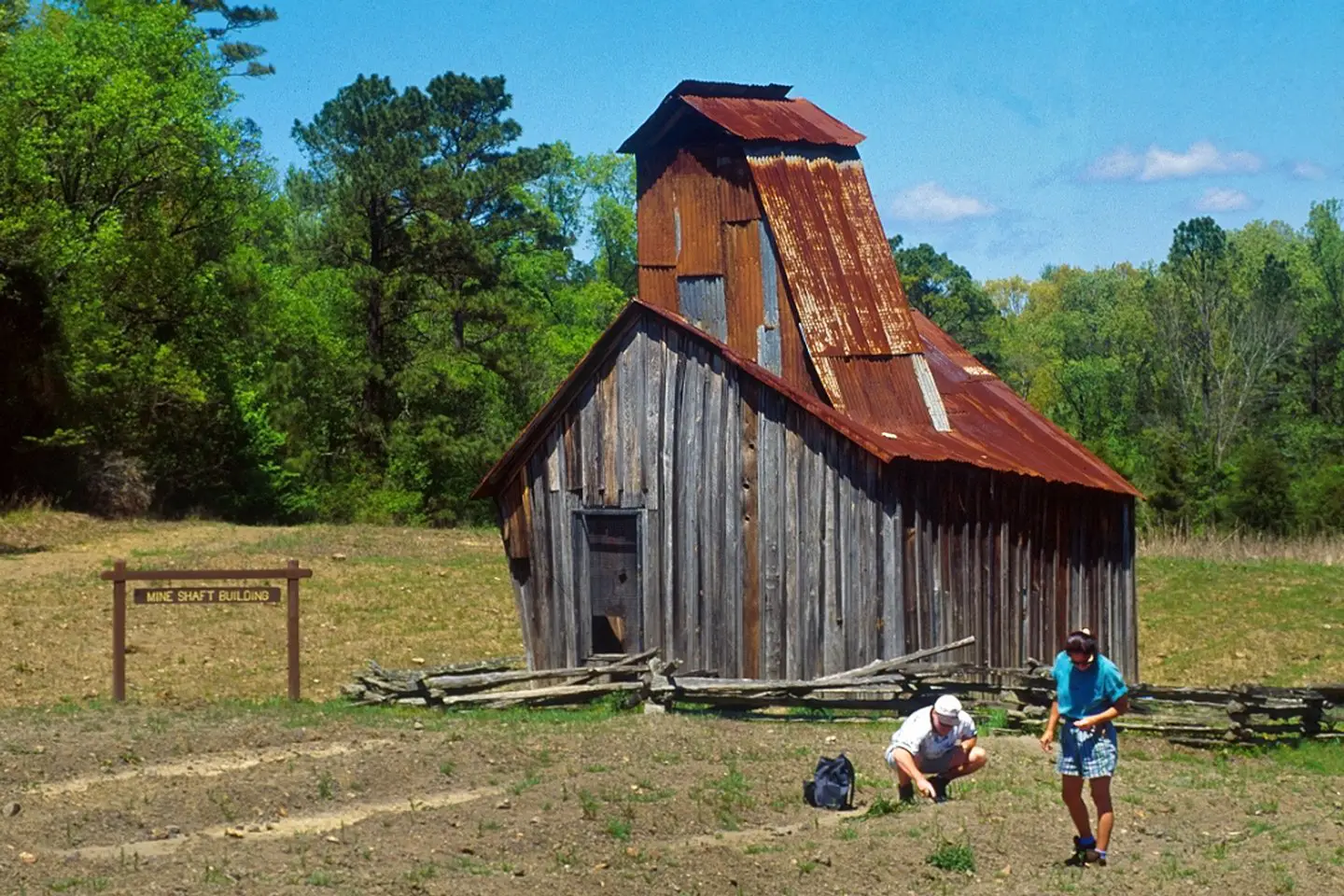
Crater of Diamonds State Park.
Crater of Diamonds State Park in Arkansas is one of the most famous places for people to look for gems themselves. This 38-acre field is really the top of an ancient volcanic crater. The prospectors who come here pay a small fee and can look for gemstones and other minerals, and can keep whatever they want.
Since the early 1900s, over 76,000 diamonds have been discovered there. The biggest specimen ever found is the 40.2-carat “Uncle Sam” stone. And in 2020, a Nebraska teacher discovered a 2.22-carat brown diamond.

Crater of Diamonds State Park.
Other locations where it’s allowed to go looking for precious gems are Emerald Hollow Mine and Gem Mountain. The former is known for emeralds, quartz, and aquamarines, and the latter is a great sapphire place. Last but not least, the Rainbow Ridge Opal Mine in Nevada is an excellent place to find beautiful fire opals.
Where can you go with a metal detector?
Although metal detecting may be an exciting hobby, the regulations are different in each country and sometimes even in each district. In the U.S., it’s permitted to use a detector on private land if the owner agrees to it. When it comes to public lands, it may be hard to obtain a permit. Just so you know, this kind of detecting is banned in national parks but can be done in some state parks with an official permit. If you are searching for especially old artifacts, you can check out the Antiquities Act. According to it, the government owns any historical item found on federal land that is over a century old.
In the United Kingdom, you can metal detect on private land if you have obtained permission. The Treasure Act 1996 covers all significant historical finds, for example, Roman coins, Anglo-Saxon items, or antique custom brooches. Naturally, one must report finding such an item to the authorities. Sometimes, national museums can be interested in purchasing a find. In this case, the owner of the land and the finder will usually split the reward.
It’s not surprising to learn that most of the finds are scrap. However, there is always a possibility, even for an amateur detectorist, to discover something valuable. For instance, the Staffordshire Hoard containing a huge collection of Anglo-Saxon gold with a total value of £3.3 million was discovered over 15 years ago.
Unfortunately, metal detecting is quite restricted in many European countries. And in places where it’s permitted, one should obtain a “metal detecting license” in order to do it legally.
Who will possess the treasure in case you find one?
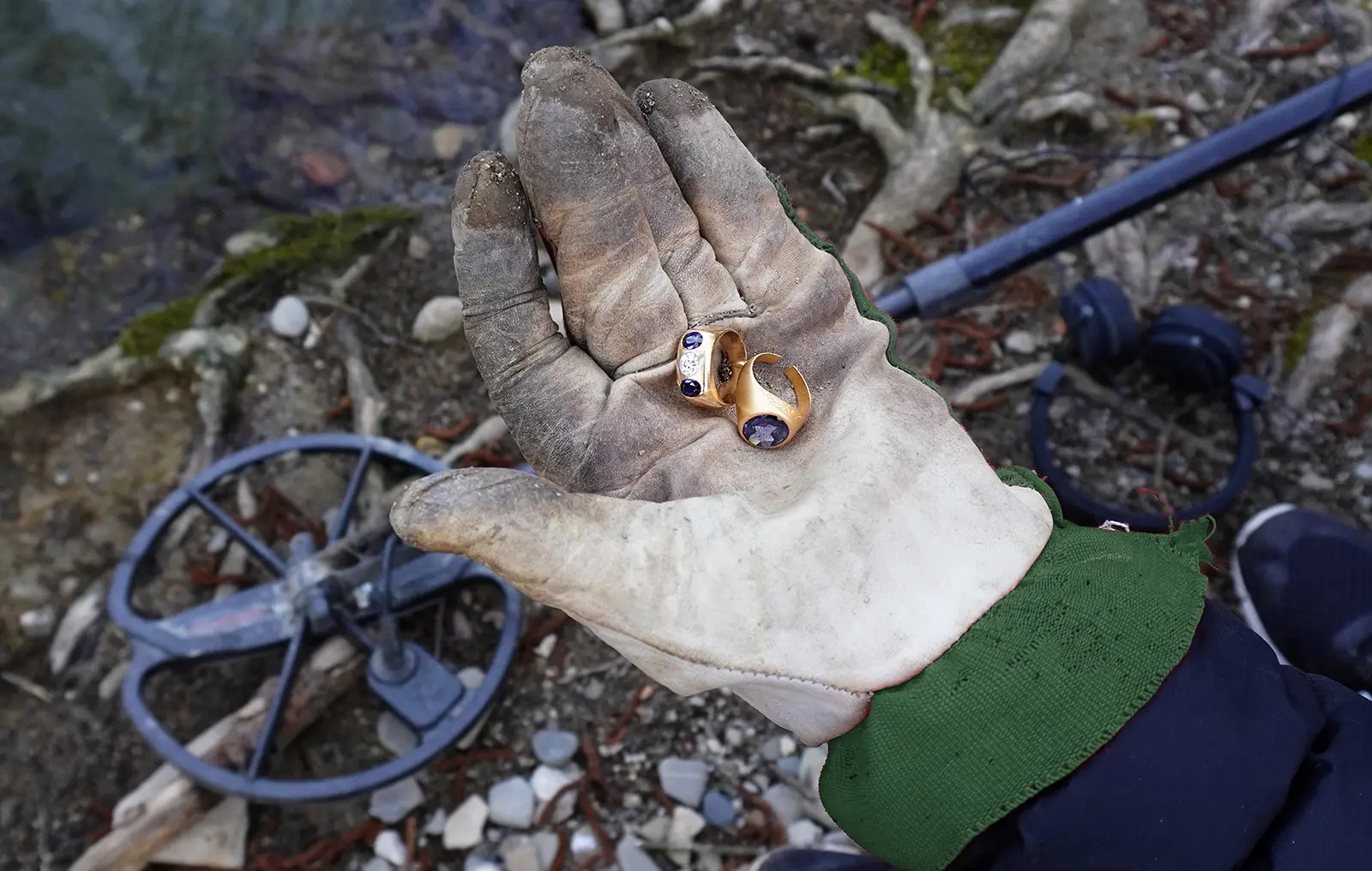
In the majority of countries, finding valuable artifacts or buried treasures doesn’t mean they belong to you. This is especially true for countries with strong archaeological backgrounds. In Egypt, you may be fined if you pick up old stones that lie near historical buildings. In Italy, 100% of archaeological items belong to the state. The only way you could buy or sell an archaeological find is through the black market. Of course, you could be easily sent to jail if anyone finds out.













In the U.S., rules vary widely and depend upon what kind of artifact you stumbled upon, whether it’s historical, and, most importantly, the place where it was found. The most basic rule is, that if it’s found on private land and you have the permission of the landowner, you can keep the item as long as it’s not too archaeological. Yet rules get stricter with federal or public land and major historic finds.
Can I search for natural objects and sea glass?
You may not believe it, but in some areas, you can’t legally collect even basic natural objects, such as shells. For example, in the state of California, it’s forbidden to pick up sea glass from restricted areas or near ports. In Spain, taking shells from sand beaches may be punished by a fine. In the United Kingdom, it’s safe to pick up things from nature, unless they are in a conservation zone or very old.
It’s best to always make sure to follow local guidelines when it comes to searching for treasures. The thrill of finding something valuable could be spoiled by a heavy fine, so it’s always worth knowing in advance whether or not you can do metal detection or excavation in some area, and whether you could be the owner of the find. The Olertis team wishes you legal and fruitful treasure hunting adventures!