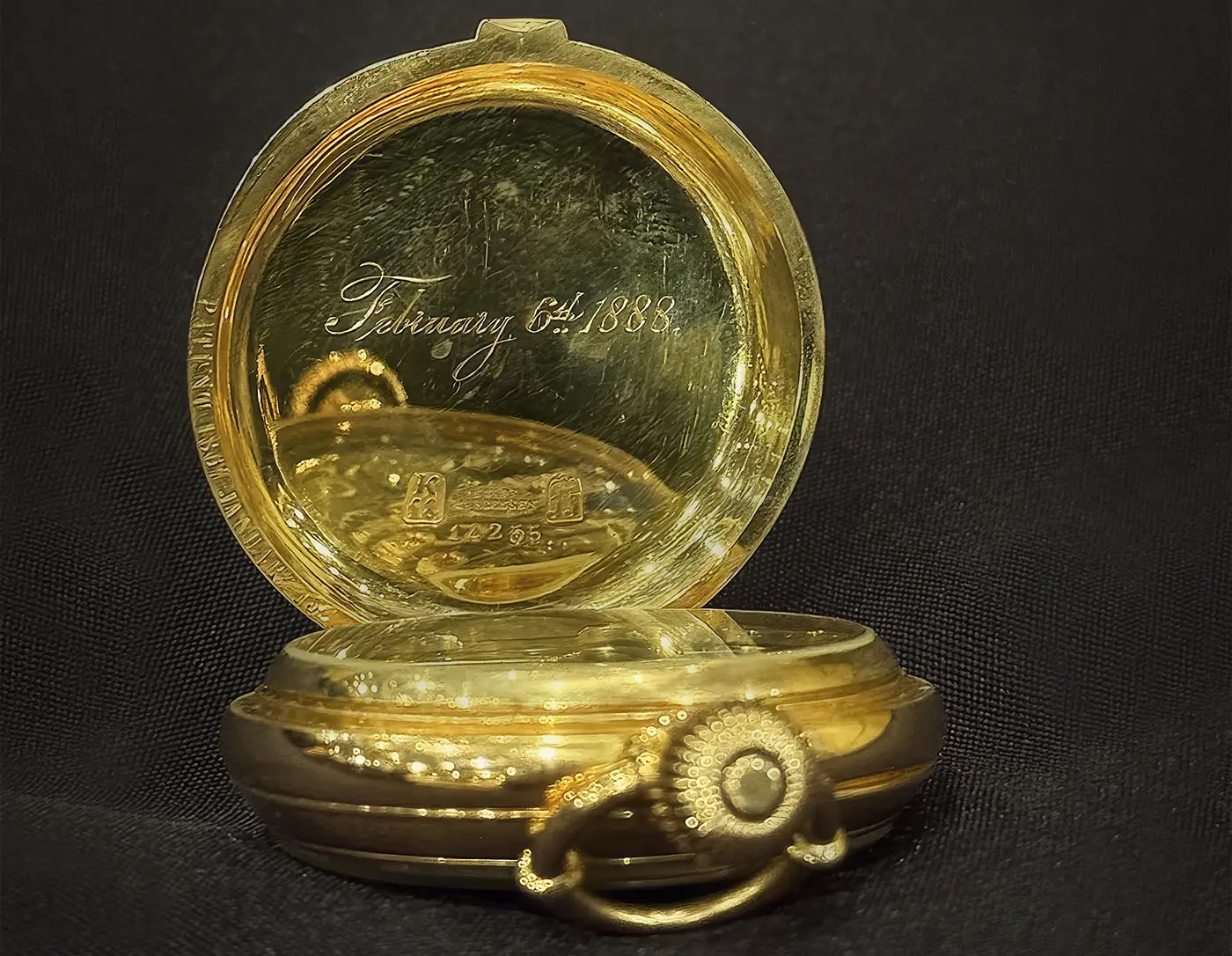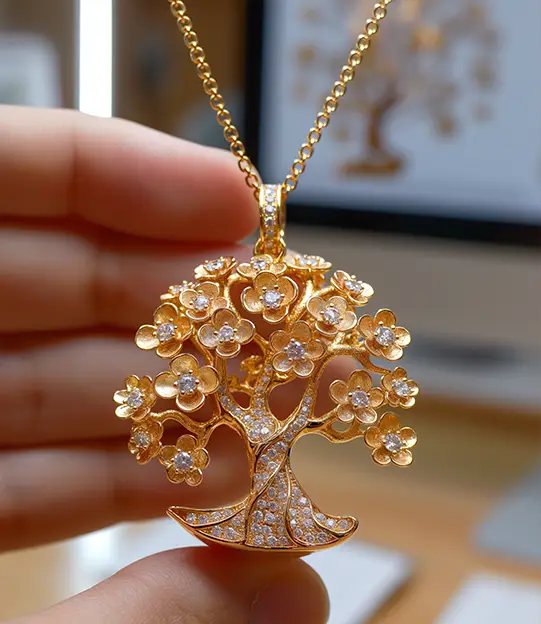

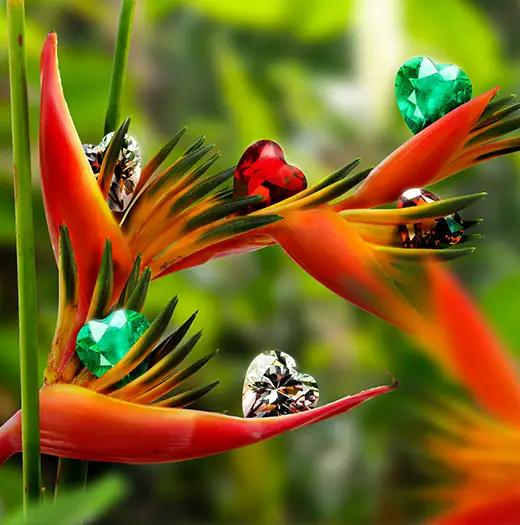
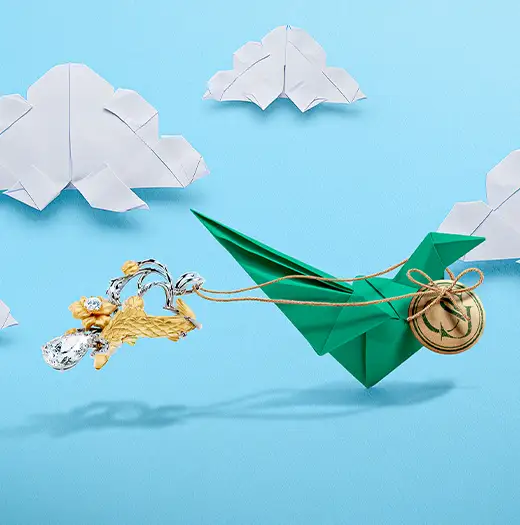

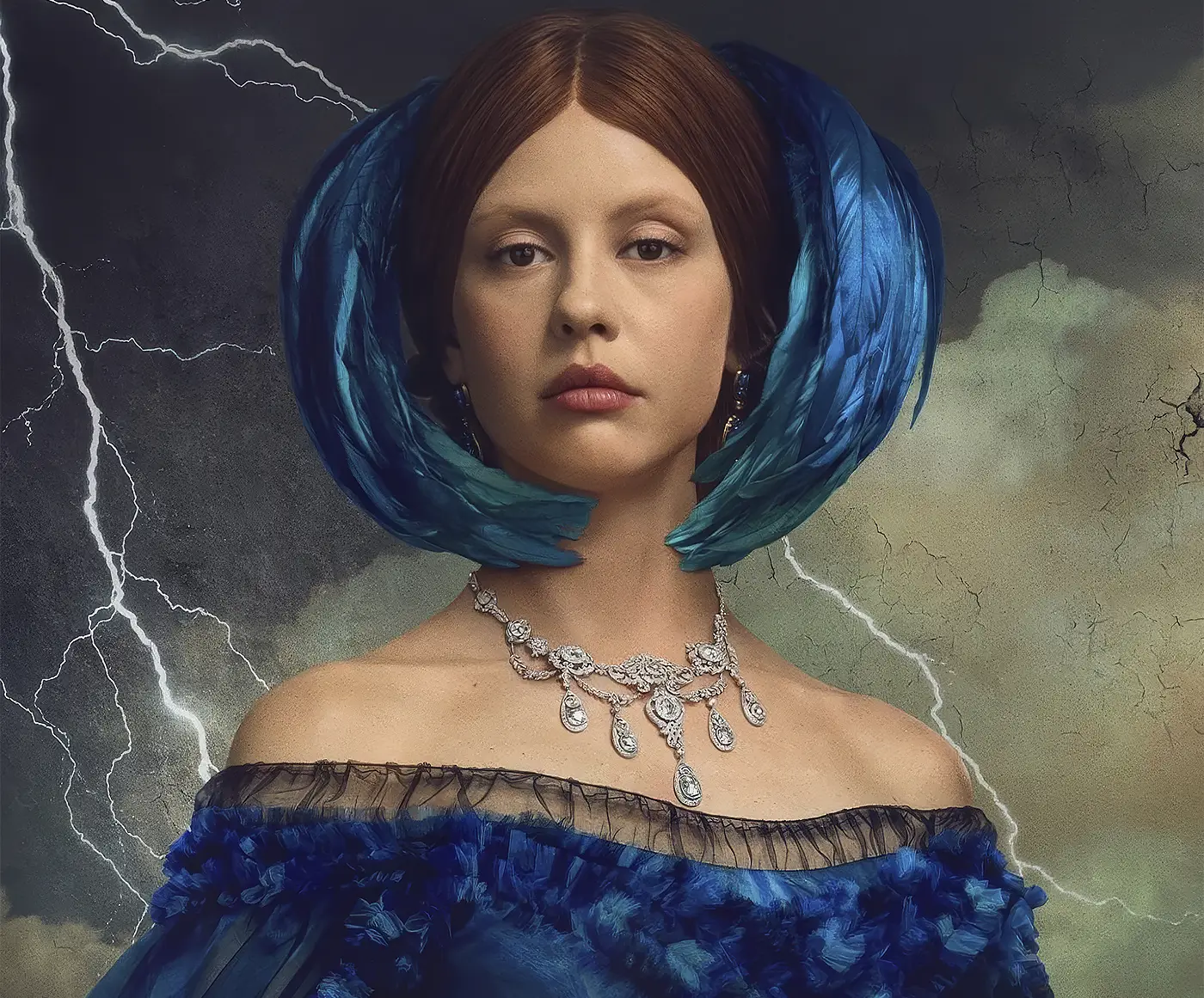
It is clear that when Guillermo del Toro chose to tell this story the craftsmanship was not limited to the sets and the special effects. Del Toro’s film used some of the most beautiful Tiffany jewelry that has been hidden away and never seen by anyone — let alone a camera lens. To protect these priceless heirlooms, Tiffany & Co. sent a representative to oversee every time an actress put on one of their historic Tiffany pieces. So much so that when Mia Goth played the piano, the representative would actually sit at her feet to ensure that the Wade Necklace stayed safe and intact.
This excessive caution is just one of many behind-the-scenes stories that were revealed during a fun evening at the 92nd Street Y, as part of NYC Jewelry Week. Author Marion Fasel moderated the conversation between costume designer Kate Hawley and Tiffany executive Christopher Young, who is responsible for overseeing both Tiffany’s historical collections and the brand’s global visual creative direction. The three guests shared some of the reasons why Guillermo del Toro’s Frankenstein turned into an unlikely showcase of Tiffany jewelry craftsmanship.
Behind the Scenes of Tiffany’s Historic Jewelry Selection
Del Toro’s film, which is currently available on Netflix after a short theatrical run in October, features 27 historic Tiffany pieces representing different eras of Tiffany’s New York history. The collection includes five custom-made pieces for the production, six of the brand’s current designs, 10 jewels that are considered historic, and six pieces of archival silverware from the company’s archives.

Photo: Andrew Werner.
Perhaps one of the most interesting stories from the evening was about Mia Goth’s carnelian rosary in the wedding scene. Young shared with the audience that the cross of the rosary has the engraving of the character’s name, Elizabeth, using a replica of Mary Shelley’s handwriting from the original Frankenstein manuscript. This literary reference immediately generated buzz in the room and beyond through social media.
A few of the jewels that Young selected for Goth had never been worn in the modern era until the film. Young and the rest of the archival team followed the production to ensure that each of the delicate pieces was perfectly fitted for the actress. Due to the high level of detail provided by the archival team, it seemed as though pieces created by designers such as Meta Overbeck (one of Louis Comfort Tiffany’s collaborators) were made specifically for Goth, even though the items were decades old.
Selecting jewelry for Elizabeth was a collaborative effort between Hawley and Young. Hawley stated that the costume team and del Toro, along with Young and Tiffany’s specialists, all had input on how Elizabeth should show her personality through jewelry. When del Toro referred to Elizabeth as having an insect-like quality, the group focused on a custom necklace from Louis Comfort Tiffany that dated back to the early 20th century and had glass beetle components that sparkled in the light. Young mentioned that Tiffany had a long-standing interest in both botanical and insect motifs. Hawley elaborated on that point, stating that her team based Elizabeth’s wardrobe on visual cues inspired by moths, butterflies, and other winged creatures.

Photo: Andrew Werner.
The Jewelry Book and Its Influence on Modern Design Conversations
A day earlier, another NYC Jewelry Week event took place at the 92nd Street Y: The Jewelry Book Panel. The panel supported the release of The Jewelry Book, published with the support of the De Beers Group. Editor Melanie Grant participated in the discussion with jewelry writer Tanya Dukes, Brooklyn Museum fashion curator Matthew Yokobosky, and 92NY Jewelry Center Director Jonathan Wahl.
Melanie Grant described The Jewelry Book as a “collective masterpiece” that was developed through the collaboration of 27 contributing writers. She compared the experience of working on the book to building a community of writers who worked collectively to develop the stories of major designers, companies, and tastemakers featured in the book. Each panelist discussed their favorite section of the book and why those specific pairings of personalities and design houses interested them.
Melanie Grant selected a page in the book that featured supermodel and jewelry icon Grace Jones opposite Brazilian jeweler Fernando Jorge. She complimented Jones for always viewing her body as a stage to display bold and expressive jewelry and for never altering her style. Grant stated that Jorge is notable in the jewelry industry not only for his design talent but for his kindness and generosity. In her words: greatness in design does not have to be scary or unkind; you can be genuinely warm and kind while still creating great work.
You can explore more insights into Guillermo del Toro’s Frankenstein—and the Tiffany pieces featured in the film—in your article, “Frankenstein, the Movie by Guillermo del Toro, Will Be Graced by Tiffany & Co. Pieces.”