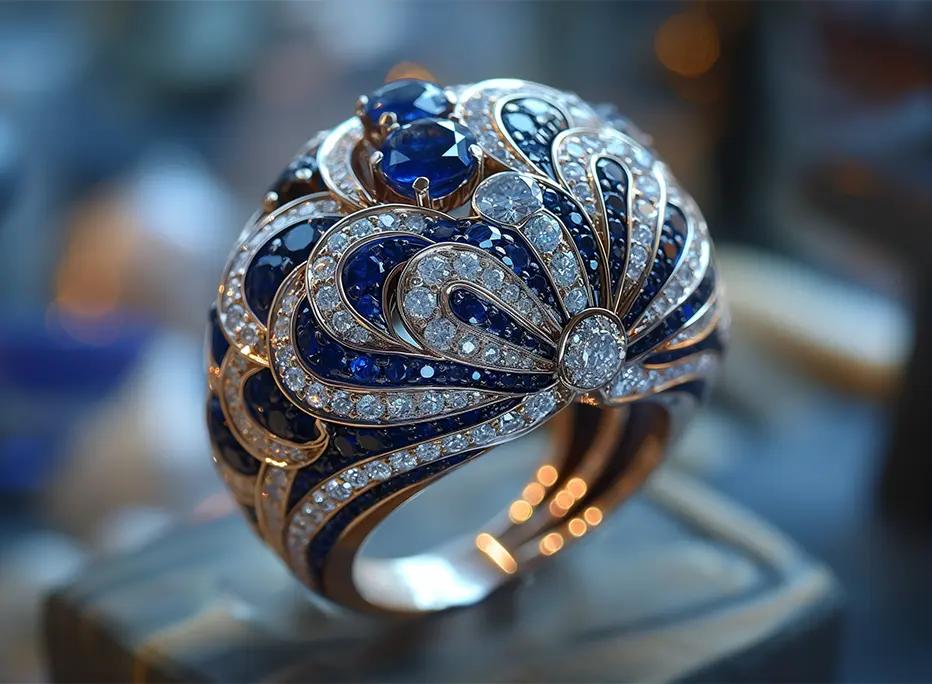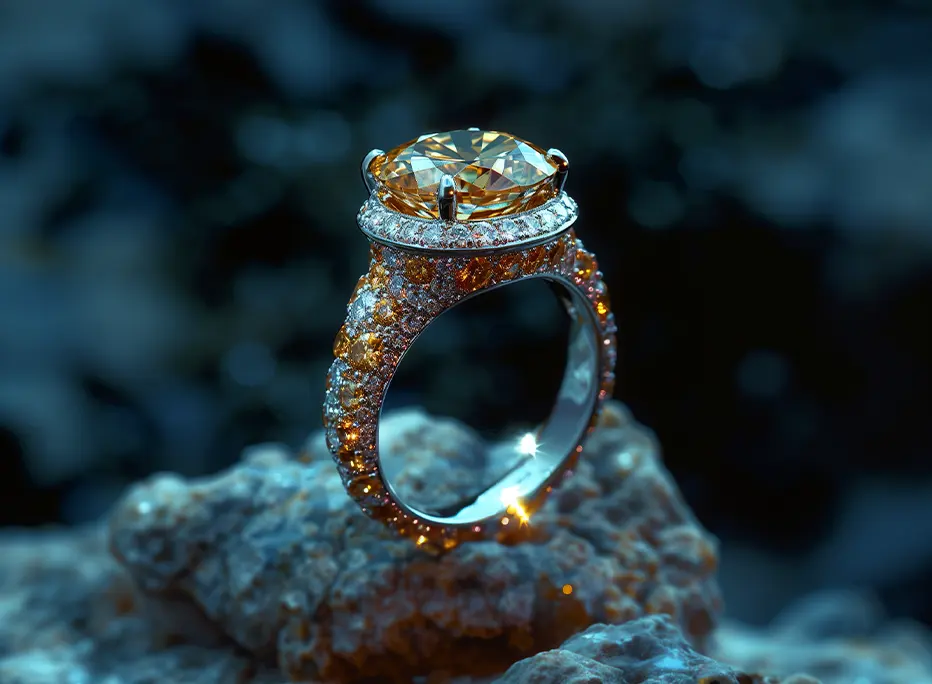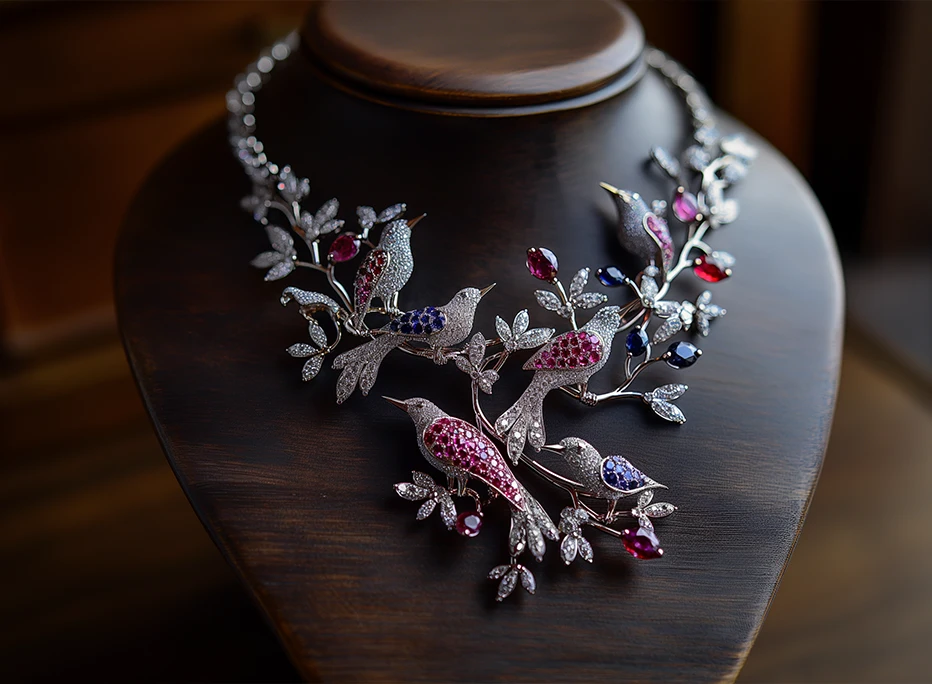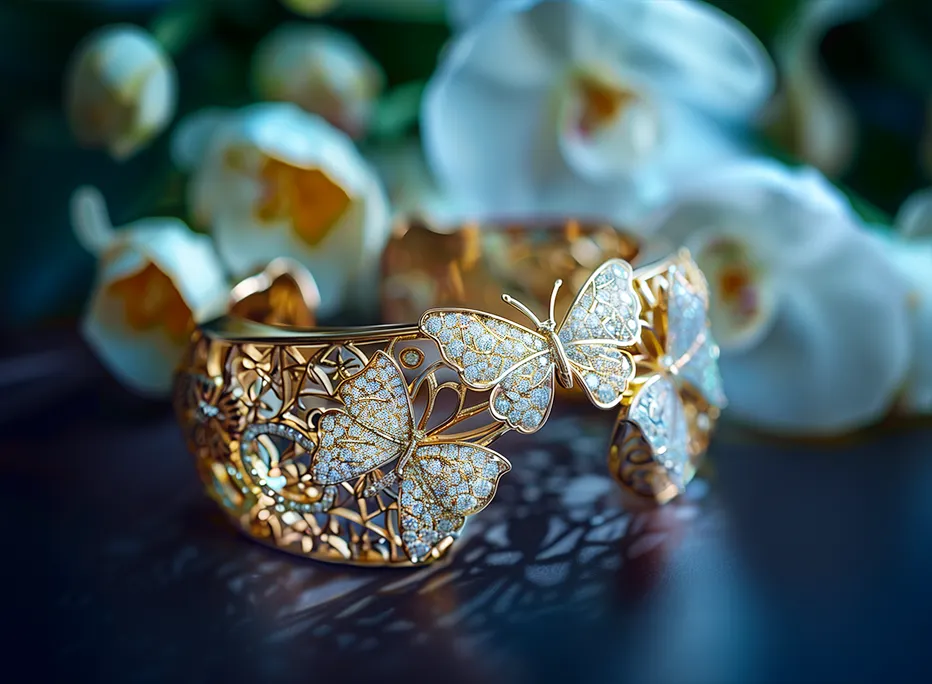



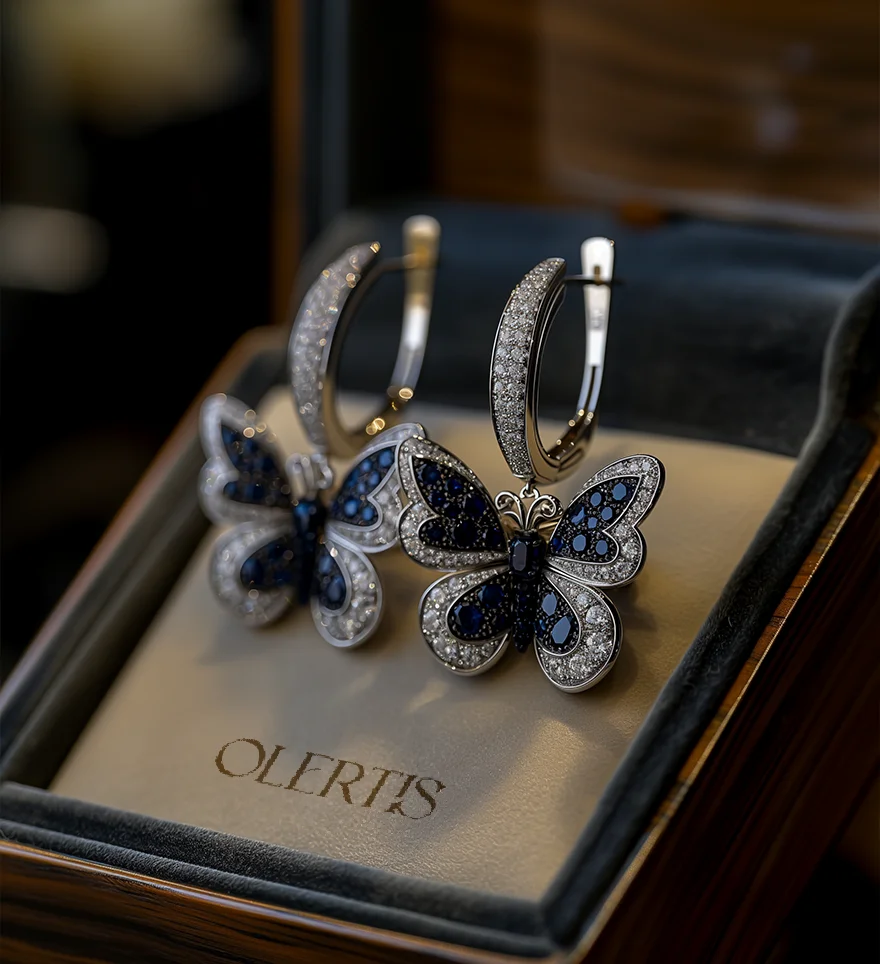
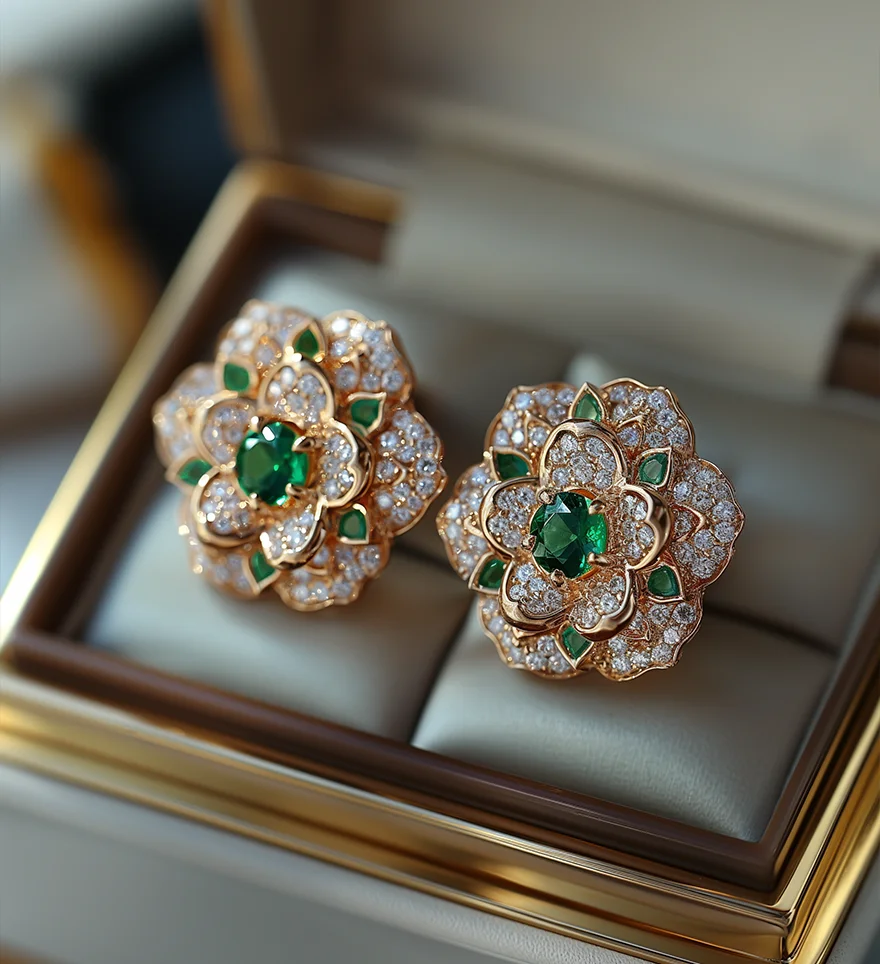









Earring Shapes and Styles for Custom Earrings
All aspects of your custom earring design should contribute to the whole — no unnecessary details.
As the earrings draw the eye to the wearer’s face, they can suggest lightness or drama, convey movement or stillness, and range from a subtle accent to the focal point of an entire look.
Earrings by Design: Custom Steps to Perfection
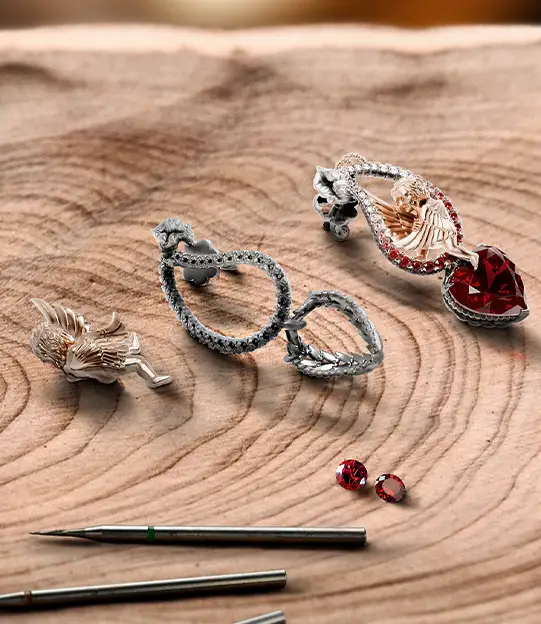
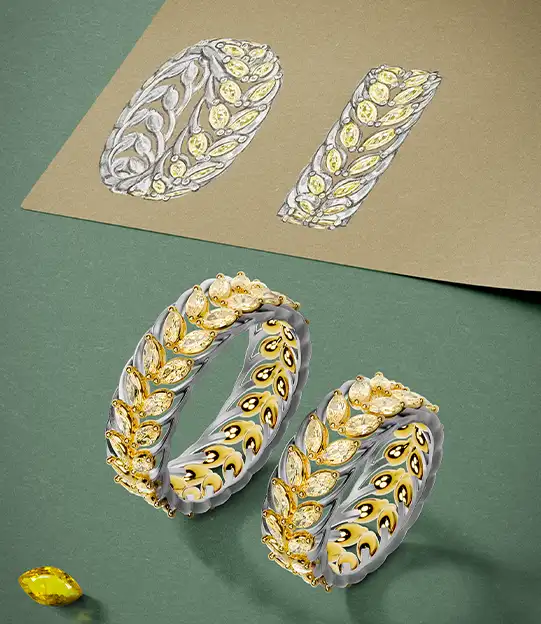
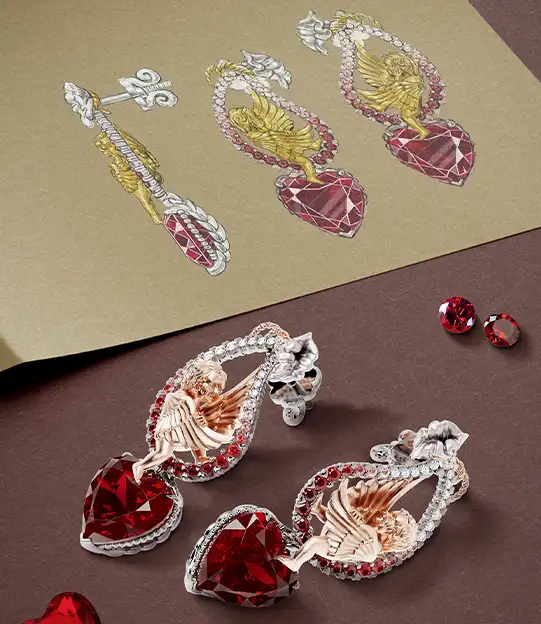
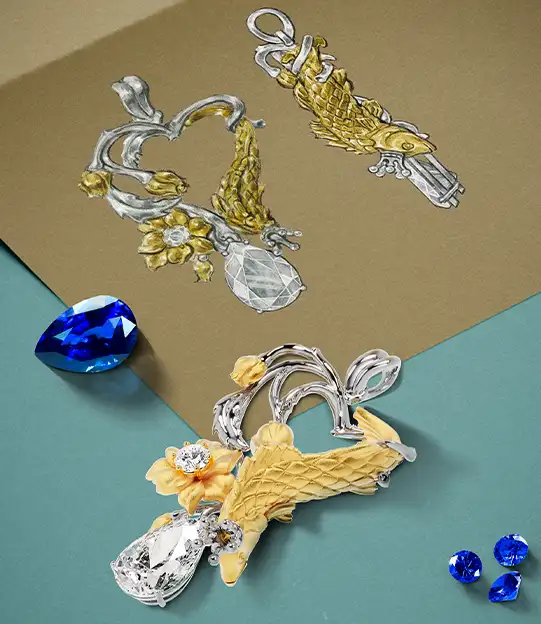
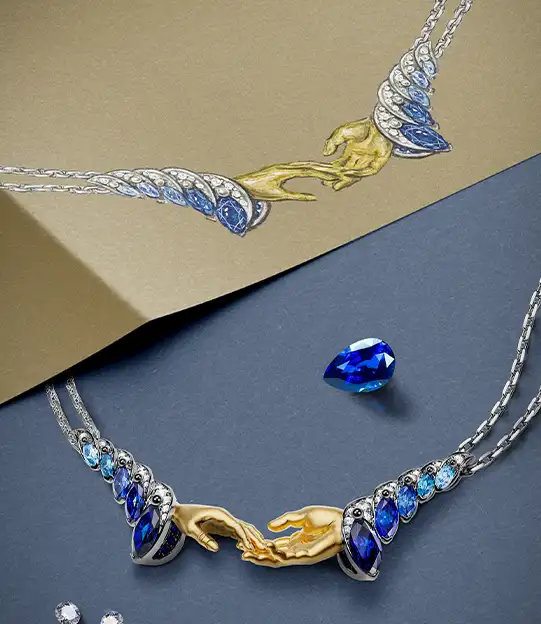
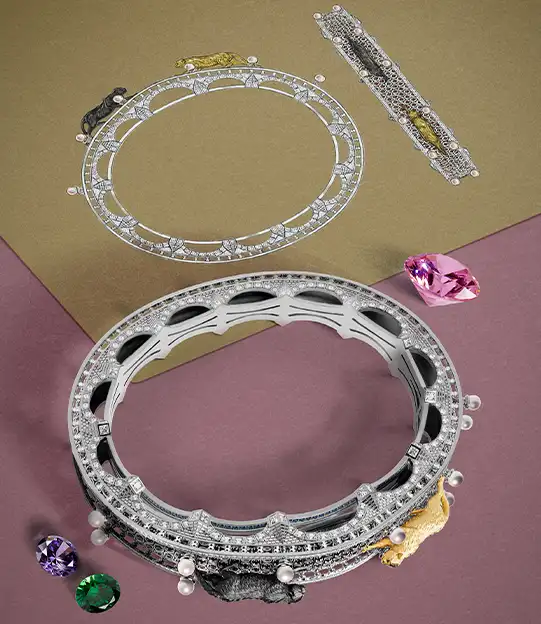
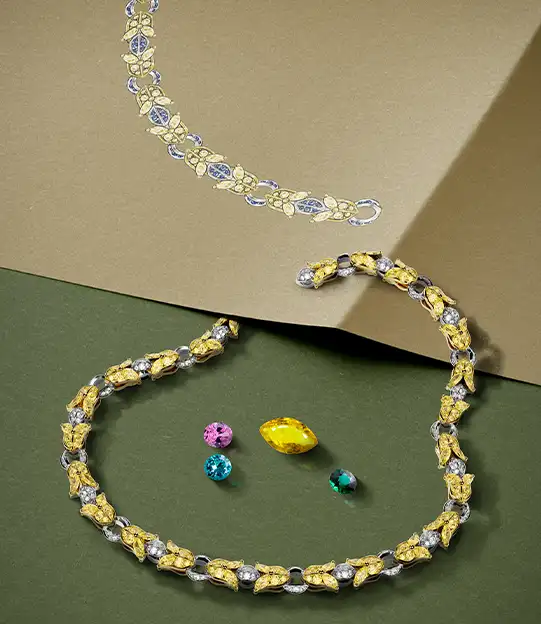
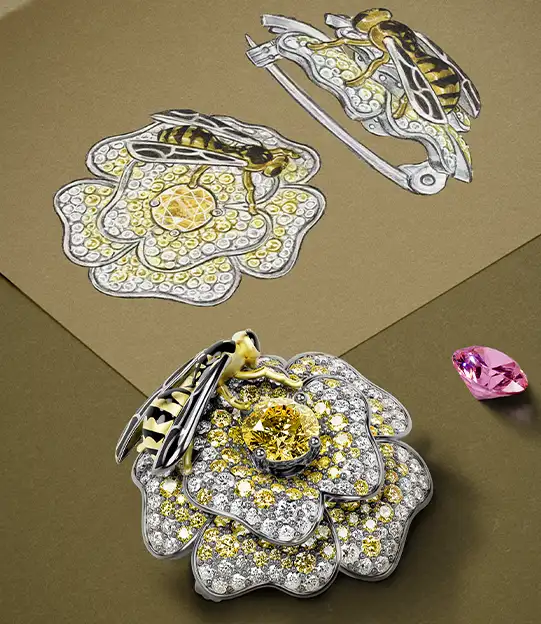
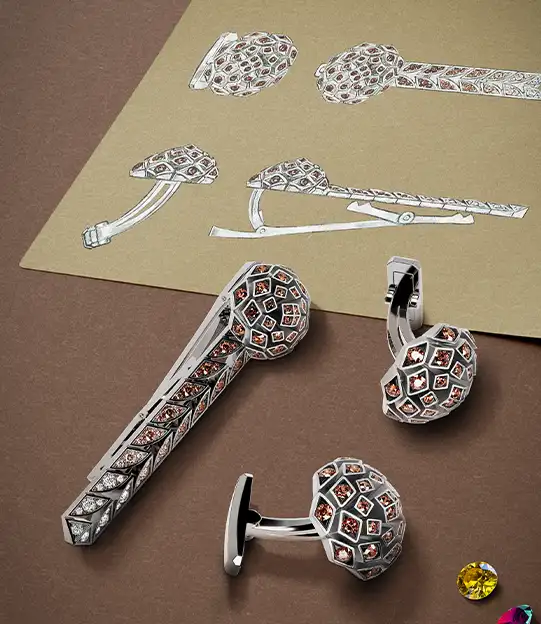
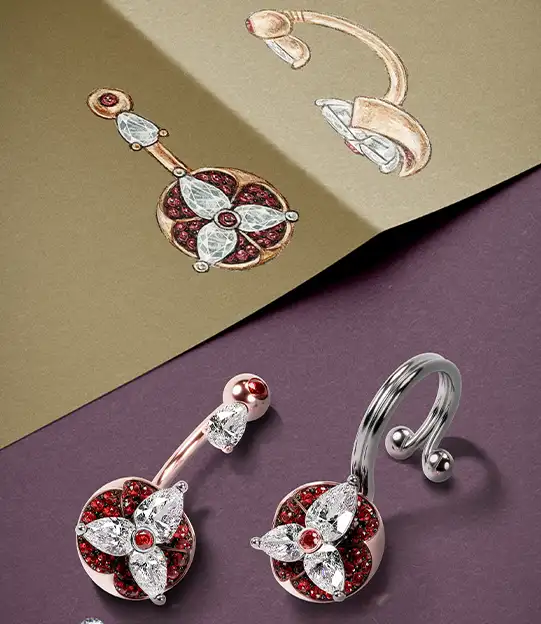
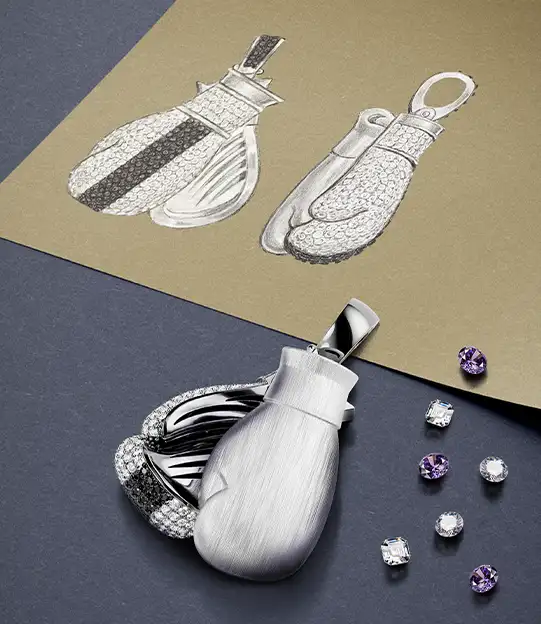
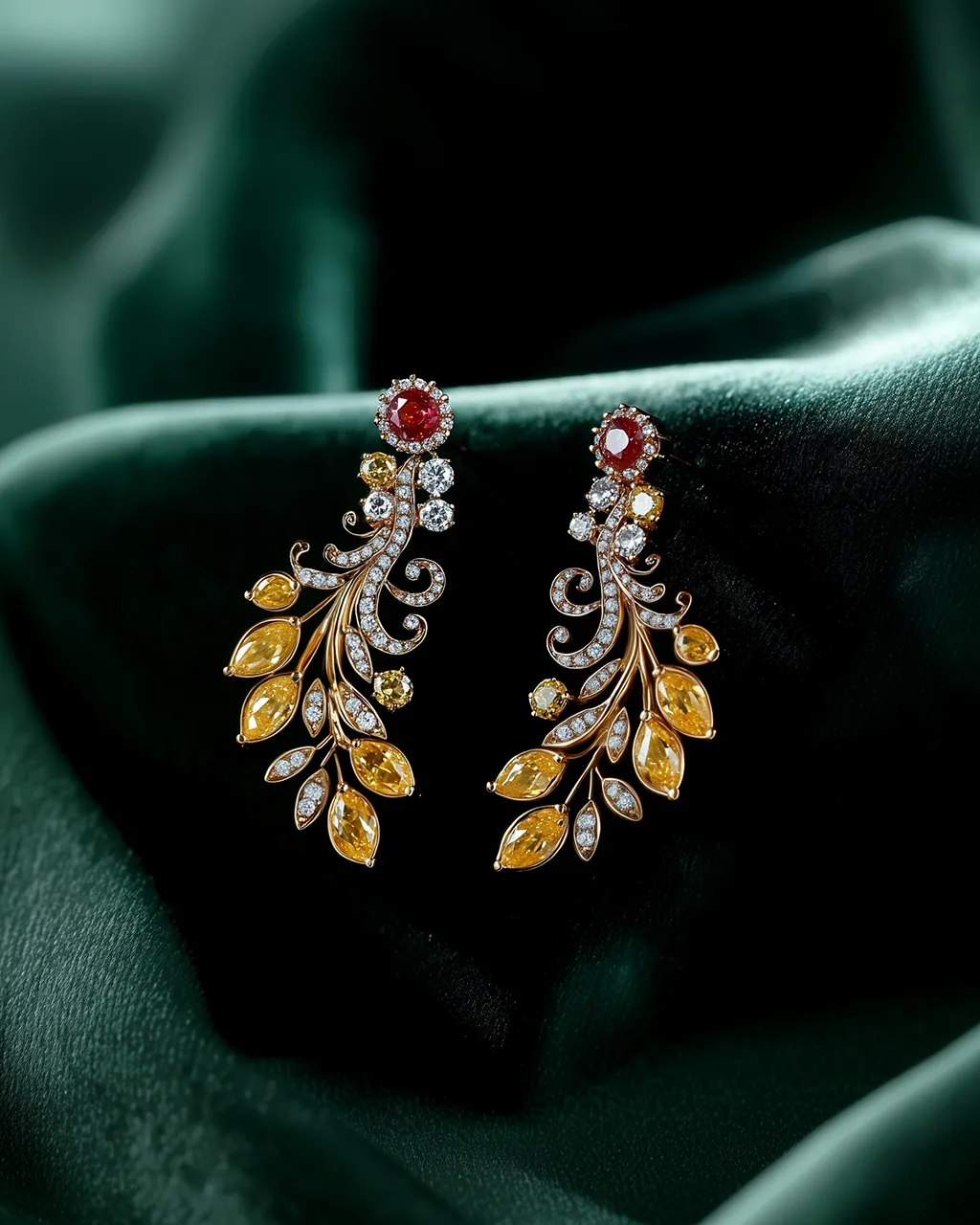
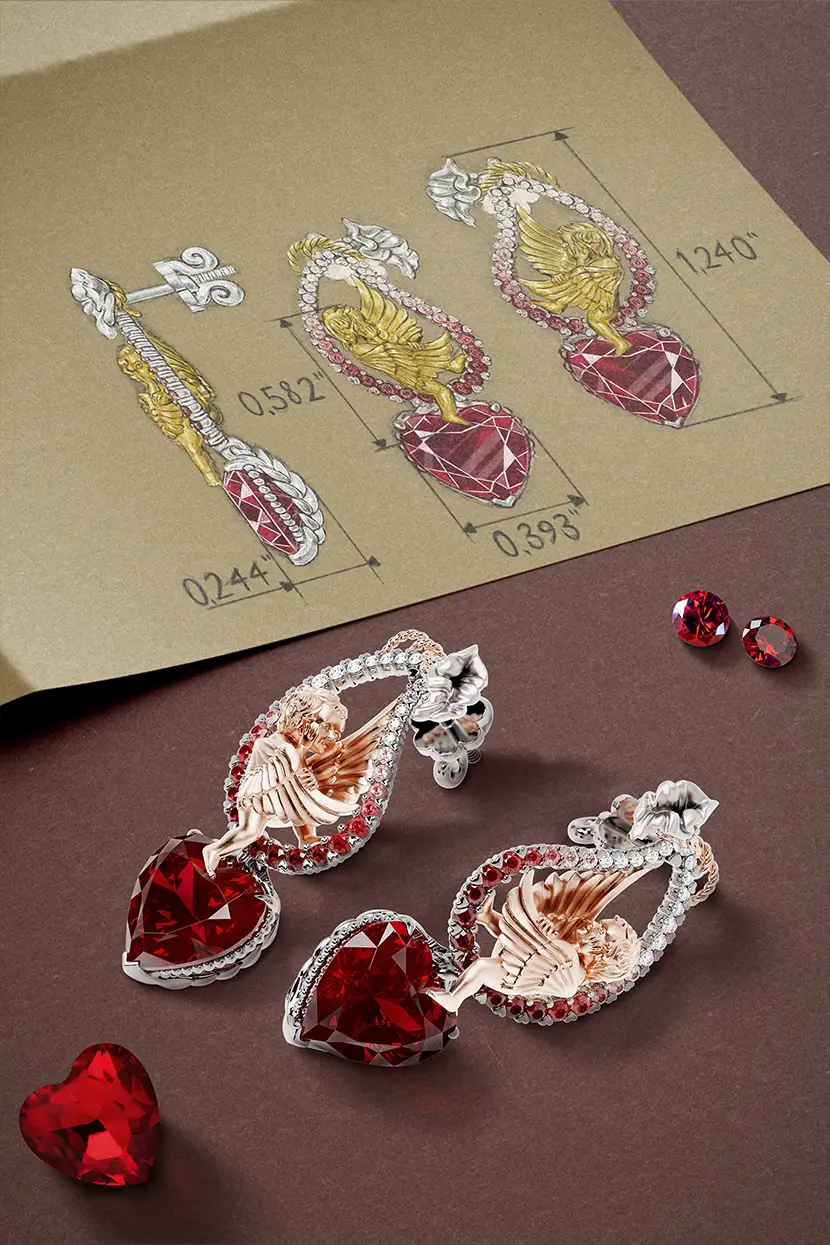
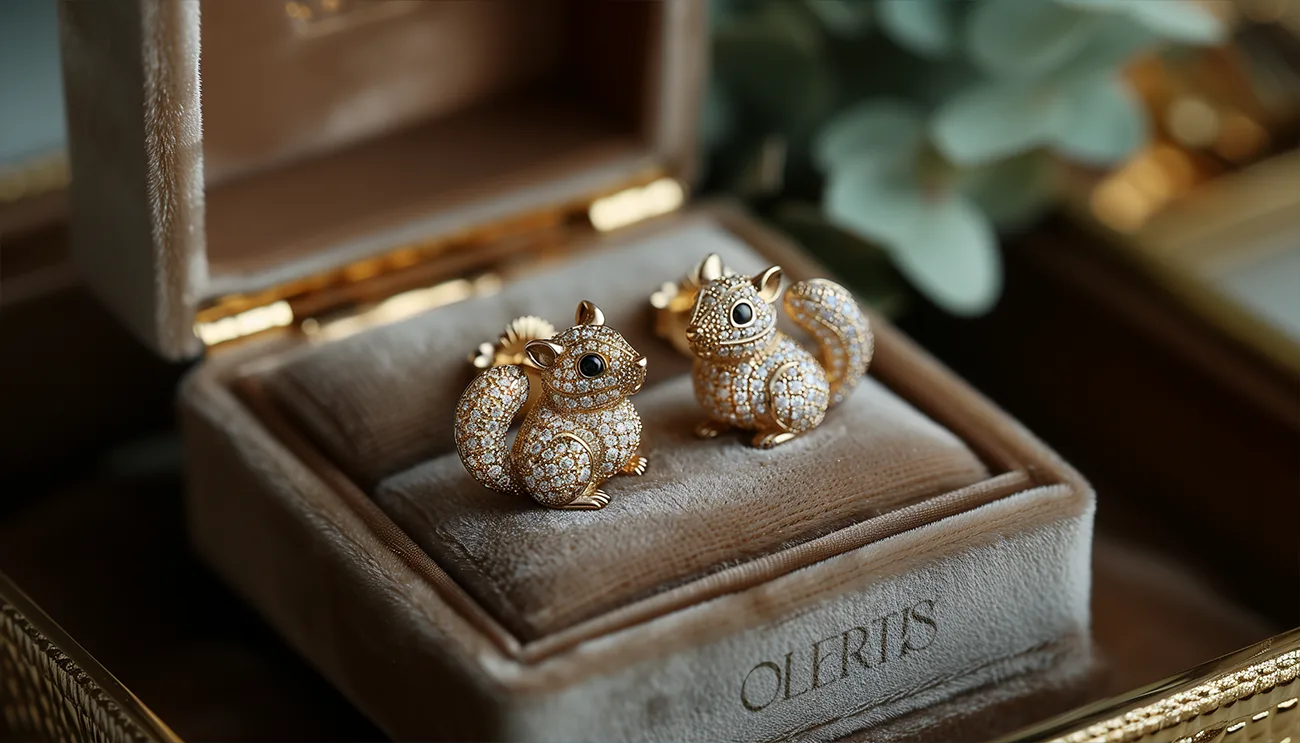
An idea may begin with something small and specific: a single element inspired by nature, an architectural line, a special gemstone, a symbol or emblem, or simply a color that suits you. Because earrings can accommodate miniature motifs, we can express an idea with remarkable precision. Also, since the earrings don’t necessarily have to be identical, subtle asymmetries can add character and personality to their design. Depending upon the style chosen (e.g., studs, hoops, drops, clusters, ear cuffs, ear jackets, etc.), there are many opportunities to develop your idea further.
Gemstones can serve as the focal point of your custom earrings or highlight specific details of the design. We’ll help you explore available stones and select those that best suit your vision, personal taste, and practical considerations.
We’ll take your personal style, wardrobe, face shape, and favorite pieces of jewelry into account to turn a general wish for “something unusual” into a more defined concept for your custom earrings. The goal is for you to feel and see that your earrings were made specifically for you rather than selected from the catalogue. If you would prefer to describe your ideas in your own words or share a sketch, photograph, or even an AI-generated image, we can use these as inspiration to help create the design for your custom earrings.
Earring CAD Balances Size with Wearable Weight
Functionally speaking, the type of fastener and how it attaches to the earlobe are just as much a part of the design of an earring as its physical form.
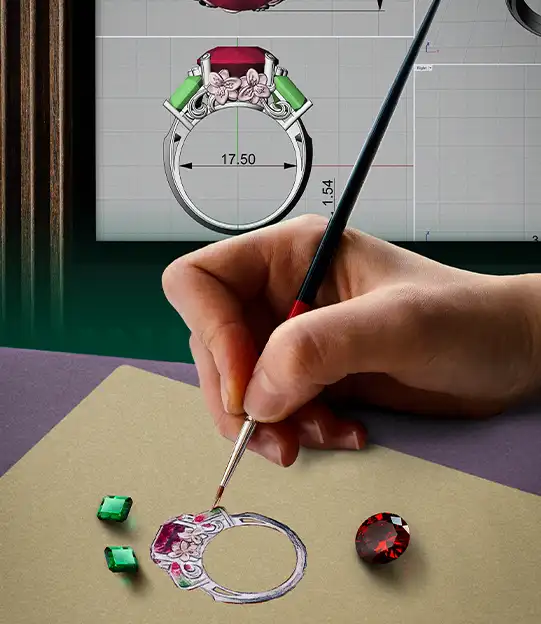
After establishing the basic characteristics and shape of the earrings, we use CAD tools to evaluate their visual balance based upon their total size and how their weight is distributed in relation to the attachment point and fastening system. This evaluation considers several factors including the location of the post or other attachment point, the center of gravity, the thickness of all components, and whether or not the two earrings are designed to be mirror images of one another. An earring may look lightweight in a rendering yet place excessive strain on the earlobe when worn.
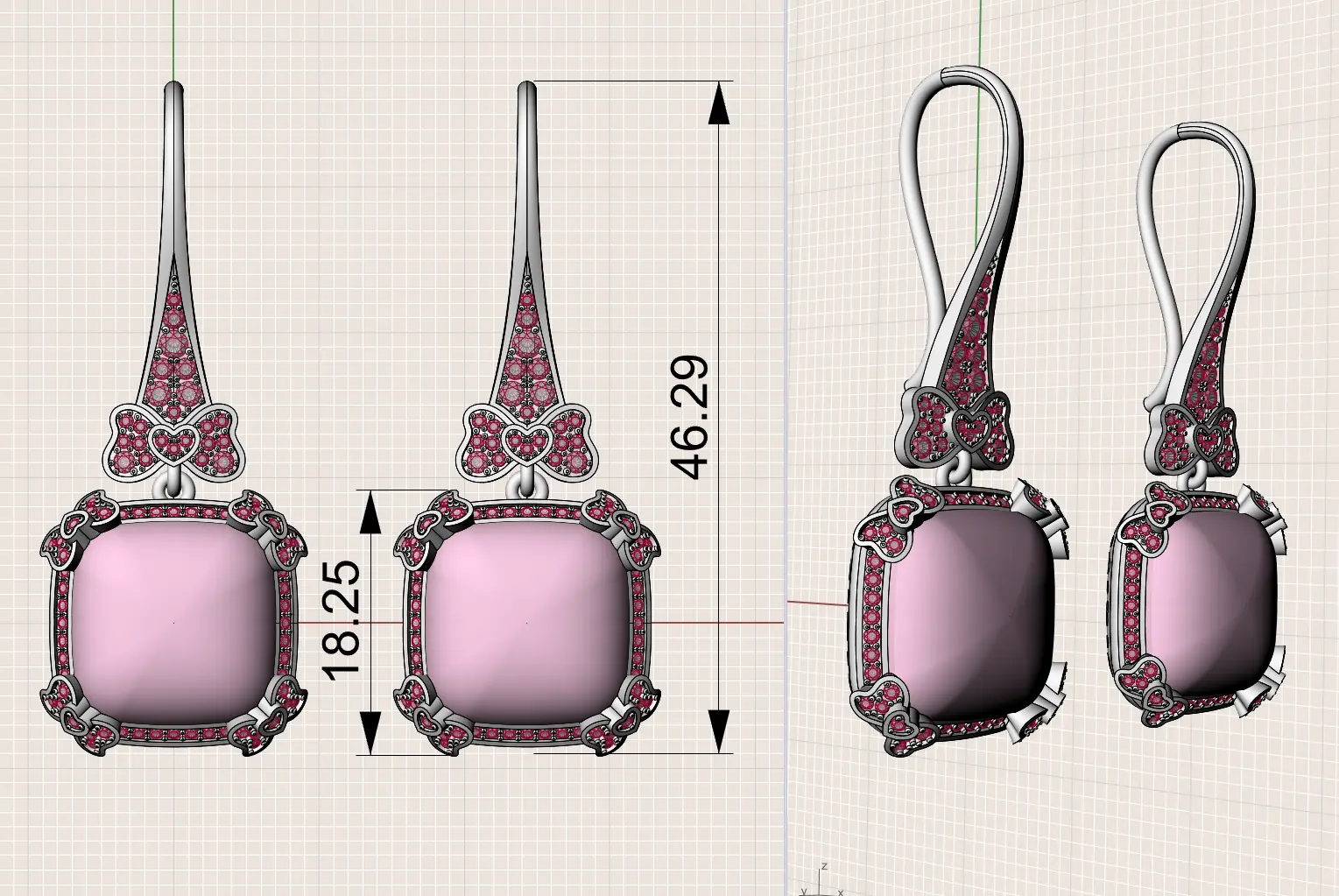
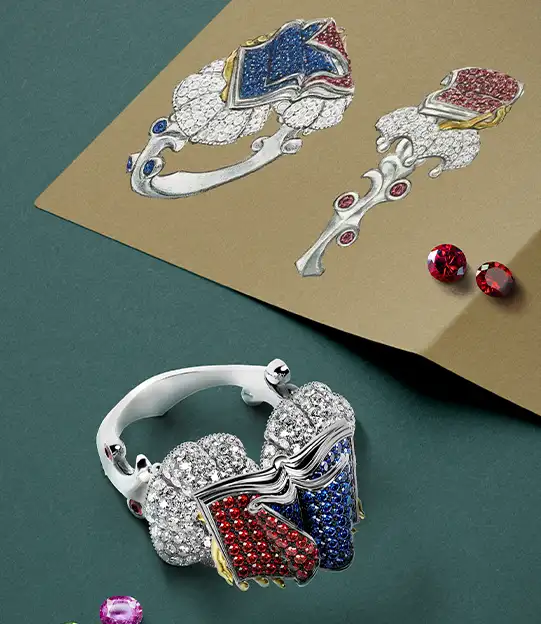
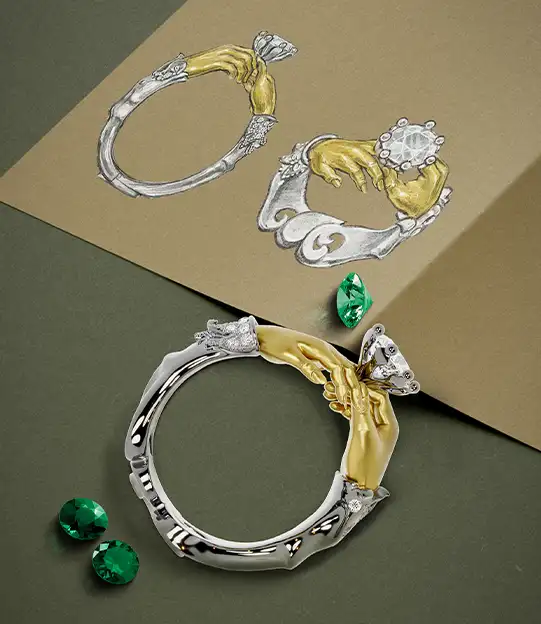
We continue to refine the interior geometry of each earring (including the stone placements); the attachment points (posts, hooks, clasps etc.), closure types (post-and-back, leverback, magnetic etc.) and thicknesses of all of the components so that we can maintain the aesthetic intent of your design while ensuring that the design is suitable for production. Just prior to manufacturing we will show you photorealistic 3D computer models of both earrings viewed from multiple sides so you can see the proportions.
Beyond aesthetics, choosing the right materials for custom earrings also means considering skin sensitivity.
Custom Earrings Use Skin-Friendly Metals for Sensitive Ears
For those with sensitivities to certain metals, the right alloy and surface finish are two crucial elements of the custom earring design.
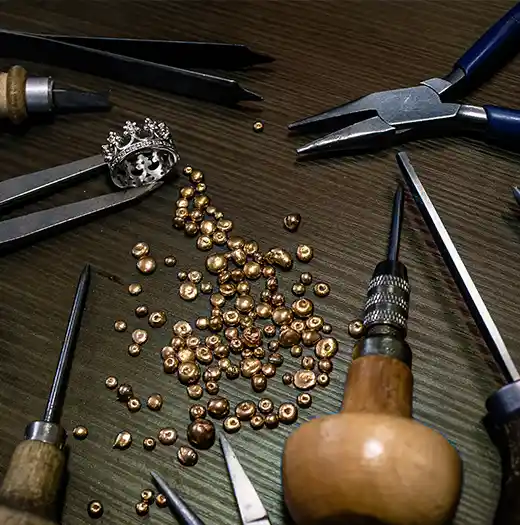
High-precision 3D printing produces casting patterns from the approved CAD models. The cast pieces are then finished and assembled, with particular care given to posts, earring backs, closures, and their attachment points.
We specify nickel-free alloys for skin-contacting components and pay close attention to their surface finish rather than relying on a general label such as “hypoallergenic.” For jewelry that touches the skin, metal purity alone does not determine suitability; the alloy’s full composition matters as well, and nickel is a common cause of allergic skin reactions.
For dangle or drop earrings with moving elements, we ensure that each component moves as intended. Gemstone placement and setting style are guided by your ideas and preferences from the initial consultation through the CAD design phase.
We examine potential back closure options and materials before assembling your custom earrings, carefully finish their attachment points, and remove roughness from surfaces that will continually come into contact with your skin. We check each component individually (including the stones in each earring where applicable) for smooth skin-contacting surfaces, proper attachment points, and securely set stones where appropriate. The finished pair is covered by our warranty.
When designing custom earrings, it’s important to consider how they hang, move with you, and feel against your skin.
Earrings Through the Ages: From Status Symbols to Fashion Statements
The earliest archaeological evidence from Asia suggests that earrings were around as far back as 7,000 years ago. However, the most famous and well-preserved ancient pieces were found in the pillar burial sites in Kenya dating back to 4,500 years ago, as well as the tomb of the Sumerian Queen Puabi of roughly the same period.
Earring artifacts were discovered in archaeological sites of almost every ancient civilization – Egypt, Mesopotamia, India, China, Persia, Minoa, Greece, the Roman Empire, and its successor, the Byzantine Empire, to name a few. Of course, in most of these cultures, earrings signified the high social status of their owners. At the same time, they were a symbol of the lower class in ancient Rome and Greece where they were worn by slaves and prostitutes respectively.
Some of the most interesting golden ear pieces dating back to the 1st century BC were unearthed in Africa, in the city of Jenne-Jeno in the country of Mali as well as in Rostov, Russia (the latter belonged to a high-status female warrior). There is evidence that some nomadic tribes used this accessory as a part of their wardrobe, for example, Vikings.
During the Middle Ages, the popularity of earrings decreased significantly due to the ban enforced by the Catholic Church in the 13th century. This is why most of the ear jewelry of that time was worn by vagabonds and pirates. The culture of the Renaissance era was freed from strict rules and gave way to humanitarianism. Therefore, earrings became fashionable once again among men and then women. You might remember a historical painting of William Shakespeare sporting a gold hoop earring. In the 16th century, men used these accessories to emphasize their social status. For example, it was commonly worn by sons of widows and the last representative of the lineage.
Fast forward to the 17th century, earrings became all the rage among rich women. It was then that jewelers came up with all kinds of earring designs from simple geometrical ones used to sharpen one’s features to chandeliers that visually elongated the face. In the next centuries, earring pieces became even more popular and diverse, eventually becoming affordable to almost everyone. Modern custom earring designs include hoops, studs, drops, teardrops, cuffs, threaders, wire hooks, clip-ons, shoulder dusters, tassels, clusters, danglers, leverbacks, and many more. Some of the most modern trends include mismatched and statement earrings.
Anthropologically speaking, earrings are often involved in religious rituals and rites of passage. For example, even to this day, they’re used to open divine sounds to the children of Brahmins in Hinduism. Similarly, such jewelry symbolizes coming of age in some African tribes. Most recently, teenagers often had ear-piercing parties in the 1960s and ’70s.
In today’s world of mass-produced jewelry, it’s a good thing that you can design your own earrings with Olertis based on your style and preferences. With our personalized earrings, you can make something meaningful that would serve to express your values or commemorate a special event or milestone in your life.