



The legendary Florentine Diamond, a 137.27-carat pear-shaped (double rose cut) yellow gem formerly thought to be lost to history, has been revealed now after a full century of mystery to be safe in a Canadian bank vault.
The stone which formed part once of the most famous royal treasuries of Europe, vanished from view of the public in those chaotic days following the World War. The diamond, which gemologists say is a citron-yellow, Indian-gem of peculiar multi-faceted cut, was last recorded in public prints in 1919 and was believed to have been stolen, recut or scattered broadcast and lost sight of in the years which followed its last appearance in public.

A faithful reproduction of the Florentine Diamond. Photo courtesy of Wikimedia Commons.
But new reporting shows a quieter fate in store: Empress Zita, widow of Charles I., Emperor of Austria-Hungary, secretly transported the Habsburg jewels out of Europe in the days of the World War and put them in safe keeping in Canada. She shared the jewels’ location with only two people—her children with Charles—and instructed that the jewels be mentioned only if an alliance was ever needed, a century after Charles’s death in 1922.
By the consent of the family members, who opened the safety deposit and allowed newspapers to inspect portions of the collection, this reserve of secrecy explains how the existence of the Florentine remained unknown so long. Experts, examining the stone, say that its physical characteristics agree with the historical accounts of the Florentine before mentioned. Christoph (A.E.) Köchert – the former imperial court jewelers in Vienna – has certified the gem to be genuine, after an examination of it. The Habsburg heirs state that the diamond will never be for sale, and they hope to deposit it with other jewels of the family in some public exhibit in Canada as a token of their appreciation of the gratitude felt for the assistance given to Zita and her children.

Vintage depiction of the Florentine Diamond from the Medici era. Photo courtesy of Wikimedia Commons.
This has already raised a question, however. Andreas Babler, vice chancellor of Austria and minister of culture, has announced that an “immediate review” will be started to discover if the Florentine should be considered a state possession and recalled by the government of Austria. The Habsburgs protest against this and strive to assure the world that they intend to leave the collection in Canada and at no time will they offer it for sale.

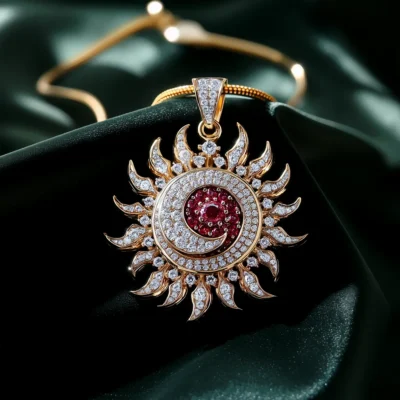
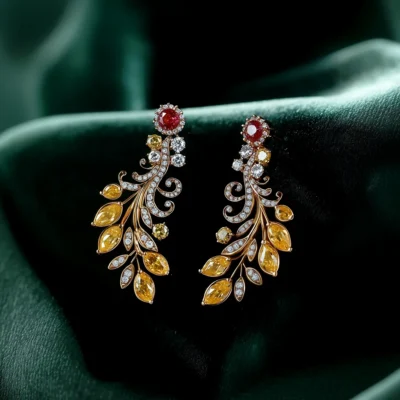
The Florentine Diamond’s reappearance closes a chapter of a century’s duration in one of the great mysteries of jewelry in modern Europe, and indeed opens another, or raises a new chapter, regarding the question: where is the proper place for historically important articles of virtue, with private heirs, or in national collections? For now, the gorgeous history of the jewel and the legal battle of ownership will be explored publicly, as preparations are being made for its proposed exhibition.