







The Staffordshire Hoard is the biggest Anglo-Saxon trove of gold and silver ever found in England. The treasure was discovered over 15 years ago in a village. A total of 4,000 precious fragments make up over 700 different objects, which is why it’s considered one of the largest treasures in history.
The hoard was initially found by a metal detector enthusiast and obtained by Birmingham Council through the United Kingdom’s Treasure process. Since 2009, the hoard has been studied by archaeologists, and many articles have been published in historical journals.
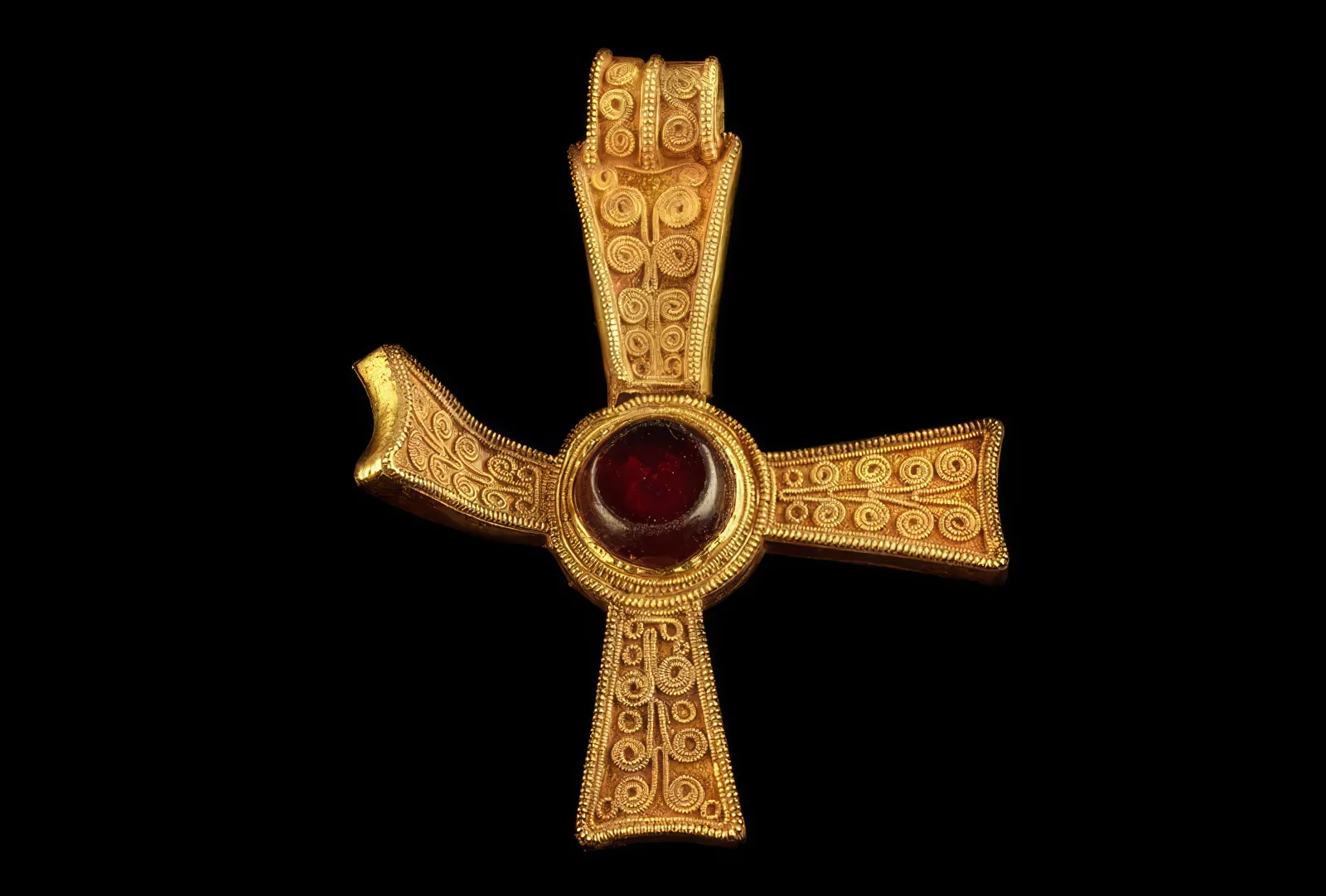
Of the 700+ pieces, only two remain almost intact: a well-preserved gold pectoral cross and a broken altar cross with jewels. Both are not only symbols of faith but also high status and prestige. Other finds are, unfortunately, fragmented and make up decorative weapon hilts, gilded ornaments from books, saddles, and reliquaries, as well as pieces of ceremonial adornment. Interestingly, a single decorated helmet accounts for over one-third of the fragments.
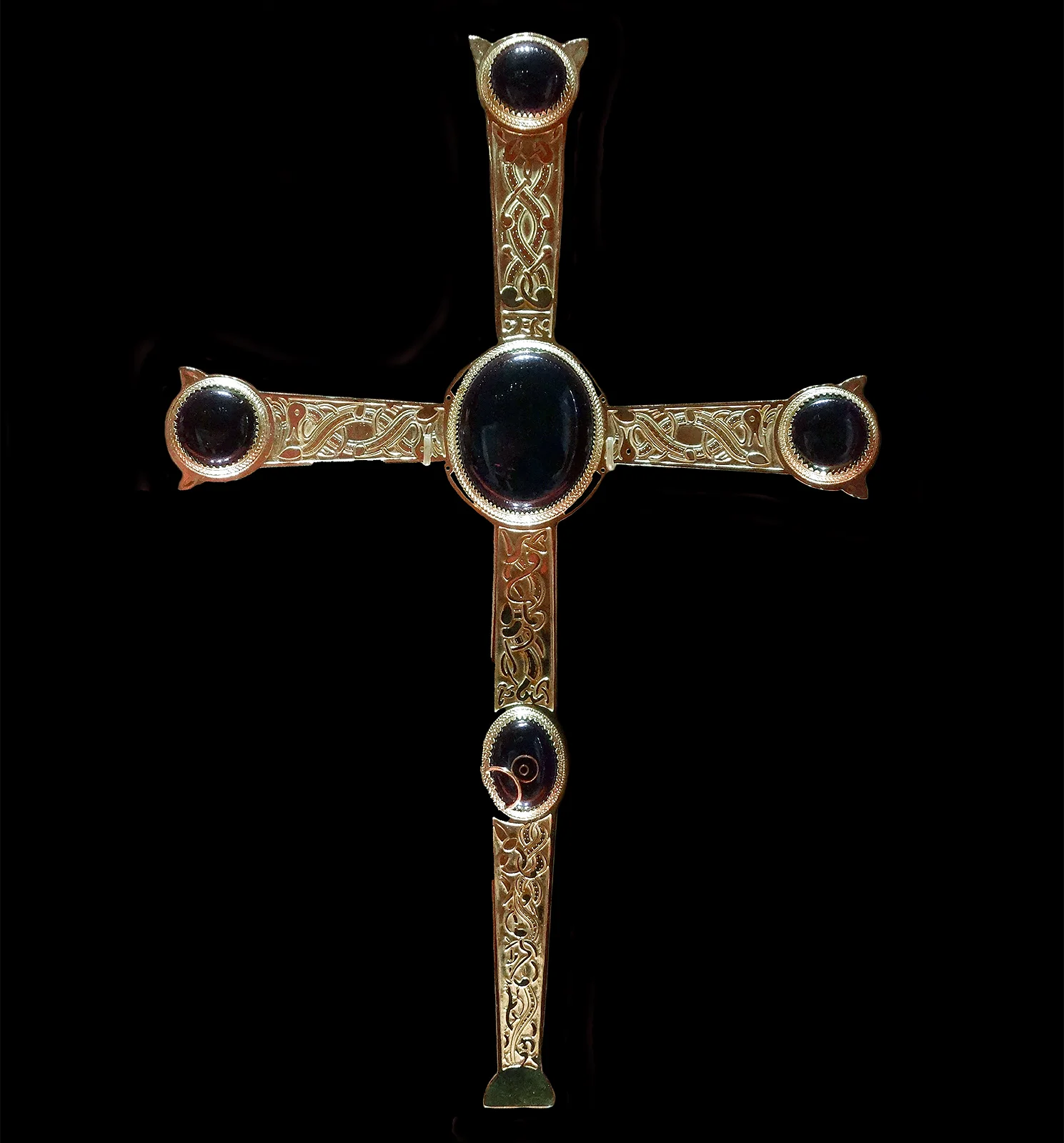
Most historians believe the artifacts to be from about AD 650-675, a period of intense struggle between Christianity and paganism. Archaeologist Chris Fern identifies four stages of production within the treasure. Some saddle furnishings and Christian fittings are so opulent they seem to have been created for kings, while others have rougher techniques and look more provincial. The hoard contains a lot of Celtic symbols, especially such animals as fish, pigs, horses, birds, and snakes. Many of them are still used in Celtic-themed custom men’s jewelry even now. These zoomorphic designs were either carved, stamped, or soldered.
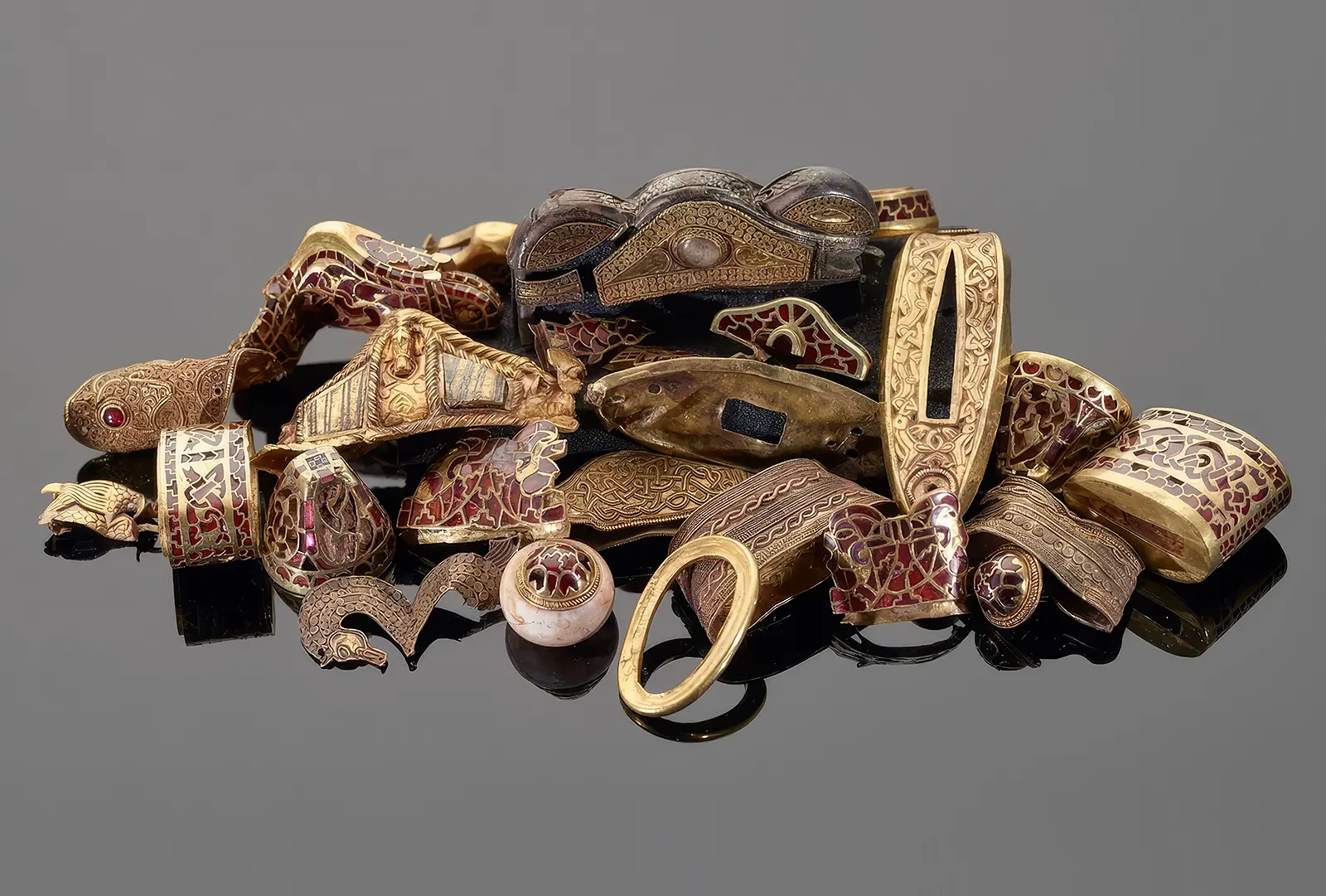
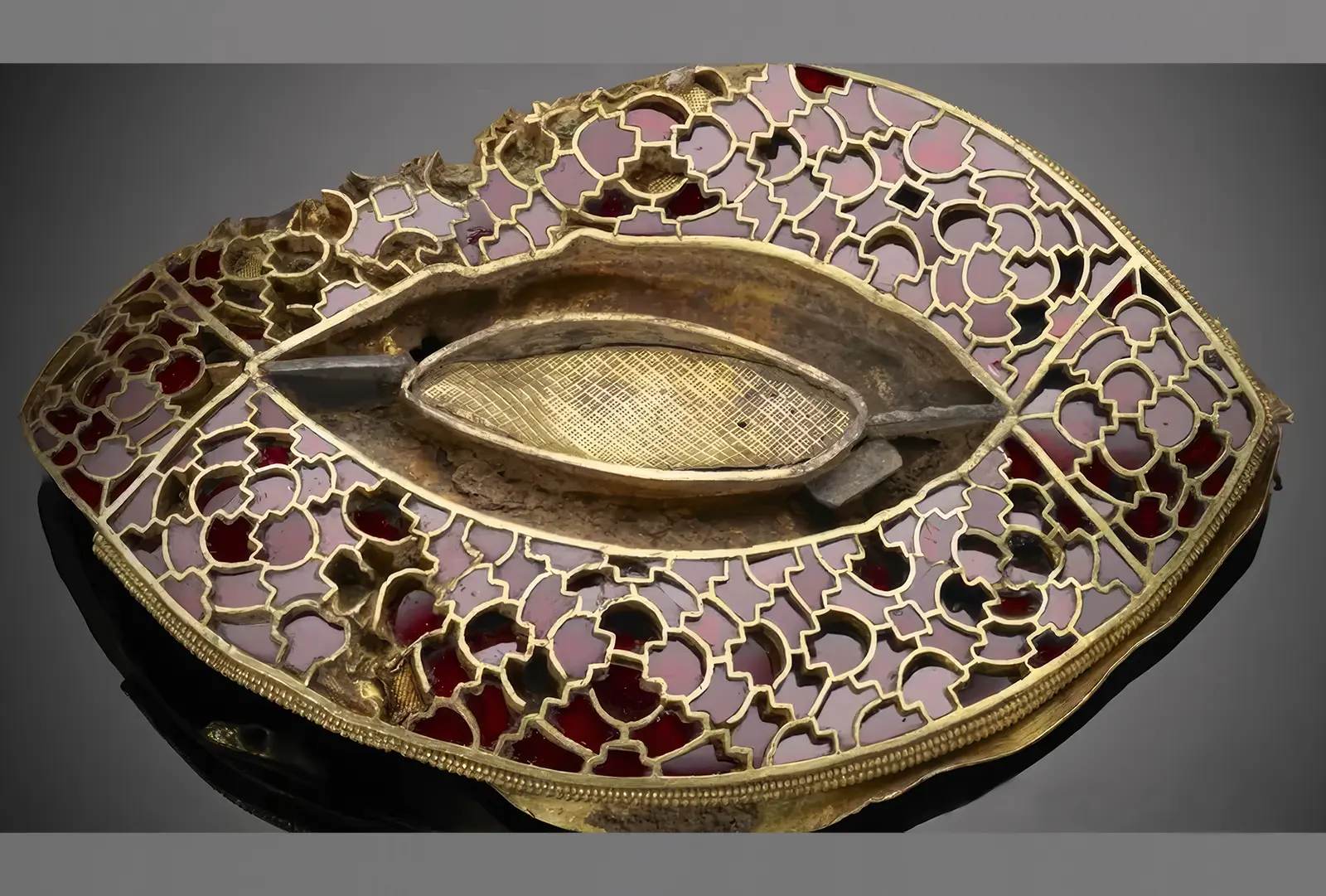
The most iconic feature of the hoard is its garnet cloisonné piece with red gems set in gold partitions. The technique itself originated in the Roman Empire and uses beeswax glue, gold foil filaments, and thinly cut garnet slivers. The treasure’s cloisonné fragments contain hundreds of garnets, each backed with gold foil and stamped in a waffle pattern.



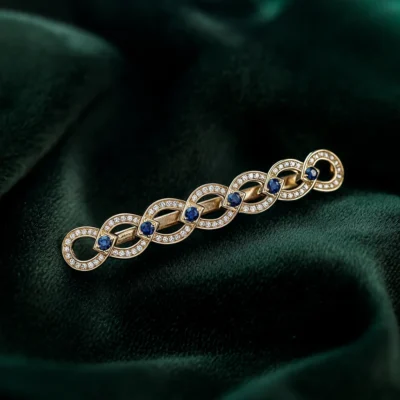


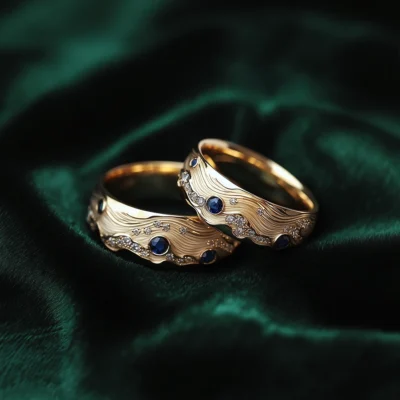
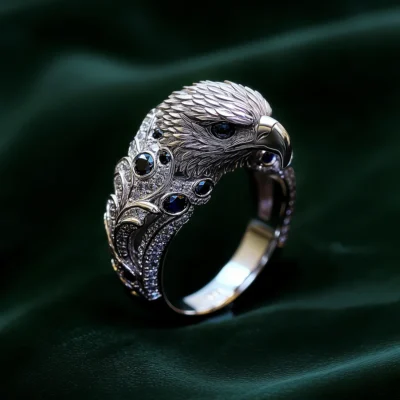
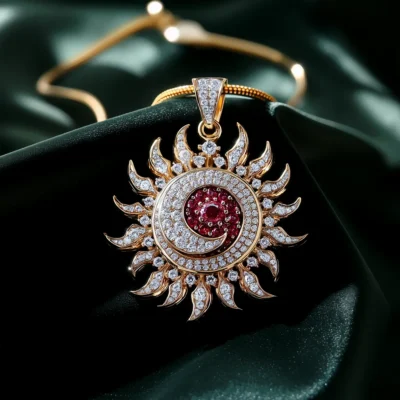
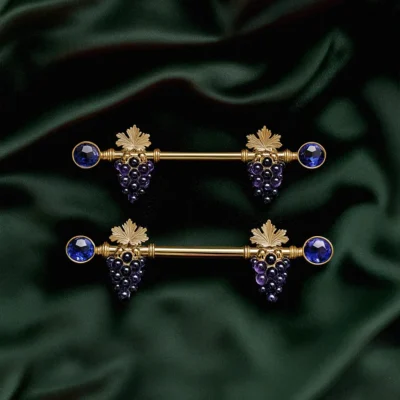
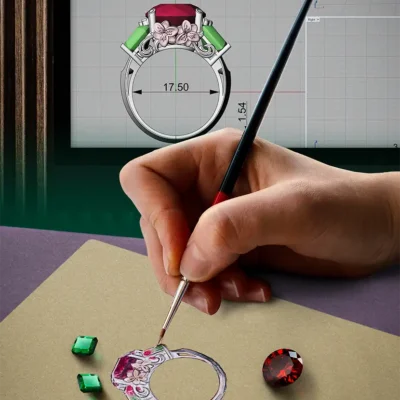
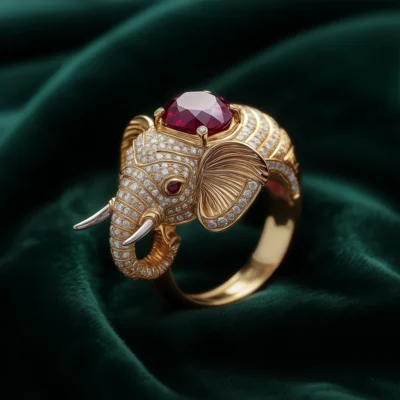
A delicate filigree technique where jewelers were twisting gold threads before soldering them into intricate designs was also used. Thanks to it, they could create dotted rosettes and spiraled scrolls. Finally, their ancient metalwork also included stamping. Scabbards, helmets, and ritual vessels were adorned with silver foils beaten into delicate dies with the help of a soft lead buffer.
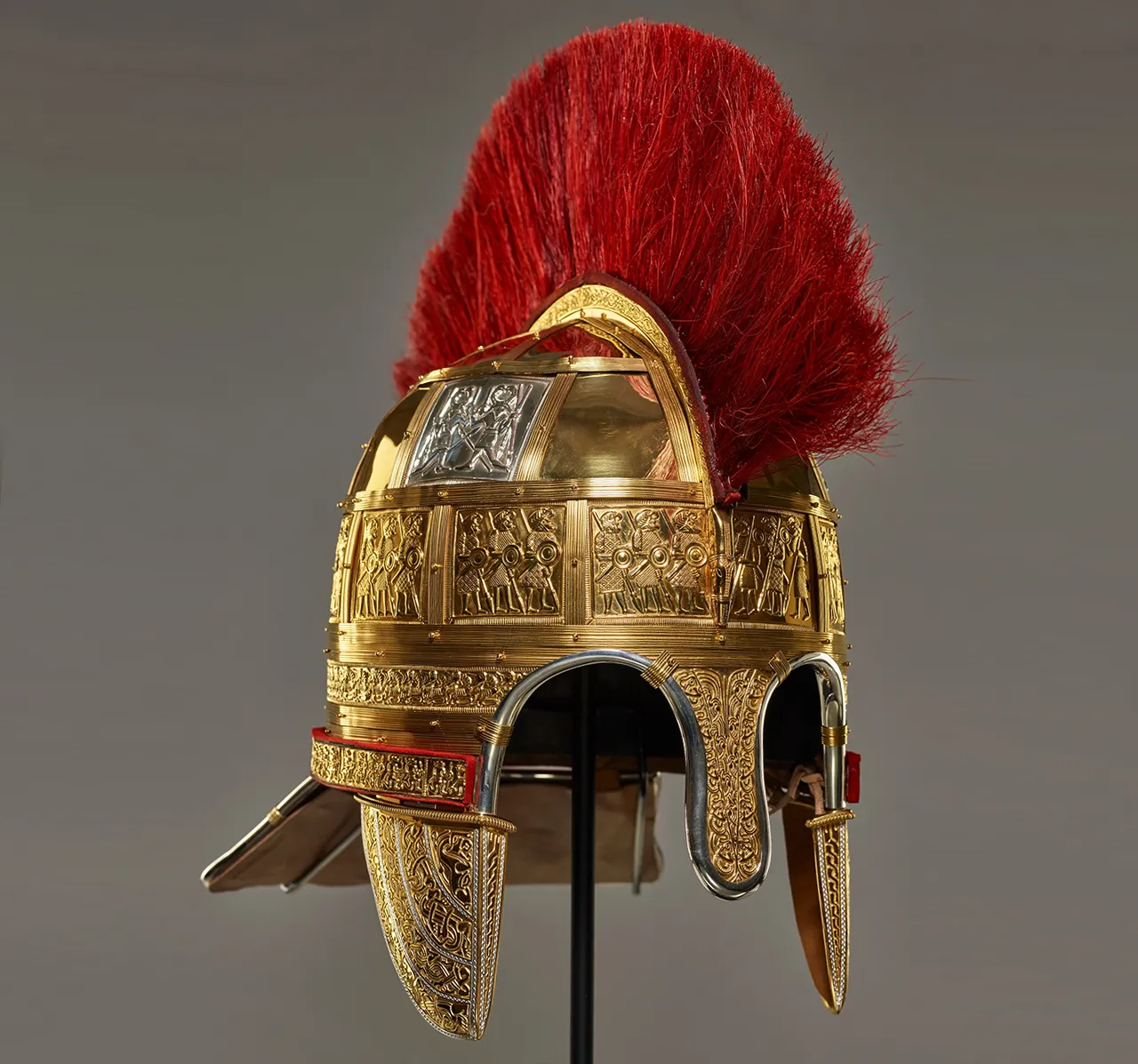
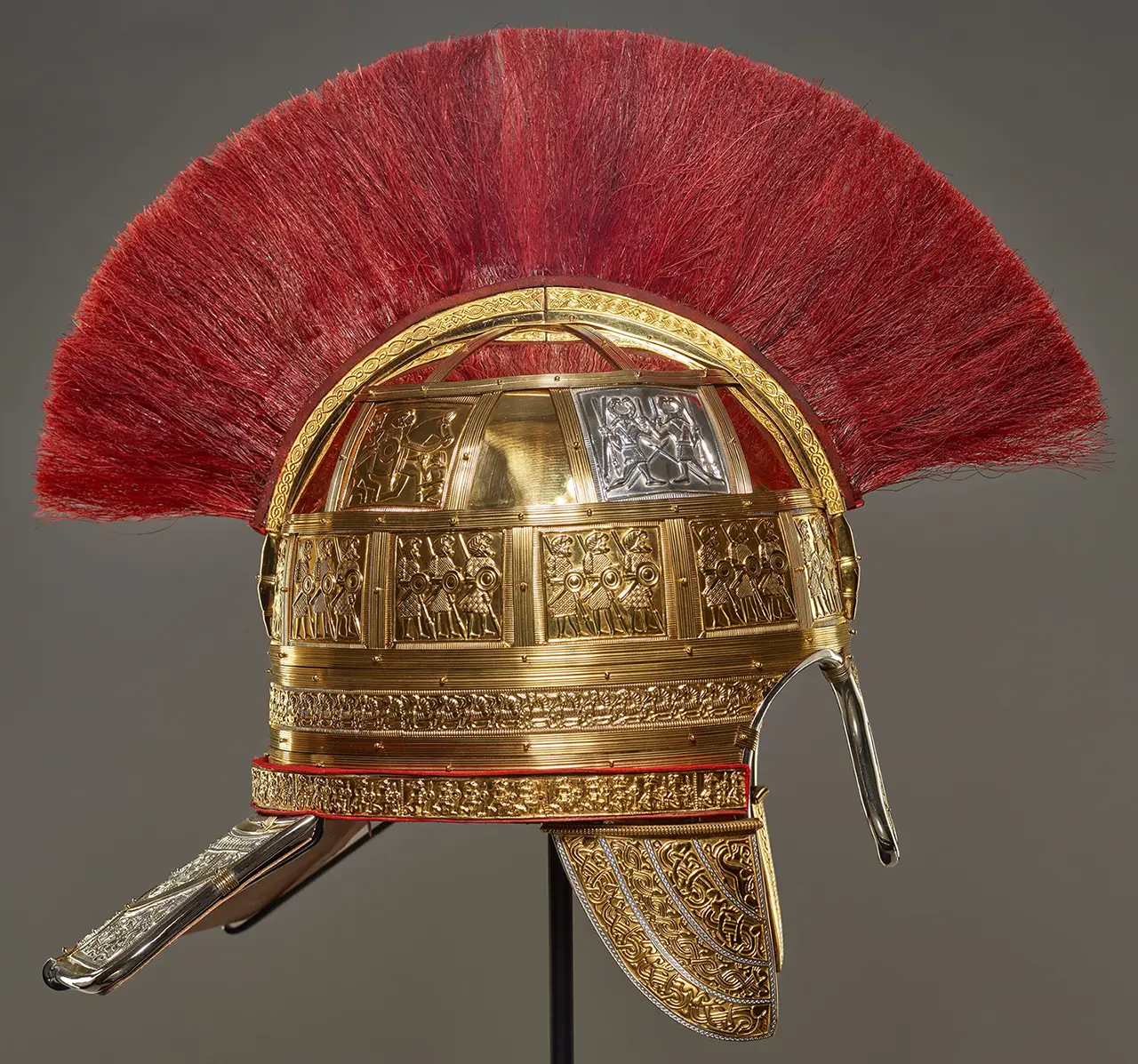
A meticulously reconstructed golden helmet from the legendary Staffordshire Hoard.
We may never know why the hoard was buried in the first place. The only thing we do know is that it was hidden during a period of spiritual and violent change. The defeat of King Penda in AD 655 gave rise to Christianity and marked the downfall of paganism. Many of the items in the hoard could actually have been war booty or presents obtained in conquest. Burying the treasure was most likely done for protection, so as to conceal the most valuable things during uncertain times. The mystery of the Staffordshire Hoard will live on forever as a symbol of early Christianity in England as well as simply remarkable works of art.