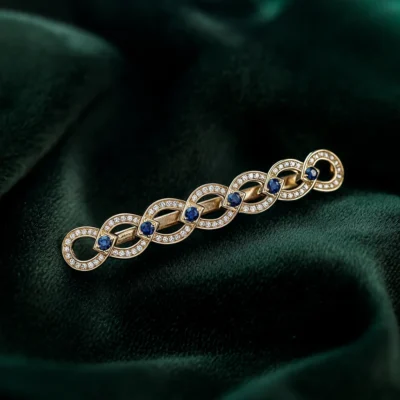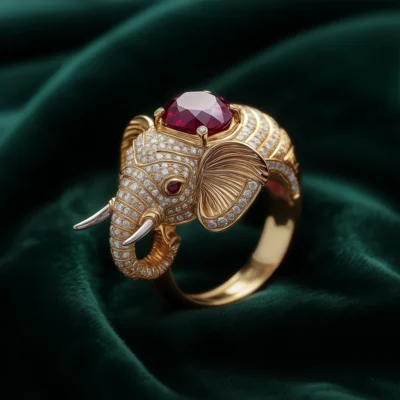





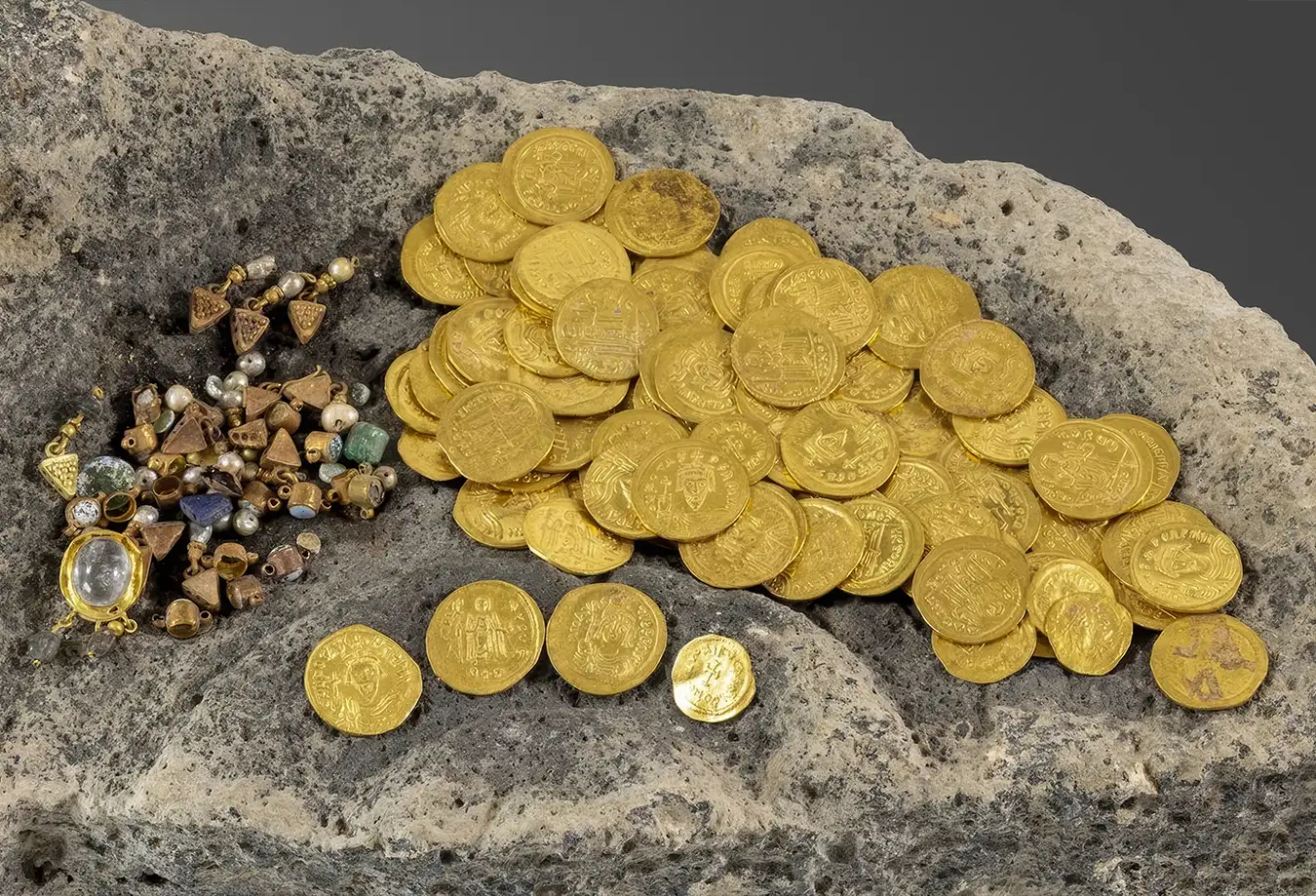
A unique and superbly preserved treasure from the Byzantine period was found by scientists in the old city of Hippos, which is located near the Sea of Galilee. This hoard is around 1,410 years old and has almost 100 gold coins (97, to be precise), as well as jewelry pieces featuring glass, pearls, and precious gemstones.
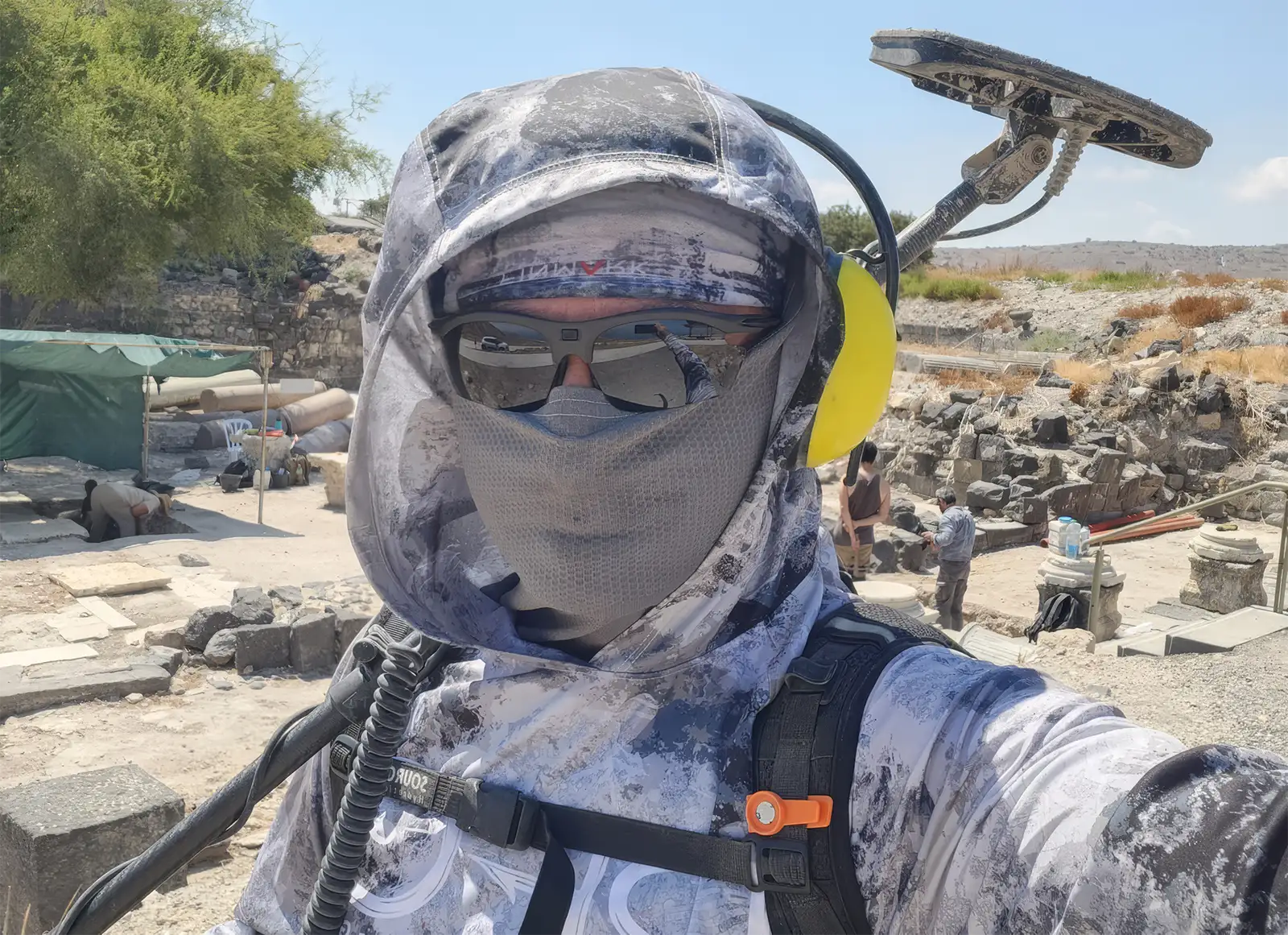
Edie Lipsman, a member of the Hippos (Sussita) Excavations Project’s volunteer team in the eastern Galilee.
Edie Lipsman made the discovery using a metal detector in July of this year. As she was walking between two ancient walls, her device started to produce a loud signal around a big rock. Edie remembers how the equipment “went berserk.” She says, “I distinctly remember how gold coins started to appear one by one.”
According to the lead researcher of the project, Michael Eisenberg, this gold stash is the first one of its kind in Hippos and also belongs to the top five biggest hoards ever unearthed. He points out how rare it is to discover coins in such a pristine condition, not to mention how lucky it is to find custom rings and other jewelry pieces in addition to the coins.
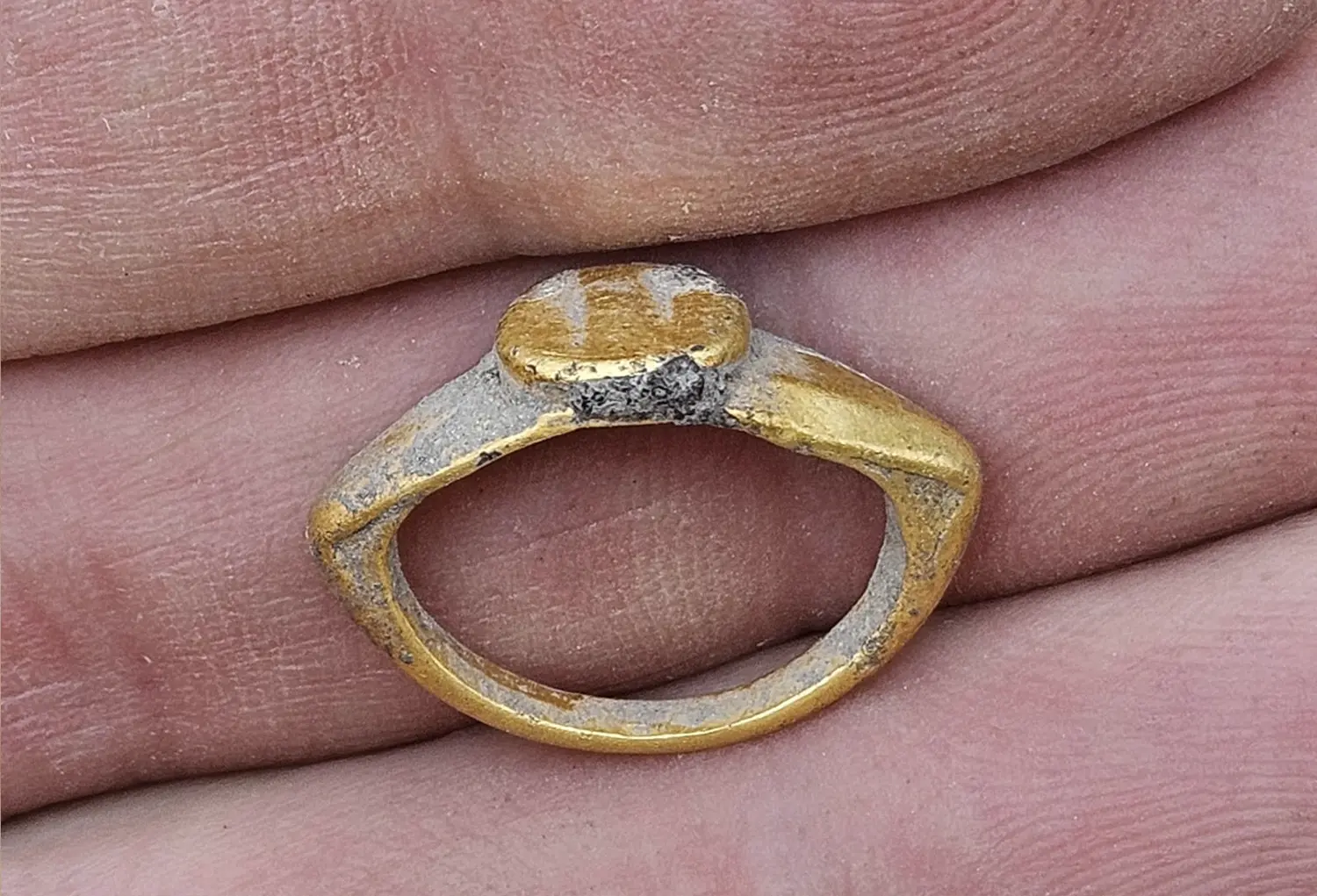

Some jewelry found at the excavation site. (Image credit: Michael Eisenberg)
Although we know that Heraclius ruled until the 640s, the coins were actually from more than one period: from the time of Emperor Justin I (518-528) to the 610s (the first years of Emperor Heraclius’s rule). Archeologists could still identify thread traces on several coins, suggesting that they were previously wrapped in some cloth. The hoard mostly included solidi (gold coins of high purity) and some coins of lower value, such as tremisses and semisses.
One tremissis especially stands out, which was probably struck circa 611 on one of the islands in Greece. The tremissis honors the memory of Heraclius and his heir. The two heroes were involved in an uprising against Emperor Phocos. After the victory, Heraclius Jr. gave rise to the whole Heraclian dynasty, which lasted until around 710.
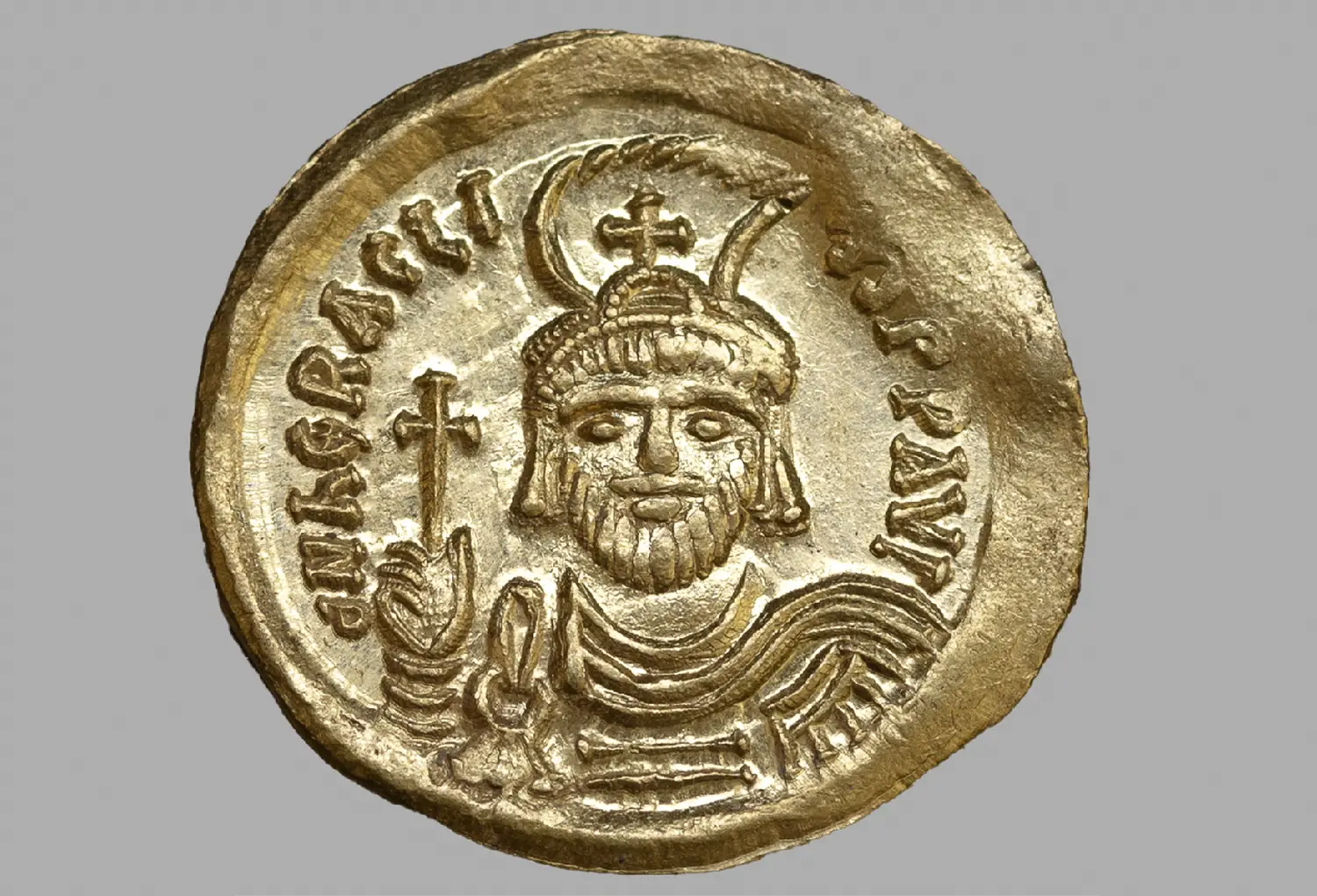
One of the gold coins found in the archaeological excavation area at the site of the ancient city of Hippos. (Image credit: Michael Eisenberg)
Like many other Byzantine cities, Hippos was enmeshed in constant fighting. In 614, the army of the Sasanian Empire invaded Palestine, forcing the local people to hide their valuables as Christian towers and strongholds were under siege. Muslim forces regained control over the area in 636, and the Byzantines took the region 15 years later. But in 749, after an unfortunate earthquake in Hippos, the city was eventually abandoned.
According to Eisenberg, the 7th-century hoards are quite popular, as people from that period often hid their bronze and gold possessions in stashes to prevent losing everything in case of an invasion.
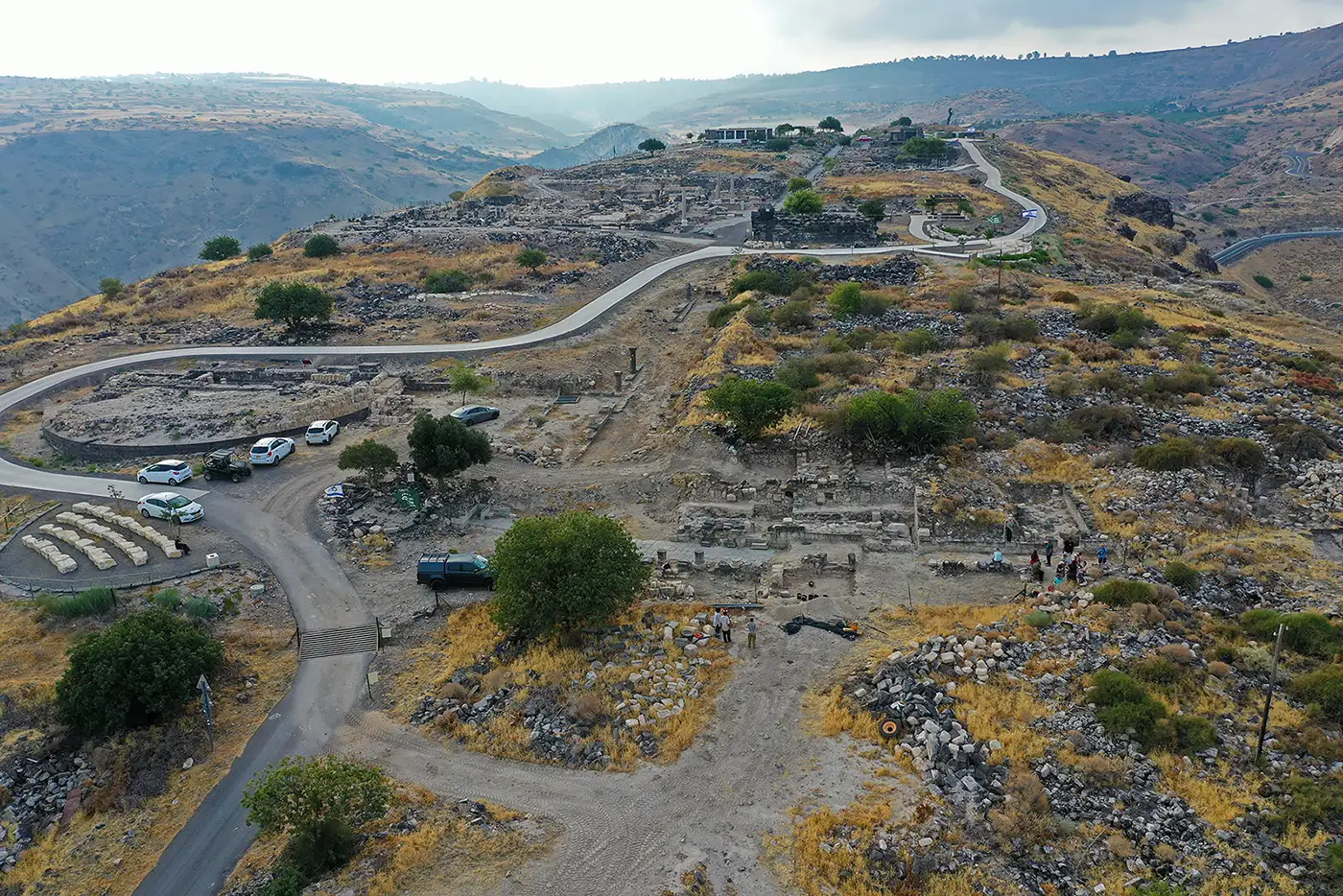
The main archaeological excavation area at the site of the ancient city of Hippos. (Image credit: Michael Eisenberg)
Danny Syon, the main coin specialist working on the project, brought to our attention the great significance of the find, arguing that it adds some details to the long-forgotten history of this period. The researchers will examine the artifacts and try to analyze the discovery within a more general historical context.
Although there is no exhibition planned in the nearest future, Eisenberg says, “I can imagine that many museums and galleries will be interested.” The Olertis team hopes that quite soon, the coins will be on general display for the public to see. After all, valuable historical artifacts are bound to be shown in museums, to remind us of the wonderful past of ancient civilizations.