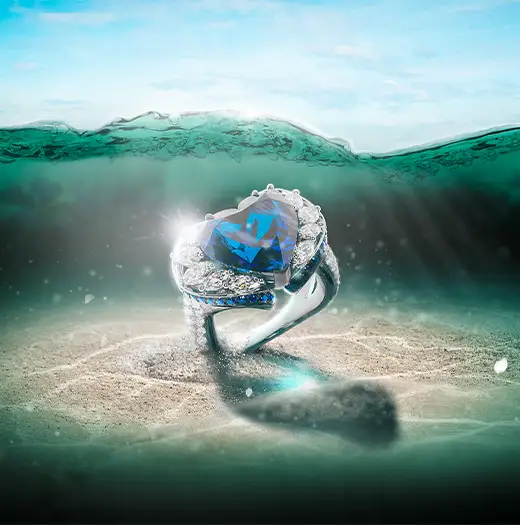








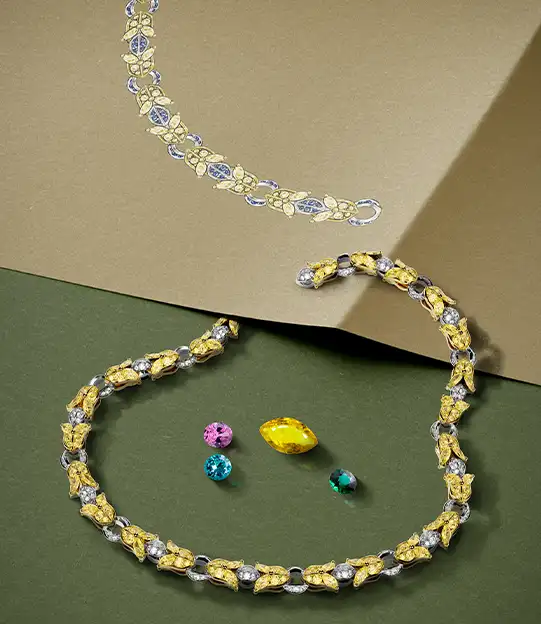






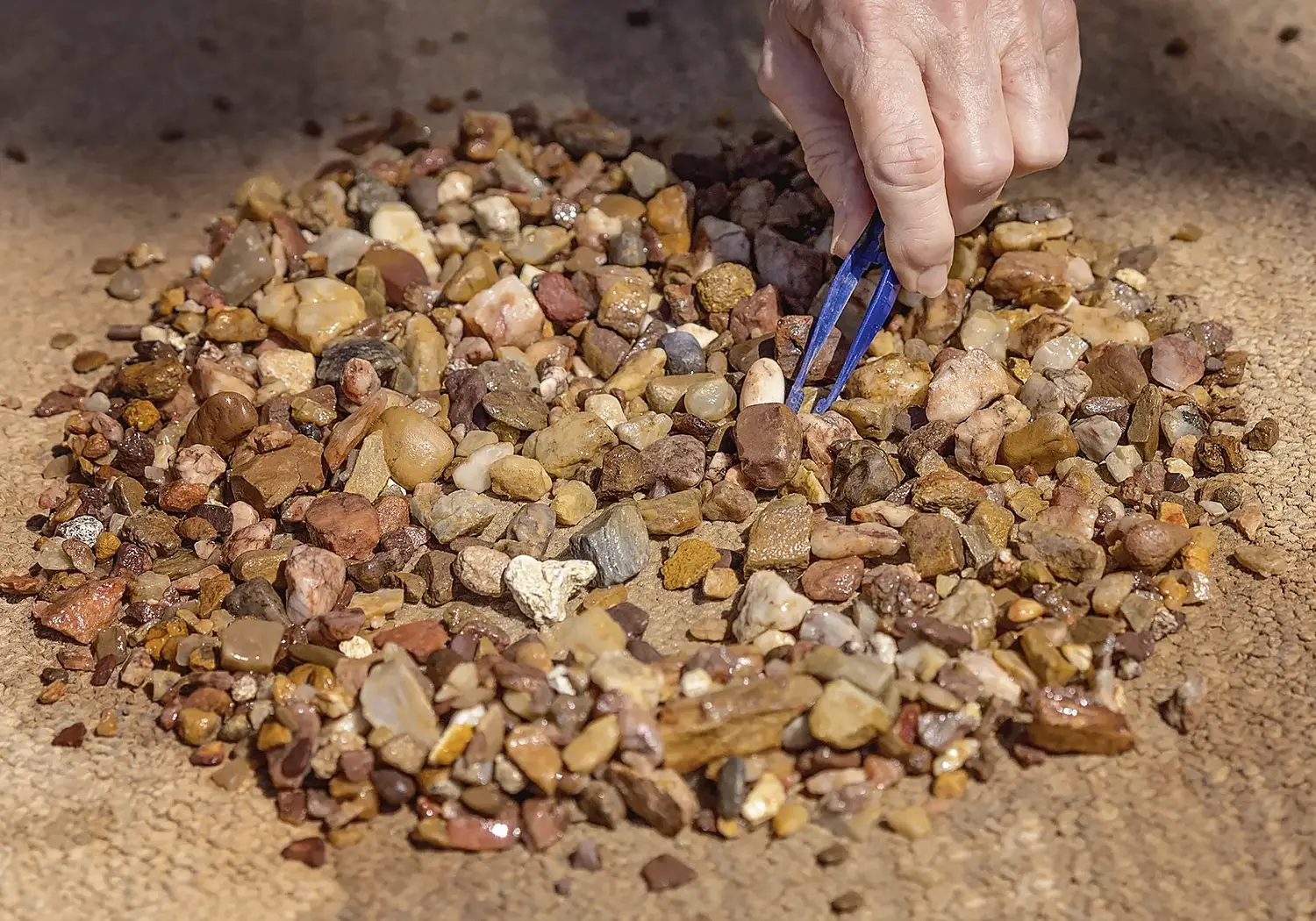
If you thought that sapphires can only be of a clear blue color, you’re hugely mistaken. Especially if you are looking at sapphires mined in Montana. They can range from earthy moss to denim color, from murky blue to light brown, or even pink.
Just recently, the attendees have had a chance to see the places where the legendary gemstones are born. The wholesale gem retailer Potentate Mining held a small showcase event for jewelry designers, shop owners, and other specialists working in this field. The venue was at the Rock Creek, and the main collaborator was Parle Gems, a famous jewelry designer and seller. The event is their second yearly Showcase in Montana, and apparently, the gathering becomes only more and more popular as time goes by.
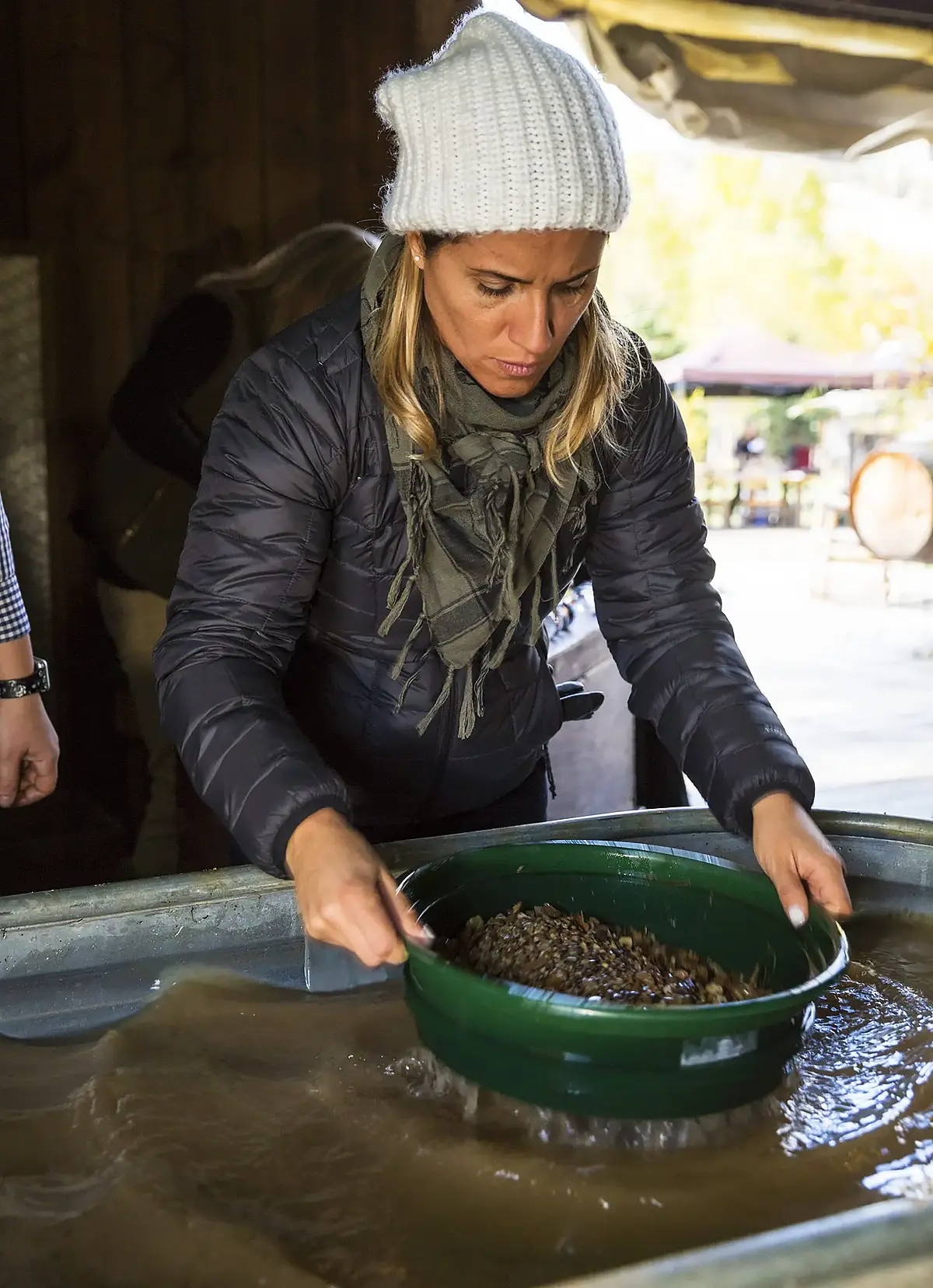
Specifically, the team met in Philipsburg, Montana, which is somewhere between the Glacier National Park and Yellowstone (if you were to draw a straight line on the map). You can easily see all the sights of this small mining town, which has a population of just one thousand people. And interestingly, if you are a driver, you may notice that the town has only one stoplight. One of the best attractions the attendees experienced was Main Street, and the most exciting activities they tried were riding horses and fly fishing.
Of course, visiting tourist attractions wasn’t the main point of the trip, the main focus was always on gems.
The marketing director Warren Boyd showed visitors around the company’s main processing factory located at the “Gem Mountain” (this is how locals lovingly call this place).
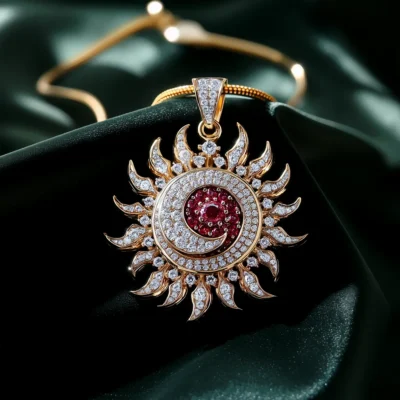
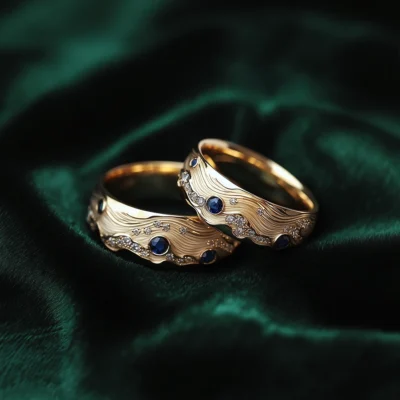
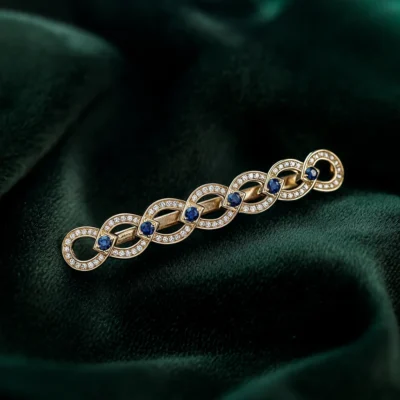
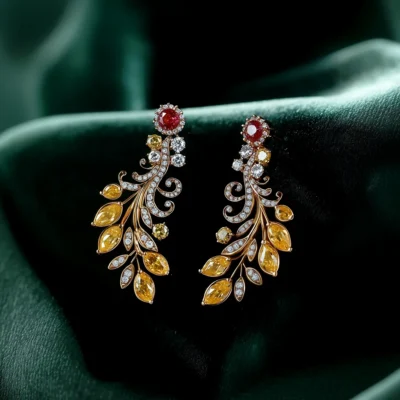
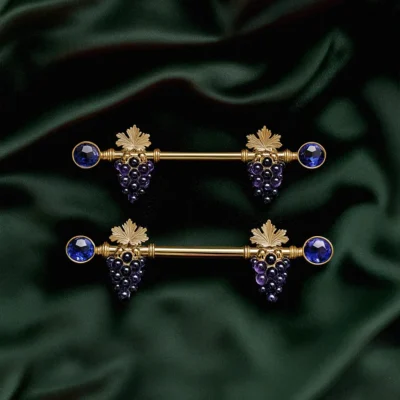
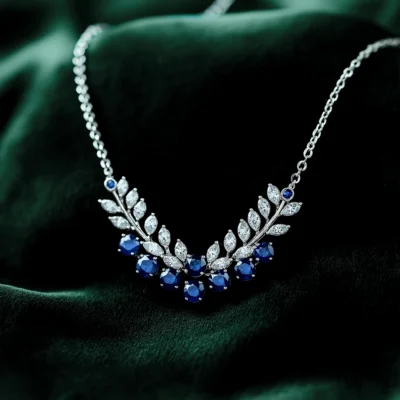




Ten sorting machines group the stones by density, mainly to separate precious ones from surface gravel: 6 for the mid-range size, 2 for big and rough, 2 for small stones, as well as gold (the one for small stones is used most frequently).
After sorting and processing, they send the gravel 20 miles away to the office. Then the preparation stage comes, so the stones can be washed in acid, treated with high temperature, and delicately cut to be used in the custom rings, pendants, bracelets, necklaces, and other jewelry.
Potentate had sourced about 300 pounds of sapphires during the summer season of this year and has plans to recover twice as much by the 30th of October. Boyd mentioned that 85% of their stones are classified as small or medium-sized (therefore, they bring the most revenue to the company), and the remaining part (a bit less than 15%) as large.
Even though mining sapphires has a long history in Rock Creek, starting from the 19th century, Potentate has operated here only for 14 years. As a part of the tourist tour, the attendees visited some base camps of early miners, which were used in the first three decades of the 20th century. The best gems discovered in the mine were actually sent abroad (mostly, to Switzerland). There they were applied in calibres, otherwise known as watch movements. However, in 1935, the camp almost stopped its operations due to economic reasons, especially, the replacement of natural sapphires with artificial ones.

But the old miners left a mysterious treasure. They only sourced sapphires from the creek bed because they lacked water pumps that could go deeper. Thus, there are dozens of feet of untouched sapphire-rich gravel deeper than 15 feet underground.
Potentate now controls the biggest sapphire-bearing territory in the Western hemisphere. Not only does it cover ancient alluvial workings, but it also expands towards the neighboring hills. Thus, the Olertis team wishes it to become one of the most important and prosperous sapphire providers in the world.