

1,500 years ago, there was a legendary city of Caracol in the middle of the Mayan civilization. It was a beautiful thriving city on the territory of present-day Belize. Colossal ruins, including pyramids, giant statues, and pompous ballrooms, tell vivid stories of the Native American past. And just recently, archaeologists discovered a royal tomb of Te K’ab Chaak.
For the first time, archaeologists Arlen and Diane Chase from the University of Houston found a royal burial site at Caracol, in the thick forests of Belize. The founder of the royal dynasty buried here was none other than Te K’ab Chaak, and he came to power in 331 AD.
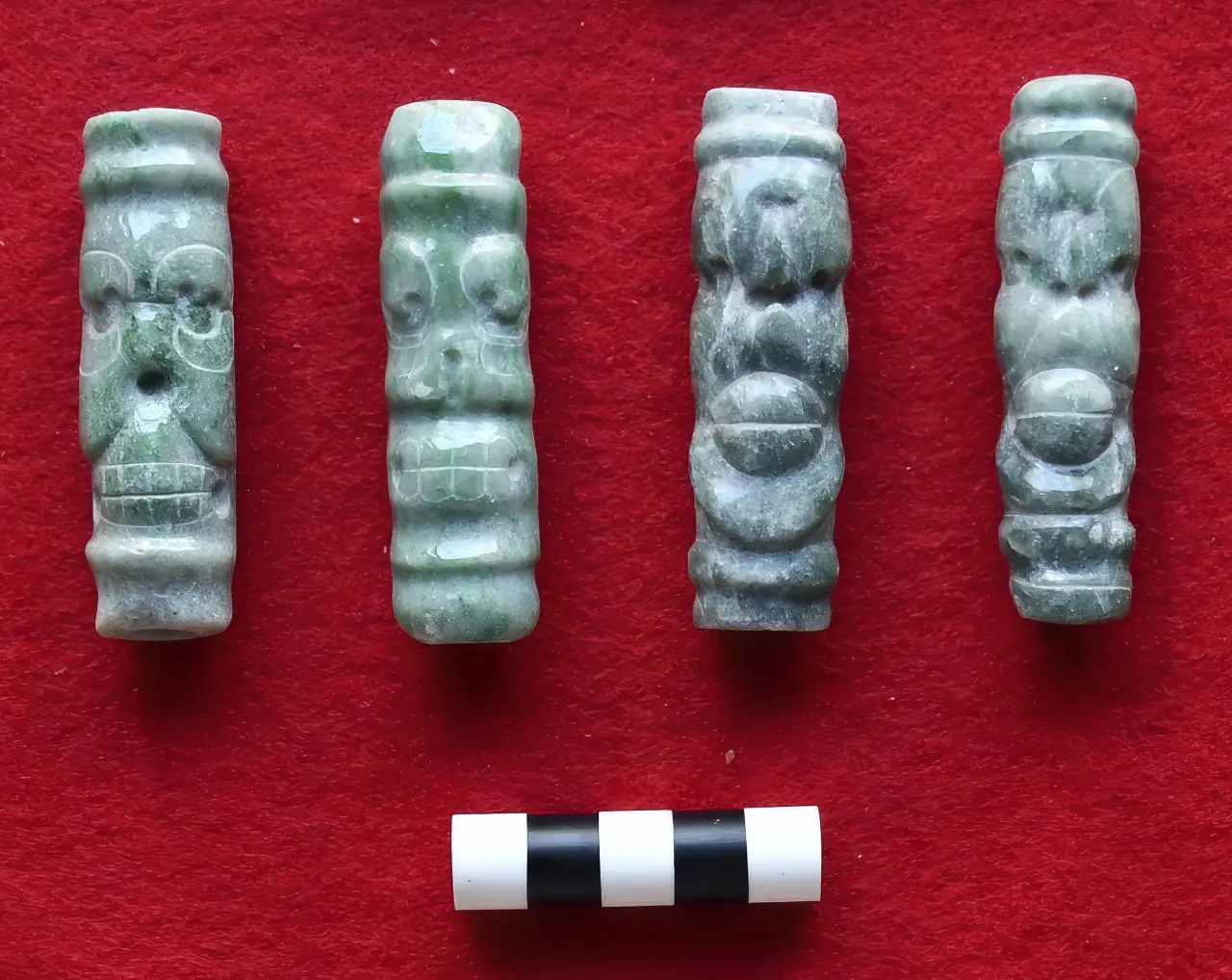
Four jadeite tube-shaped beads depicting both living and deceased spider monkeys.
The richly furnished tomb is full of valuable artifacts of the Mayan royalty. For instance, these included unusually shaped shells, jadeite jewelry pieces, thinly carved bone tubes, and a mosaic death mask (the last one was exceptionally rare). Three sets of jadeite custom earrings were the most conspicuous items in the tomb. They were worn only by aristocrats and thus, were a symbol of high social distinction.
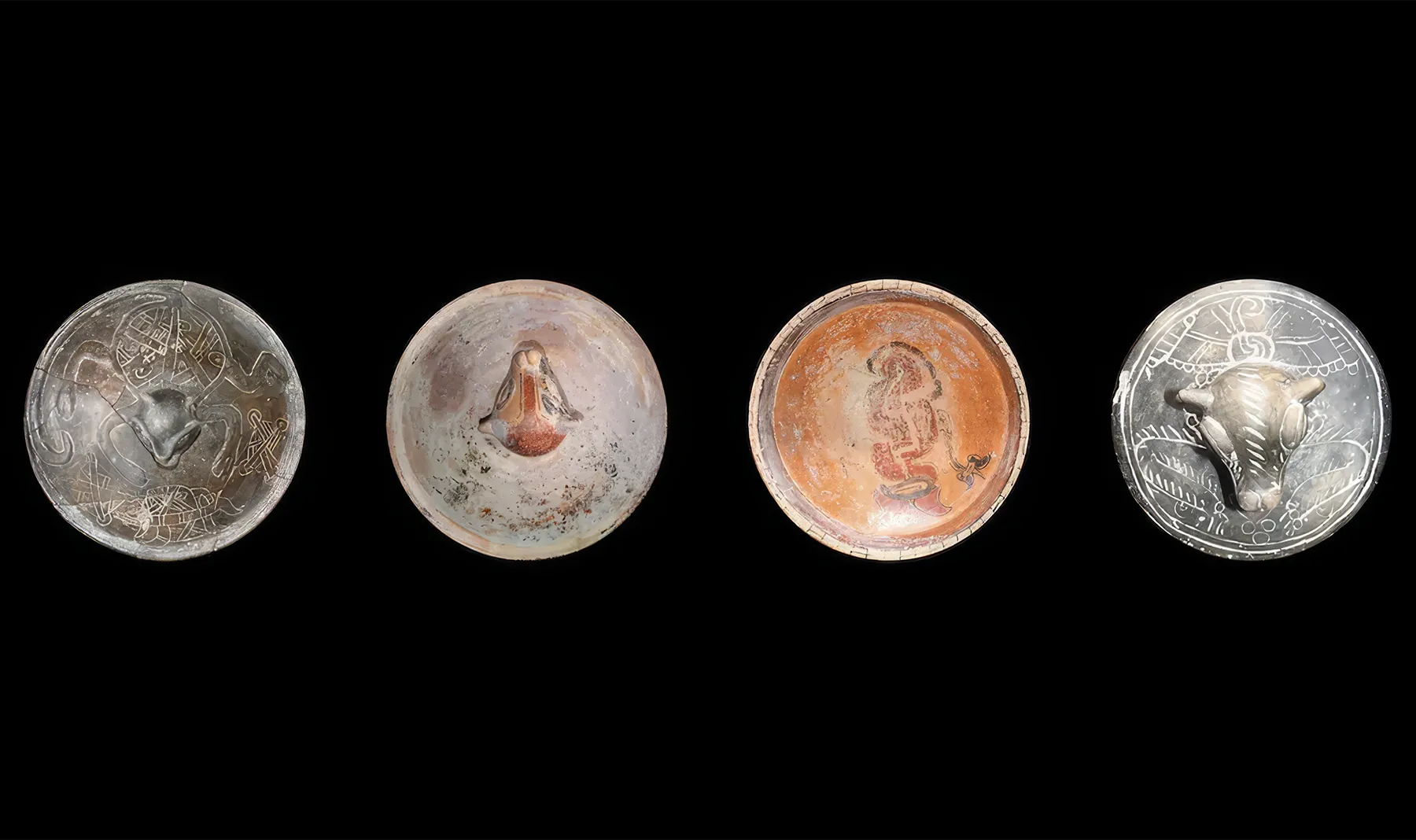
The pottery discovered in the tomb was most likely owned by a wealthy or high-status individual, suggesting their importance in society.
Illustrations on ceramic vessels paint a bright picture of the Mayan beliefs of that time. For example, one artist has painted a portrait of Ek Chuah, an ancient god of trade. Funnily enough, one lid depicted a curious-looking coatimundi (a kind of raccoon). Other pottery shows hummingbirds, monkeys, owls, and even a warrior brandishing a spear. Thus, we can see the most important symbols of the Mayan culture from that time.

Maya pottery bowl with a basal flange, featuring a coatimundi head.
Scientists believe that the skeleton and skull discovered at the site belong to Te K’ab Chaak, who was a warrior king of the Early Classic era. During his rule, Te K’ab Chaak tried to establish dominance by using wealth, trade, and even military conflict with the neighboring tribes.
The king’s status was especially highlighted by the red cinnabar blocks around his burial chamber. This bright-red mineral was only used for monarchs, high-standing officials and clergy. As archaeologist Arlen Chase states, “you’re dealing with the highest royalty when things are covered with cinnabar.”
Just so you know, cinnabar is one of the minerals scientists use to get mercury. You can only find it near hot springs or volcanoes. When it’s freshly cut, the mineral may be covered in what looks like little drops of blood, but they will get less distinct over time as its surface oxidizes from contact with air.
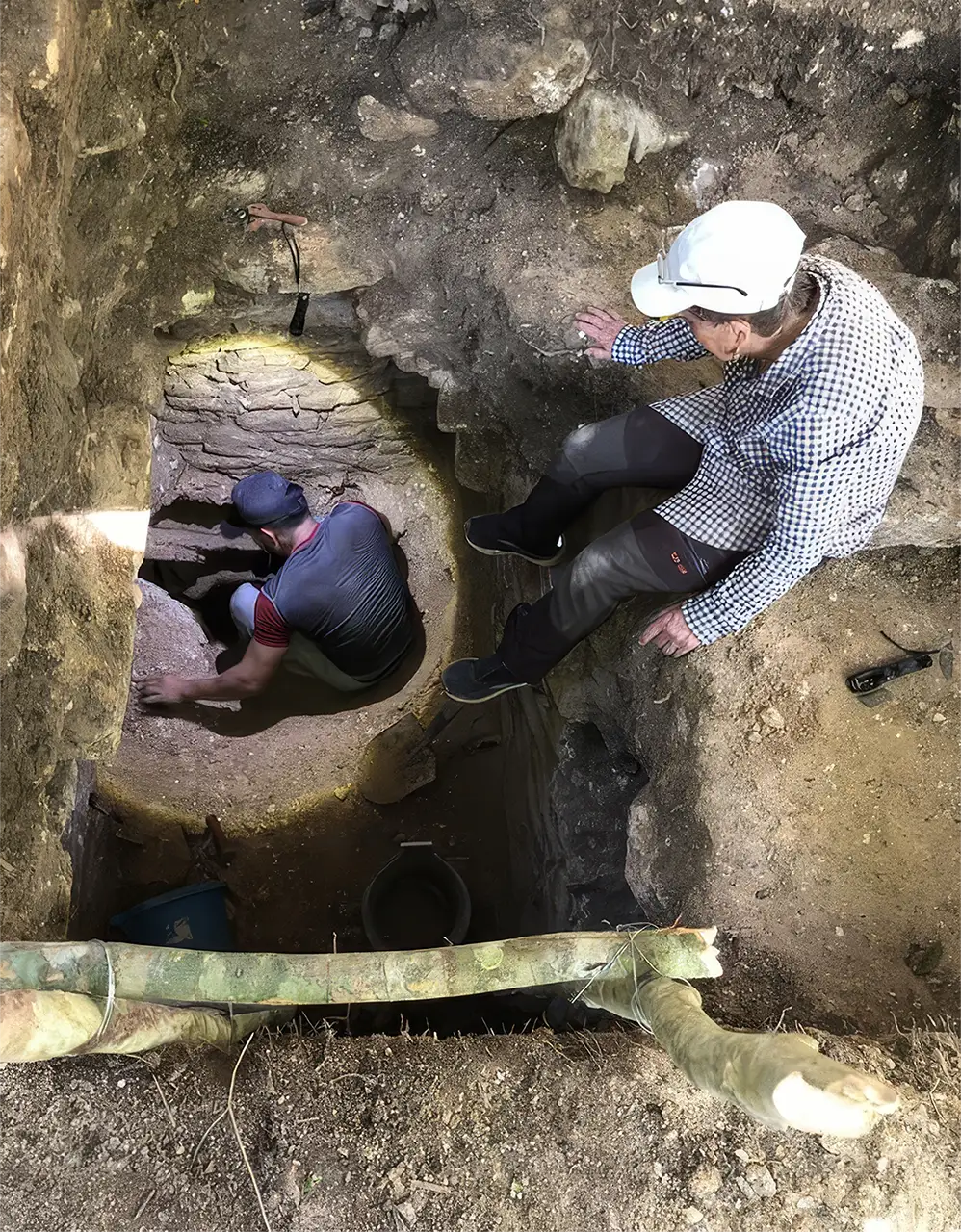
In 2025, archaeologists finally reached the royal tomb by delicately excavating through the floor of an earlier tomb discovered above it in 1993.
The tomb is so luxurious that it could have only belonged to a true “one-percenter” of that era. Till the end of his life, the king’s wealth remained only his own. In contrast to Te K’ab Chaak, later Caracol rulers would share their war booty with ordinary people after military victories (for example, after the conquest of the city of Tikal). The king’s funeral was likely very ostentatious and served as the last demonstration of his special power.
These finds in ancient Caracol reveal what was meaningful for the Mayan civilization, especially for its rulers and kingship. And who knows, perhaps the jungle’s canopy of Central America hides even more interesting discoveries about religion, politics, hierarchy, and other aspects of ancient Native American societies.
Forty years into their work, UH archaeologists Arlen and Diane Chase uncover a ruler’s tomb at Caracol — once more transforming the story of the Maya. Video report courtesy of ‘University of Houston’.