

Fabergé eggs are the pieces of the great master Carl Fabergé, who became famous for making Easter eggs for the royal family. Each of his works is special in its own way, all of them are made with professional precision and impress with opulence and beauty.
Carl was born in 1846 in St. Petersburg to a German father and a Danish mother. He took after his father who owned a jewelry workshop. In 1870, Carl headed the family company, and in 1882, Emperor Alexander III became interested in the artworks of Fabergé after seeing them at the exhibition in the capital.
In 1885, the Emperor ordered a jewelry egg from Carl, which he gave to his wife for Easter. Since then, the royal family kept ordering jewelry eggs every year, but their appearance was kept secret until the very moment the gift was presented. Although other Fabergé pieces were impressive, it was the eggs that brought the master his fame. he even received the title of “Master of the Paris Guild of Jewelers” in France.
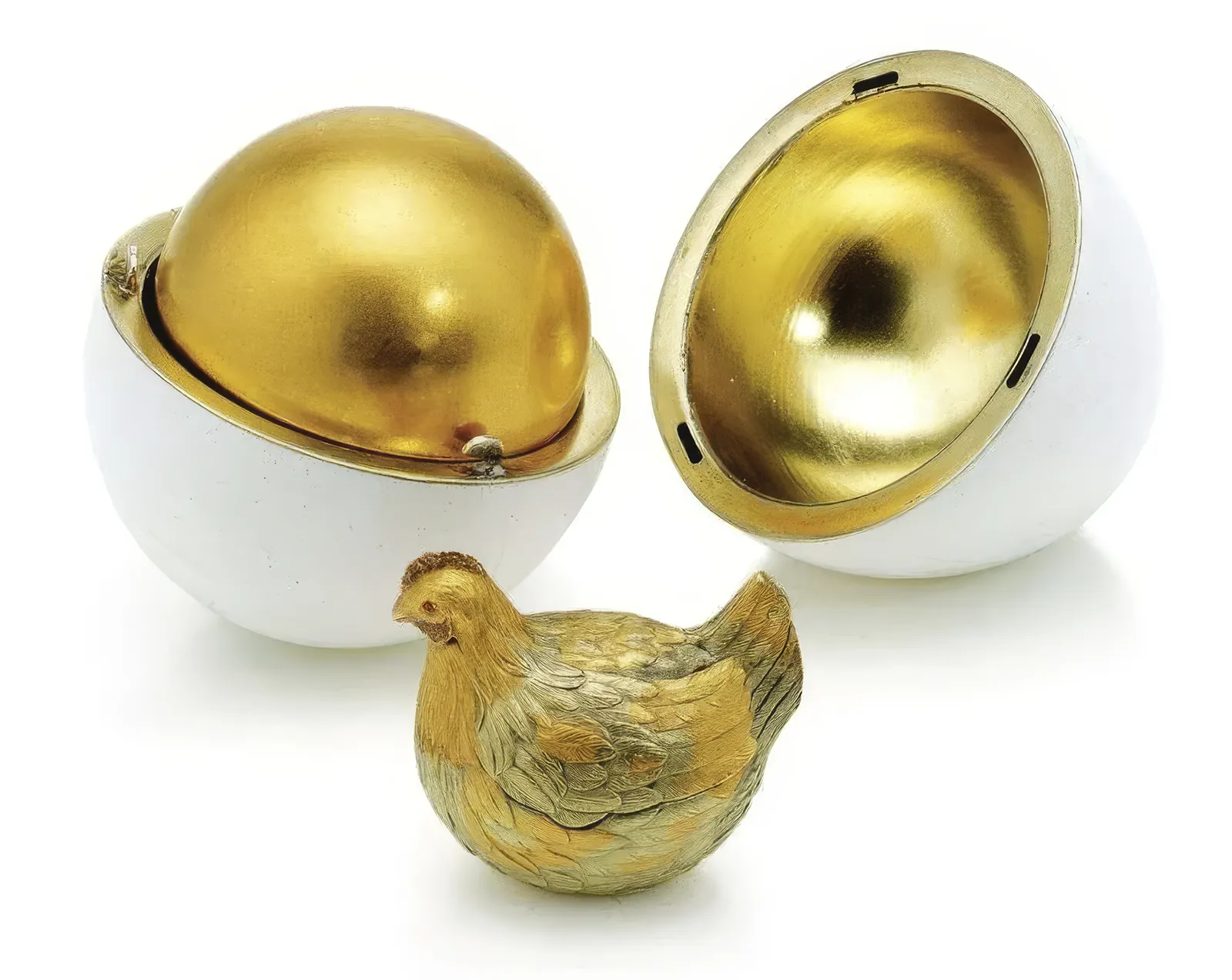
The very first egg for Alexander III’s wife was 2.5 by 1.4 inches in size. It was covered with white enamel, with a gold stripe running down the middle along the opening mechanism. Inside the piece was a smaller gold egg (virtually, a “yolk”), and inside it was a golden chicken. Inside the chicken was a miniature crown with a pendant.
The structure of the egg wasn’t actually Сarl’s own idea; it had lots of prototypes. In the second half of the 18th century, some jewelers made eggs with secret elements (sort of like today’s Kinder Surprise).
Every year, the Emperor continued with his Easter jewelry tradition. Each egg was produced by several artisans and their apprentices under the close eye of Fabergé himself. After the death of Alexander, his son Nicholas II kept the tradition alive. It’s known that a total of 54 eggs were made for the royal family.
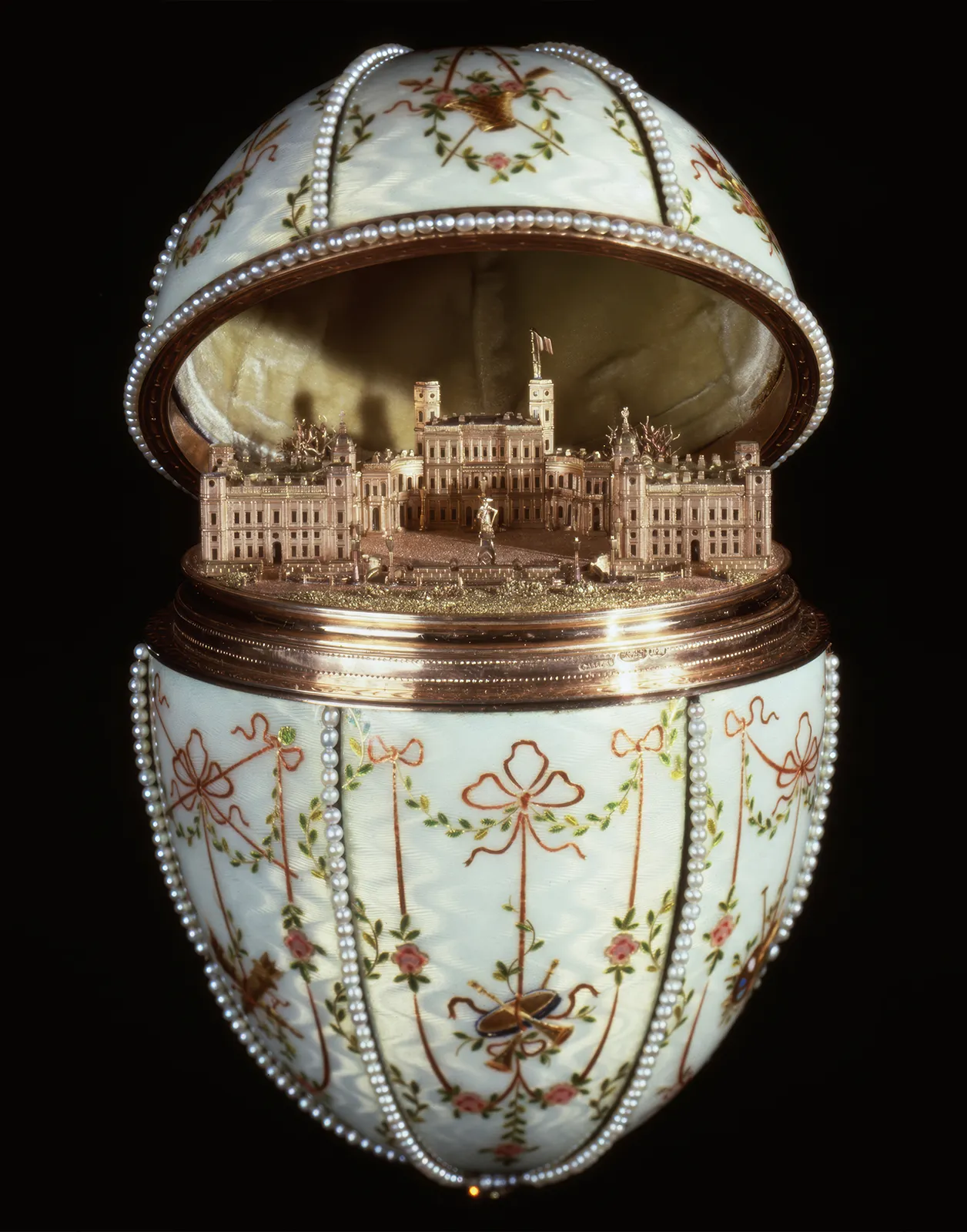
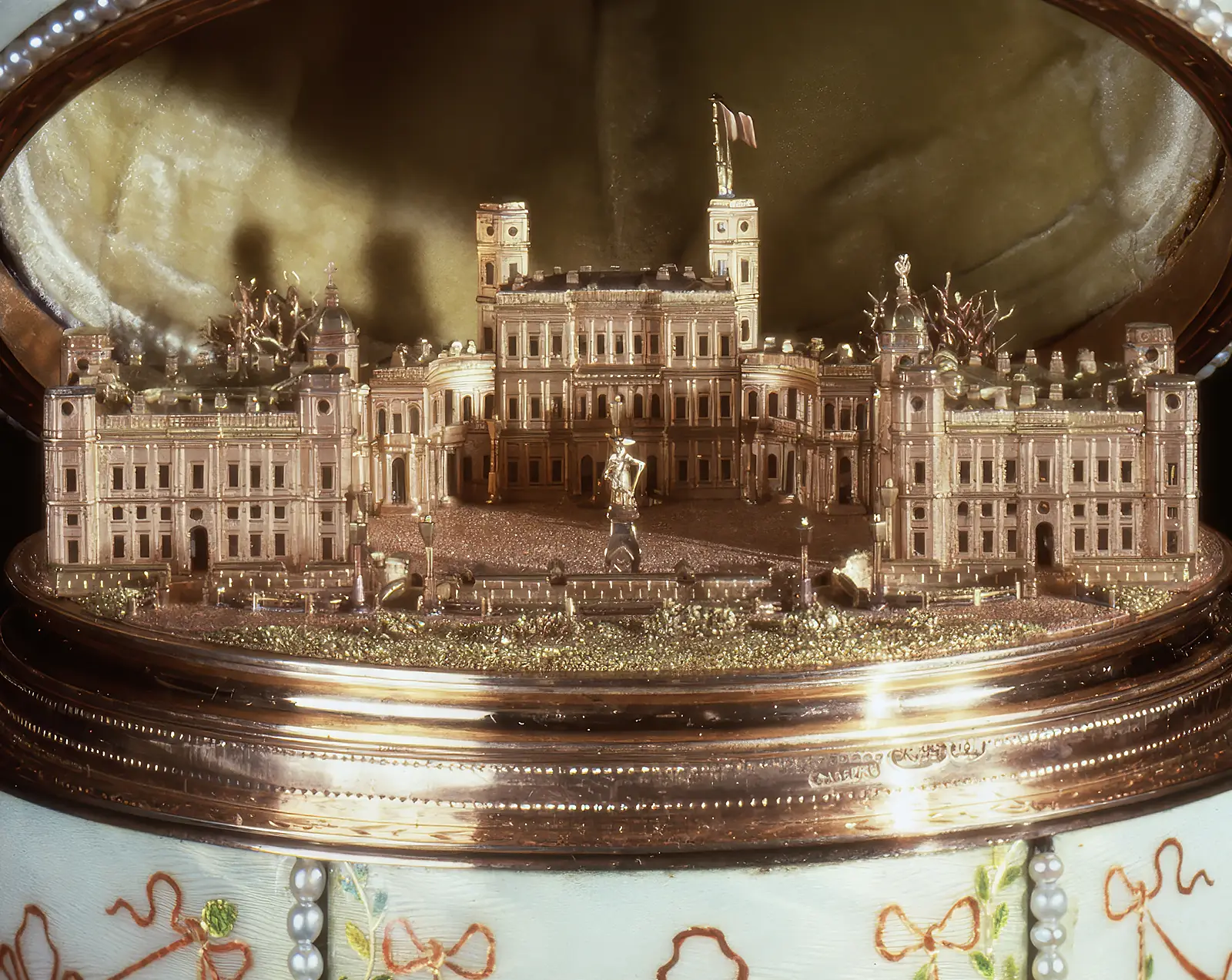
Inside the Gatchina Palace Egg lies a miniature of Catherine the Great’s Gatchina Palace.
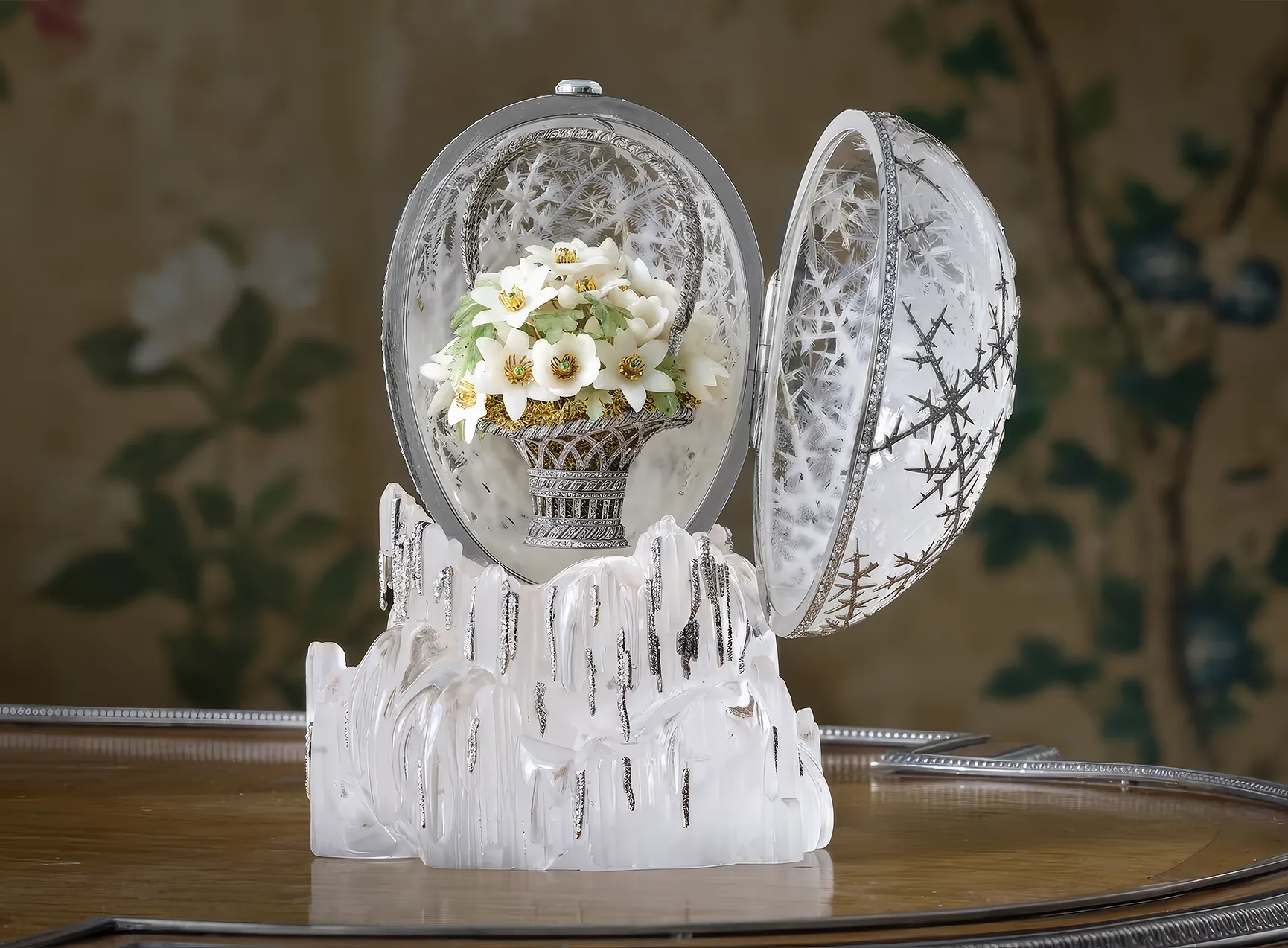
The jeweler became famous not only in Russia but also in European countries. The most influential collectors wanted to get his pieces. Each time, Fabergé surprised them with something new. He hid miniature ships, animals, and portraits in the eggs, and once even made a mechanical peacock that walked and raised its tail.
Unfortunately, not all of the pieces were saved after 1917. Besides the Romanovs, Fabergé crafted eggs for other people of noble descent. However, it’s impossible to determine the exact number of these pieces, since not all orders were documented.
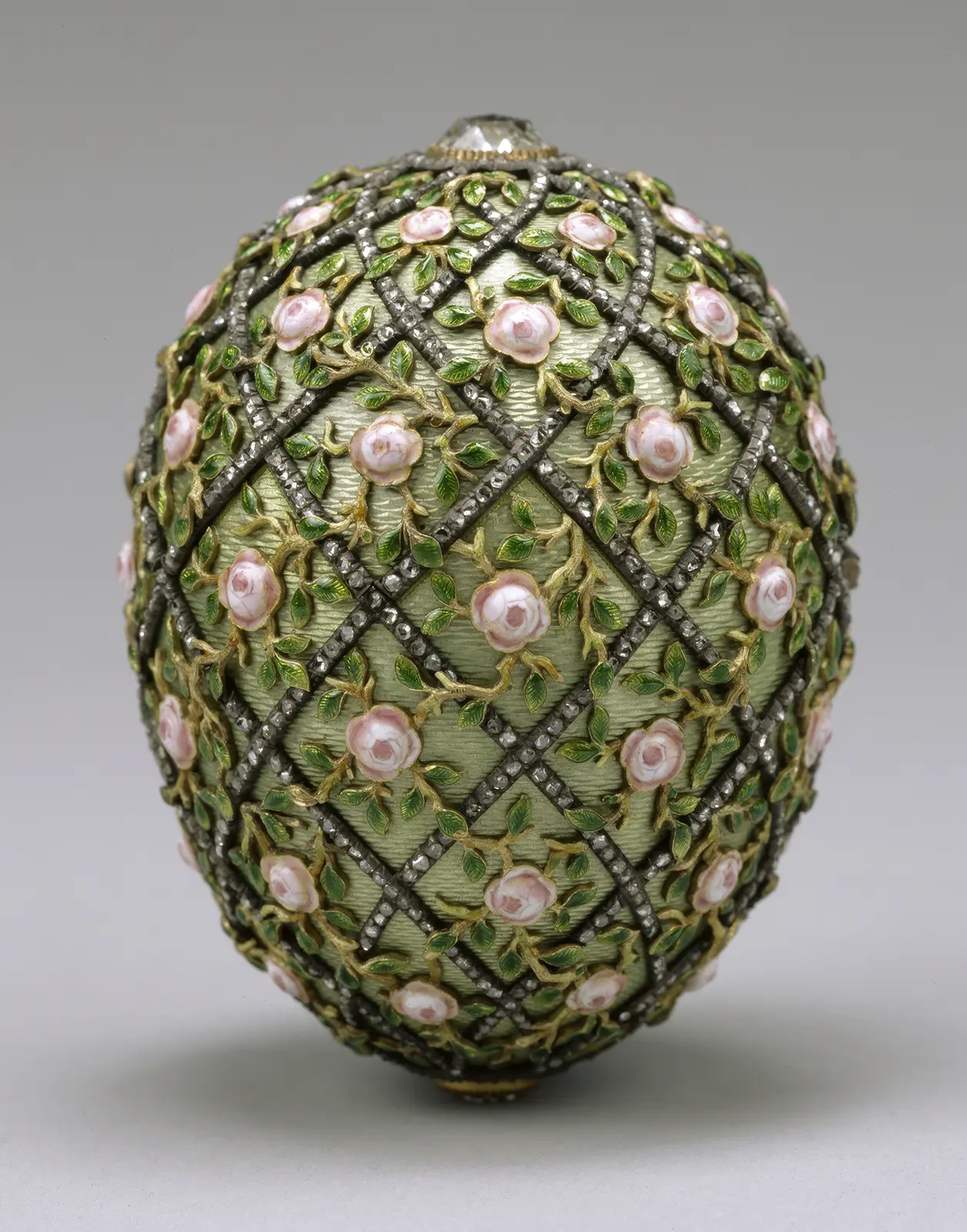
The Rose Trellis Egg was crafted by Fabergé in 1907 for Emperor Nicholas II, who gifted it to Alexandra Feodorovna to mark the third anniversary of Tsarevich Alexei’s birth.
At the moment, we know of 71 masterpieces. Some of them are kept in museums, while others are in private collections. One of them contained seven items and belonged to the gold miner Alexander Kelkh. Also, the nephew of Nobel Emmanuel, Prince Felix Yusupov, and the Rothschild banking dynasty ordered some pieces from Fabergé, which are now in private collections.
The business magnate Forbes collected the most masterpieces – 15 pieces, to be exact. His heirs wanted to present the eggs at an auction, but they were bought by Viktor Vekselberg, who founded the Fabergé Museum. According to rumors, Forbes’ egg collection was worth about $100 million. And when Viktor was asked the question: “Isn’t this too much?” he simply said: “In short, the collected pieces have no price tag. They’re priceless.”
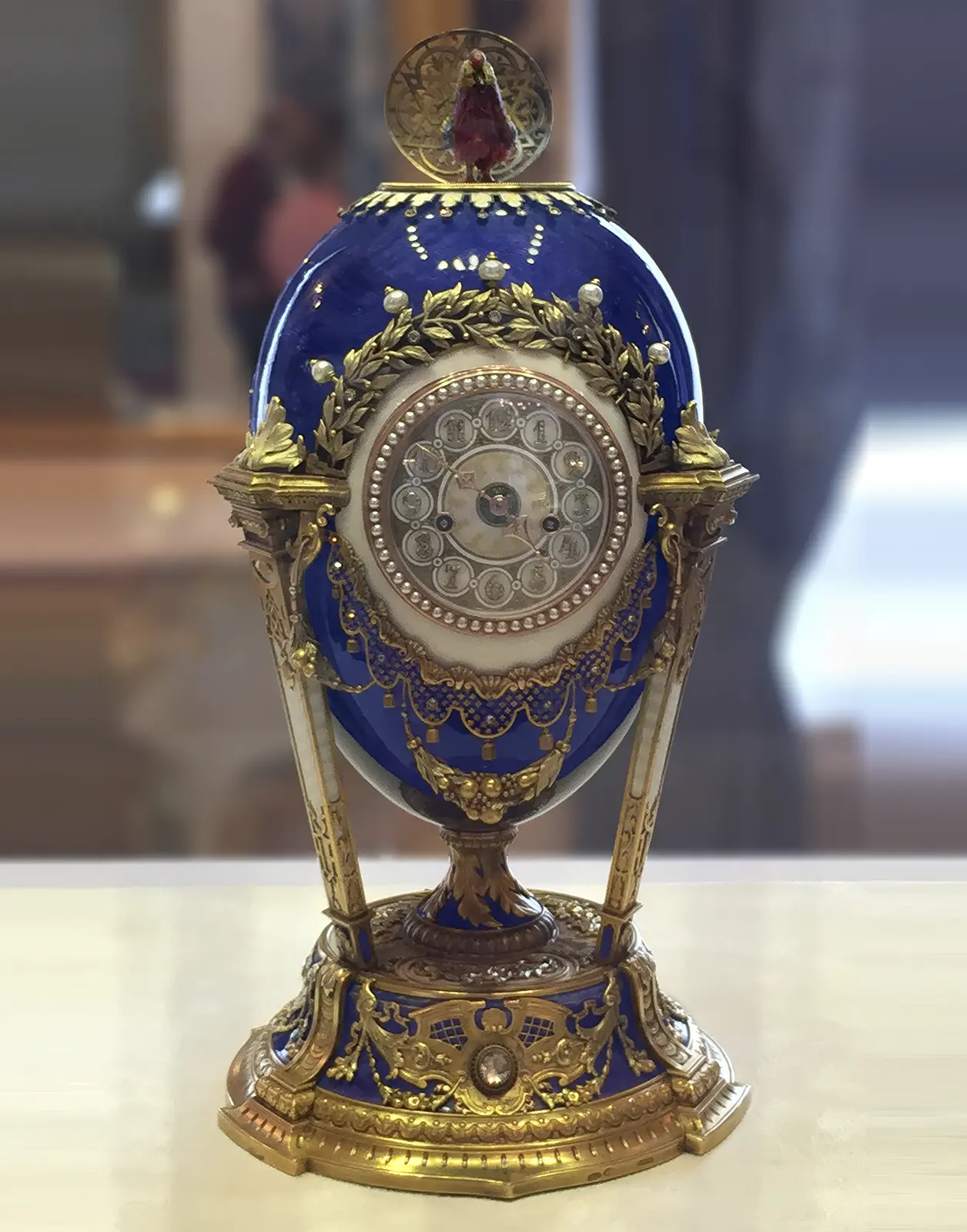
The Cockerel Egg, created in 1900 by Fabergé, features a bird that springs to life and once held a now-lost pearl.
Unfortunately, due to political and other circumstances, egg masterpieces were scattered around the world. Today, the largest collection consists of 9 items. You can see it on display in the Fabergé Museum in St. Petersburg. Another 10 pieces are stored in the Moscow Armory Chamber, and 5 items are displayed in the Richmond Museum in the U.S. Perhaps, one day we’ll be able to find all of the pieces, even the ones that are stored in secret private collections. After all, the world deserves to see real masterpieces, no matter what country they come from.