

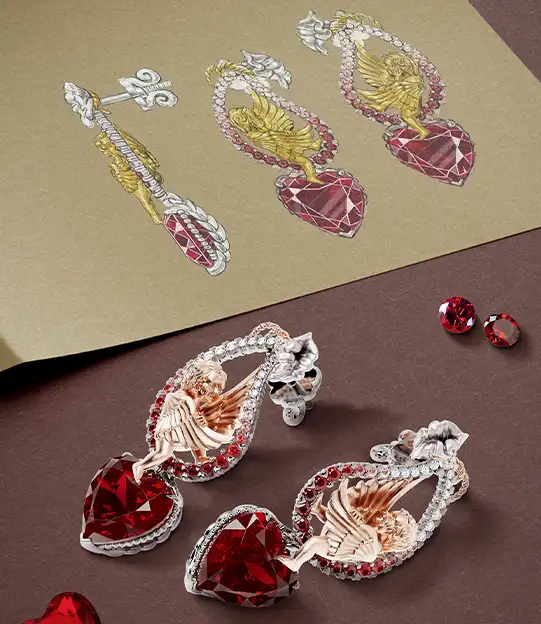
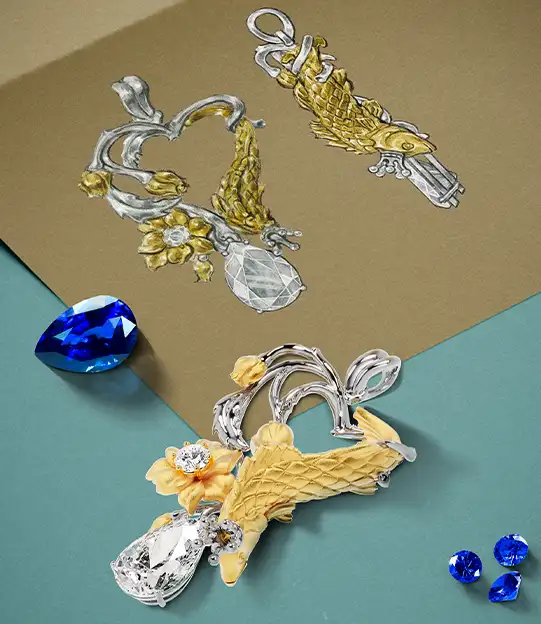
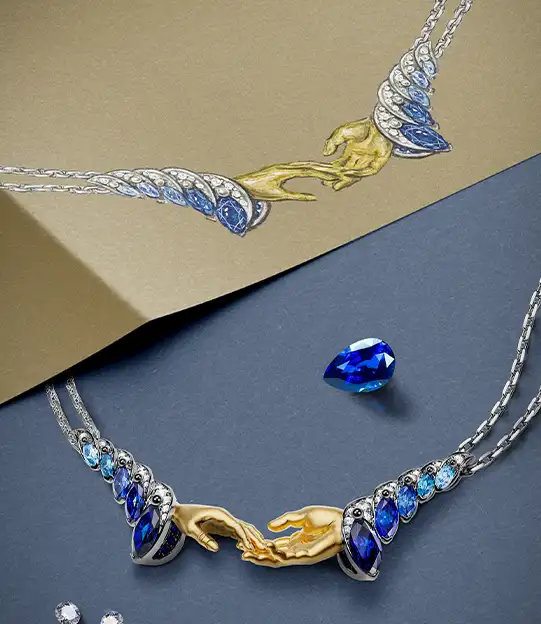
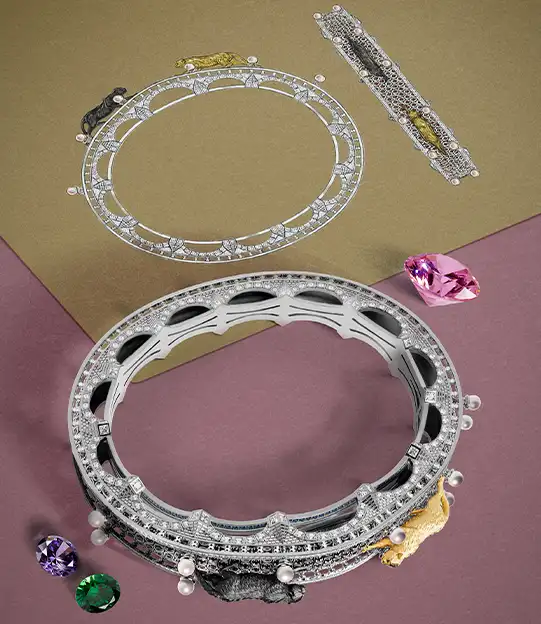




Pandora, the largest jewelry manufacturer in the world, has reaffirmed its decision to keep producing its goods abroad. Even in the face of new, less-than-comfortable U.S. tariffs, moving operations to the U.S. would make no sense, according to one of the most recent public statements by CEO Alexander Lacik. He argues that the country simply lacks skilled artisans that Pandora needs to uphold its high level of craftsmanship. Also, any attempt to move operations would be logistically and financially impractical.
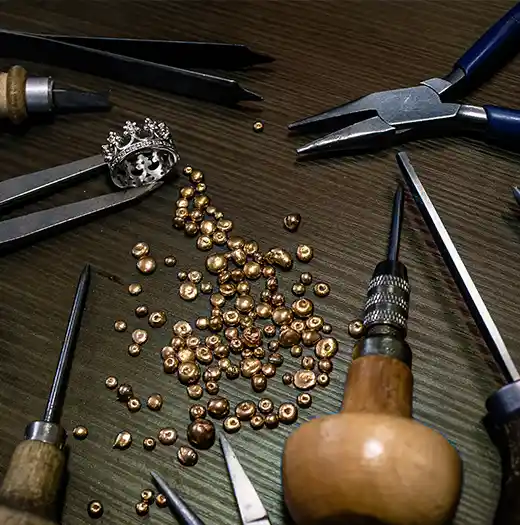
Lacik says, “The U.S. wouldn’t be able to meet our demand for well-trained artisans even if the company had plans to establish a manufacturing facility in the U.S. That level of experience is simply non-existent in the U.S. market. This is why we employ about 14,900 craftspeople from Thailand.” Indeed, more than 90% of what the company produces is made in that country.
It’s true that Pandora was significantly affected by the recent “Liberation Day” tariffs that were introduced by President Donald Trump on the 2nd of April, 2025. They are unprecedentedly high and range from 36% on Thai-imported goods to 46% on Vietnamese products.
If the company’s calculations are correct, the additional expenses will amount to $68 million (around 700 million Norwegian kroner) in 2025, and will total $181.5 million (1.25 billion kroner) every year. Apart from the Chinese products, those tariffs have been lowered to 10% for a three-month period, however, Pandora is still concerned about the future effects.
The jewelry giant has no plans to move its production to the U.S. in spite of those obstacles. Lacik made a clarification that it’s not just about moving some equipment. Their business depends on multi-generation artisan expertise, which is impossible to develop overnight.
Interestingly, labor costs in Southeast Asia are still relatively low compared to those in the US. For example, Thai people earn about six times and the Chinese two times less money for doing the same work compared to those living in the US. About 8,100 Americans work for Pandora in our country, but they’re mostly responsible for distribution channels rather than the actual production processes.
In order to deal with the current trade environment, the company has started to re-organize its logistics operations. The business began to order point-of-sale supplies from regions other than China (this includes packaging as well as display stands). Furthermore, it revisits its distribution channels to ship goods directly to the central American and Canadian market instead of using the Maryland distribution hub in the States.
In view of the ever-increasing costs of silver, which have more than doubled in the last four and a half years, the jewelry giant already raised prices accordingly in the last year. In October 2024, prices went up by 5%, and in April of this year, they went up by almost as much. Because of the unstable trade policy, Pandora readjusted its earnings predictions for this year, but didn’t account for additional tariff spikes. Even though it anticipates a more-or-less stable 8% growth, its EBIT margin projection has decreased by half a percent to 24%.
The CEO argues that the more important issue is the volatile atmosphere connected with Trump’s trade policies and regulations. The absolute lack of predictability is what is most concerning for any American businessperson, not just somebody working in the jewelry sector. Long-term decision-making virtually becomes impossible when “the game rules” are changing all the time. In Asia, “living in a time of change” is actually a well-known curse people only wish for their enemies, but it seems it’s slowly becoming our everyday reality.
Finally, Lacik admitted that Pandora isn’t the only one facing such problems. Not everyone knows, but most jewelry production comes from Asian countries, thus, the tariffs will increase all the prices across the board. “Everyone will have to pay more if such policies continue.” Quite logically, the price adjustments will affect customers in the nearest future, not to mention their buying potential. This would create additional strain for all businesses, not just those in the jewelry sector.