













Two recent landmark discoveries have changed the way we see mining, both on Earth as well as in space. Before we unveil an intriguing piece of news that may sound “too out there” for some readers, try to guess the answers to the following questions:
1) Do you think microorganisms can process gold?
2) Which planet in the solar system may hide a 10-mile-thick layer entirely made of diamonds?
Gold-Processing Fungi: A Reality or Science Fiction?
In 2019, Australian scientists at the national science agency CSIRO discovered a fungus(Fusarium oxysporum) capable of processing gold. The finding may bring about new, planet-friendly ways to get precious metals, not to mention save the gold and copper industries billions of dollars!
As it turns out, some types of fungi can absorb an enormous amount of metal. Although these species are best known for munching their way through rotting organic matter, the researchers realized they can also pull in and concentrate particles of gold from their surroundings.
According to Dr. Tsing Bohu, such interaction seems unusual and a bit surprising, especially considering the fact that gold is a chemically inert element. The fungi’s special abilities might change the way we search and extract this precious metal.
Mining companies are enthusiastic about applying this biotechnology in identifying gold-rich soils, which would provide a much greener solution to the problem than the current technology.
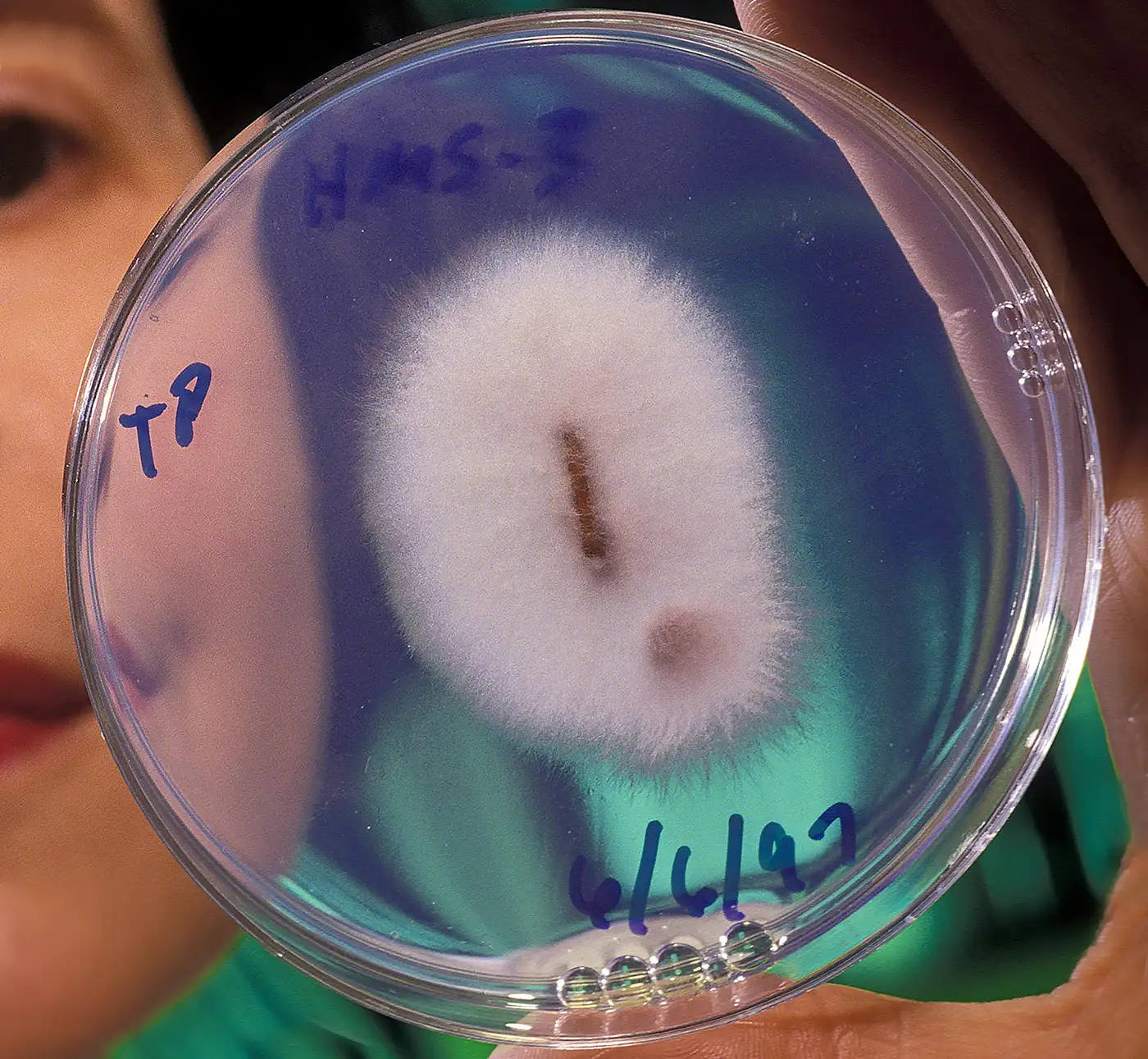
The fungus can dissolve gold and redeposit it onto its surface, coating itself in gold. First discovered in Boddington, Western Australia, Fusarium oxysporum is now being studied as a potential tool for finding hidden underground gold deposits. Photo of a fungal stem grown in laboratory conditions. Photo from Wikipedia.
Another possible application of such fungi deals, surprisingly, with space mining. Researchers are planning to send these organisms to asteroids so that they can process ores. This process is known as “metabolic mineralurgy” and would be most helpful in extracting metals from asteroids. It would eliminate the need for a large piece of equipment, proving efficient for space missions.








A 10-Mile-Thick Layer of Diamond Is Just One Planet Away From Us
Researchers announced that one of our solar system’s most closely followed planets, Mercury, may contain a 10-mile-thick layer of diamond! If you think of Mercury as a dead, sun-scorched, barren rock, you might be right, but the planet suddenly becomes much more interesting when we consider its hidden treasures.
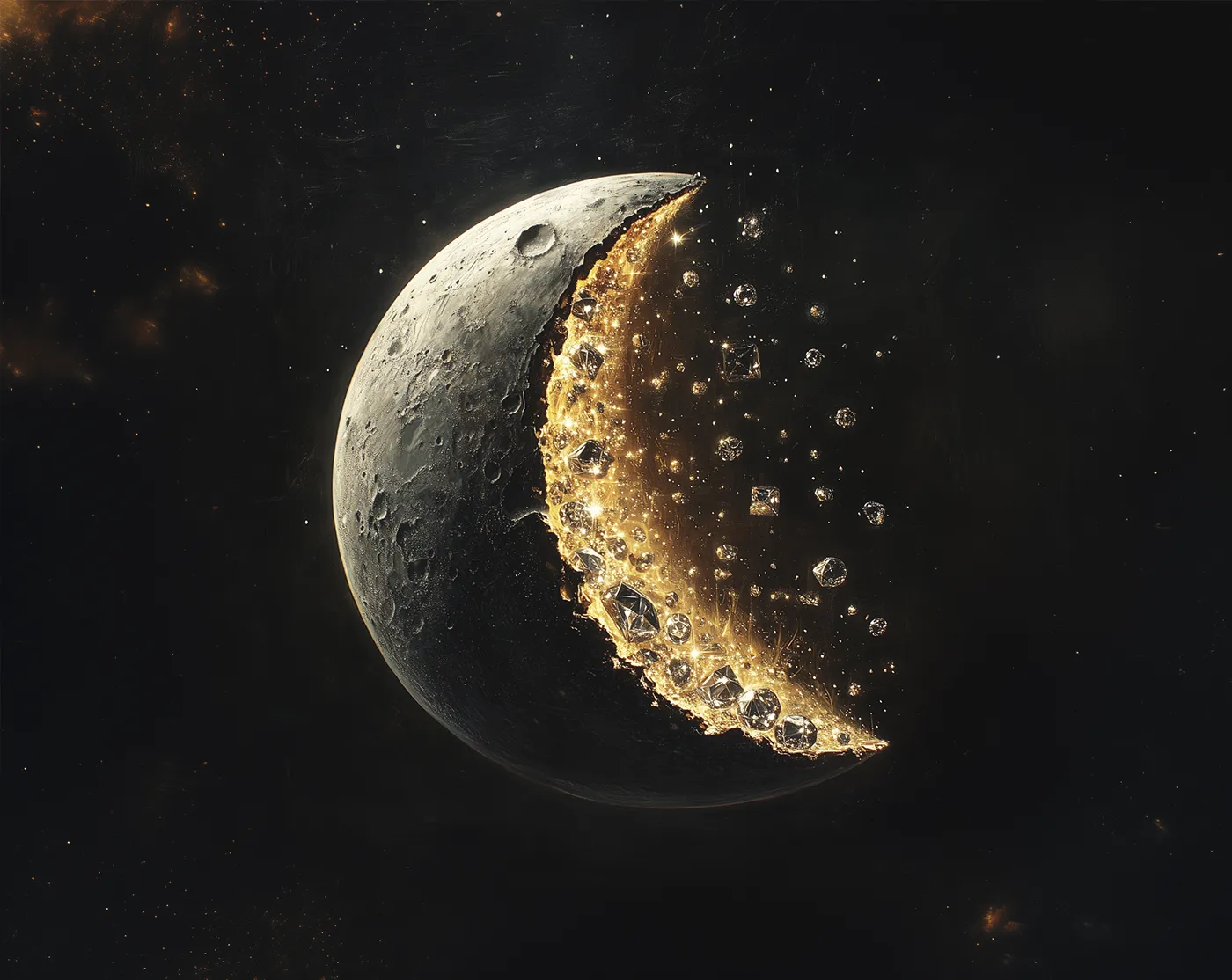
The data collected by NASA’s MESSENGER spacecraft and lab experiments conducted by Dr. Yanhao Lin of China’s HPSTAR Institute indicate that Mercury may really have a diamond ring. While the exact size of the ring remains unknown, it’s most probably within a 9 to 11-mile range.
Mercury’s graphite-coated shell means the planet once had a molten carbon-rich magma ocean. As it cooled, its lighter carbon rose to the top to make a crust, and heavier carbon with metal sank to the bottom, closer towards the core. In order to find out what happened, similar conditions were created in the lab. When subjected to high temperatures and pressures, the carbon crystallized into diamond.
Of course, this diamond layer is more than just an exotic geological curiosity. The high thermal conductivity may affect the magnetic field by promoting the transfer of heat from the planet’s core. All of this may give us clues on how such layers could form in other rocky objects.
Taken together, the two discoveries may revolutionize the future of space mining and the jewelry industry. Perhaps, our findings on Mercury geology will help us find space objects with valuable minerals, while fungal biotechnology may make it possible to collect them from alien soil. All of this might one day become a reality, assuming our civilization stops its self-destructing tendencies…