


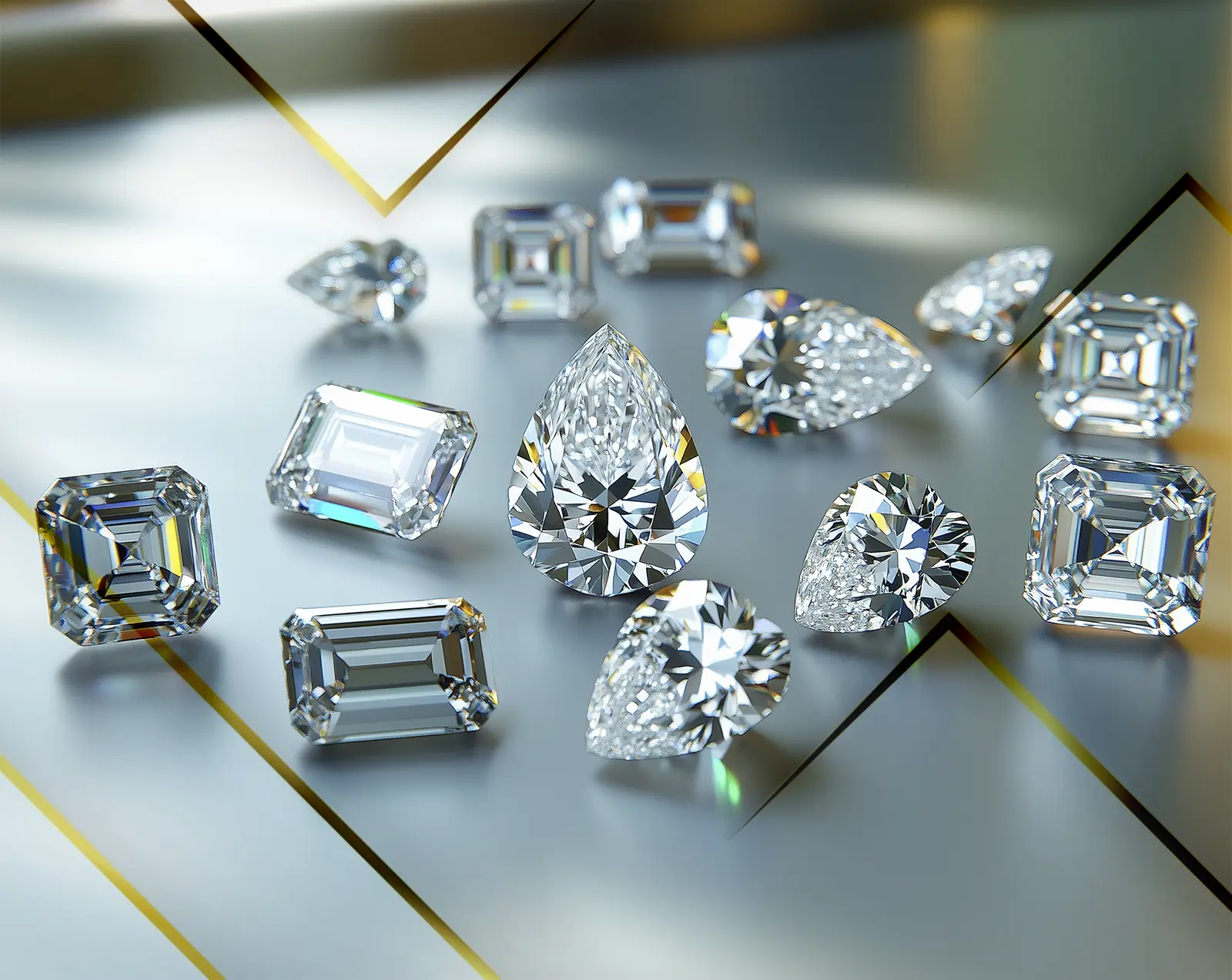
The extraordinary hardness of diamonds gave them their name — “diamond” comes from the Greek word adamas, meaning invincible. For centuries, no one could cut or polish them. This made people believe they had special powers and could protect from enemies or keep safe from any poison. For a very long time, people didn’t know (and didn’t have tools) how to cut these stones.
In ancient times, Islamic and Indian jewelers ground and broke low-quality diamonds to produce powder, which was then used to polish other stones. Indian artisans were the first to figure out that diamonds can be cut and polished only with diamonds, or at least they were the first to write it down in a book, The Agastimata, in the 13th century.
The Romans used diamonds in jewelry more than 2,000 years ago. They used these precious stones just as they were found, without smooth surfaces or sparkle like modern gems. Even though the Romans loved diamonds, they likely had access only to lower-quality stones. At that time, only India mined and exported them and only the lower-quality stones were shipped to other places. Roman traders brought these gems to Europe, but when the Roman Empire started to collapse, trade with India stopped. That is why these beautiful stones disappeared from European jewelry for a while.
However, with time, everything got back to normal, and new trading roads to the East were explored. Venetian traders were the ones who seized the opportunity and occupied that niche. But goods, fabrics, and treasures weren’t the only things they brought home in the 14th century. They also adopted the experience of Islamic merchants and learned the ways these super-hard stones could be cut. As the saying goes, “Necessity is the mother of invention.” When something is missing or not good enough, people find new ways to improve and create something better, and this is how new cutting techniques were developed.
In the 15th century, a new tool with spinning motion changed how people worked with diamonds. Before this, they could only polish the surface or break these amazing stones along weak lines. Now they could shape them better and make more detailed designs. In 1510, Portugal took control of Goa, an important trade center in India, which led to the import of higher-quality diamonds to Europe.
Older trade centers like Venice began to lose influence, while the Netherlands and England became dominant in sea commerce. Trade moved to the North Sea and cities like Paris, Bruges, and Antwerp emerged as major hubs for diamond cutting. By the late 1400s, this practice had improved a lot. Over the next two centuries, cutters started experimenting with shapes and styles, developing long rectangular shapes that were prototypes of today’s baguette cut. At the same time, older cutting techniques like the point and table cuts became more detailed and refined to improve their sparkle and appeal.
In the 15th century, a true example of faceting was created, and it was named the rose cut. Imagine a rosebud painted by Picasso during his Cubism era — a flat bottom and many small, diamond-shaped facets on top — a geometric blossom. Goldsmiths from Belgium and the Netherlands were rose cut experts — they used thinner pieces of rough stones and turned them into beautiful pieces. At the same time, methods of shaping diamonds were getting better in India. Artisans used different tools, like wood, instead of steel, but some of their methods were similar to those in Europe. The Mughal appreciation for nature and organic forms was reflected in the way Indian jewelers worked with stones. They created a flat bottom and then followed the form of the gem while carving facets. This technique was called the Mughal cut, and it remained popular for 300 years.

Heart-shaped ring set with a rose-cut diamond, held by hands and topped with a crown. (Photo courtesy of Victoria and Albert Museum)

Variations of Mughal cut diamonds documented in the notebook of Jean Baptiste Tavernier.
In the 17th century, people started to see diamonds differently. Fancy dinners lit by candlelight made them want more sparkly jewels.Thus, demand led to experimenting and creation of the style that maximized sparkle — brilliant cut. At first, the form of the raw stone determined how the final style would look. However, there was one important detail in common — they were cone-shaped, with the larger lower part known as the pavilion. This new design helped light bounce back through the top, making a gem shine brighter.

The 55.23-carat Sancy Diamond, a brilliant cut from the 1600s. Now housed at the Louvre, Paris. (Getty Images)

The 35.56-carat Wittelsbach Diamond, showcasing an early brilliant style from the 17th century. (Getty Images)
What we now call the old mine cut emerged from square cuts with rounded corners. One of them with 17 tiny flat surfaces, carefully arranged to catch the light was created around the years 1640 to 1660 by a man named Cardinal Mazarin. It was the first example of the brilliant cut. In the following century, another version came out — the Peruzzi cut with 33 facets on the top part.
There is a legend about the cut that was developed around this time — the marquise cut. Some people believe that King Louis XV of France asked for a new shape. He didn’t want more sparkle or exquisite design; his only wish was to present his mistress, Marquise de Pompadour, with a jewel that resembled her smile. One of the first examples of truly custom jewelry that symbolizes something meaningful and dear to one’s heart. However, other sources suggest that this design was created earlier by Lodewyk van Berquem, a Belgian gem cutter, known for inventing an innovative diamond polishing tool.
Even with all these new styles, older cuts like the table and point cuts were still common. But as diamonds from the East became harder to find, jewelers began recutting old stones, trying to craft something truly sparkling. That’s why very few samples from before the 1700s still have their original shape today.


Gold ring set with a table-cut diamond, Tudor period, c. 1484–1604. (Photo from Berganza website)

Diamond Cut Evolution
It happened in the early 1700s that India’s resources started to run out. Luckily, almost at the same time, people successfully explored Brazil for gemstones deposits. The area where diamonds were found was named Diamantina. The craft of working with diamonds and their forms developed rapidly, and a new style called the old mine cut won many hearts.
A growing middle class in Europe and the U.S. started buying more diamond jewelry. But Brazil’s diamond supply began to drop by the middle of the 19th century. As a result, prices went up, and diamond cutters faced hard times.
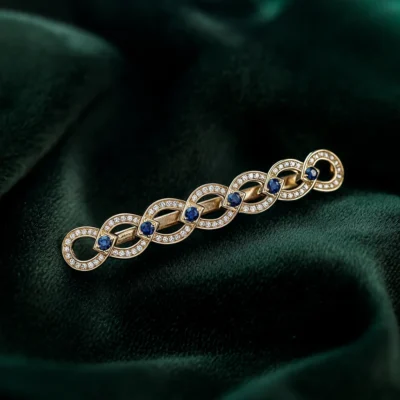
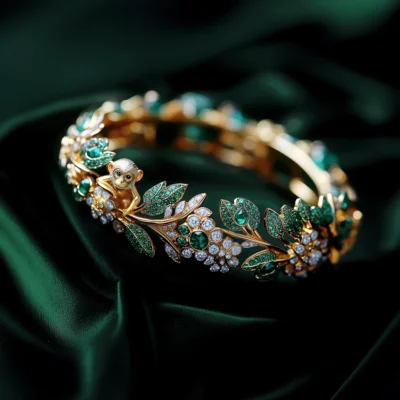
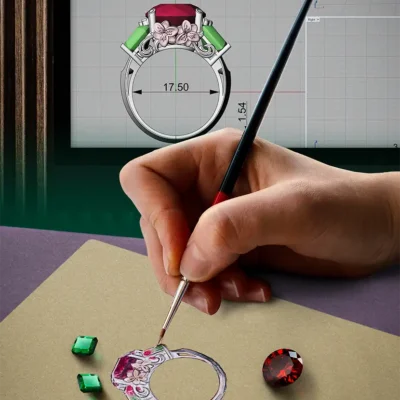
Nowadays, Africa is known as an important diamond-mining area, but it wasn’t so even two centuries ago. Nobody was thinking of looking for these stones in Africa and then an unexpected find changed everything — a 15-year-old boy found a 21-carat yellow diamond, later named Eureka. This discovery came at a time when people thought the world was running out of these stones. The boom breathed fresh energy to the diamond-cutting industries in Belgium and the Netherlands. It also brought a big supply of gems back to the market.
New tools and methods soon followed one after another. In the 1870s, jewelers enjoyed the invention of the bruting machine because it allowed them to form a smooth, round outline. Such stones were called Old European cuts.
In the 1900s, diamond cutters used new tools and knowledge to create modern shapes. One of the first was the Asscher cut. It was named after its inventor, who, by the way, was the first person to patent a diamond cut. Later in the 20th century, other popular cuts appeared, like the emerald, oval, princess, and radiant cuts.

Exquisite Platinum Engagement Ring Showcasing a Breathtaking 7.11ct Asscher Cut Diamond. (Photo from Sotheby’s website)
For hundreds of years, Europe was the center of diamond cutting. Many of the businesses were owned and run by Jewish families. But during World War II, these communities were deeply affected and many cutting centers were lost. After the war, Jewish immigrants and refugees helped build new cutting centers in other places, especially in Israel and India. Today, India is the world’s top country for diamond cutting — a fitting role for the place where diamonds were first found and likely first shaped.