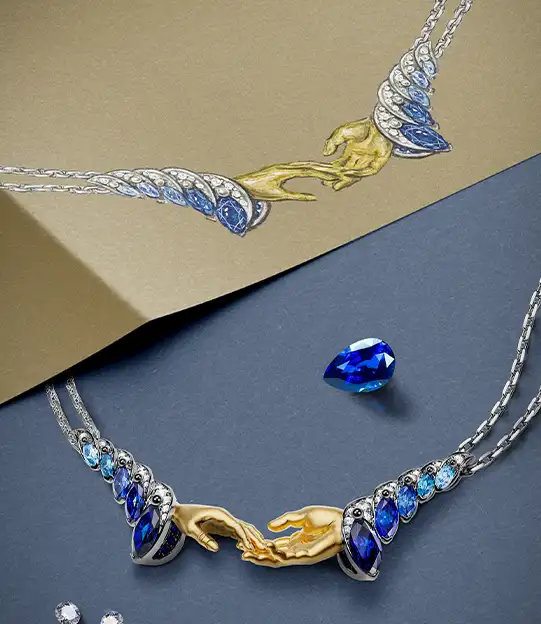
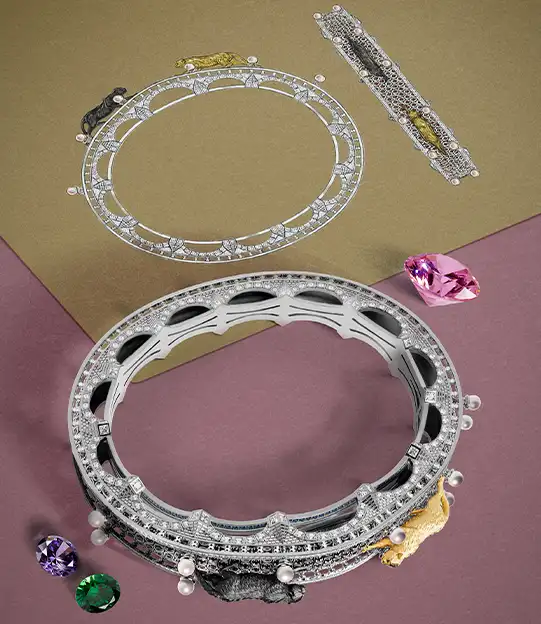
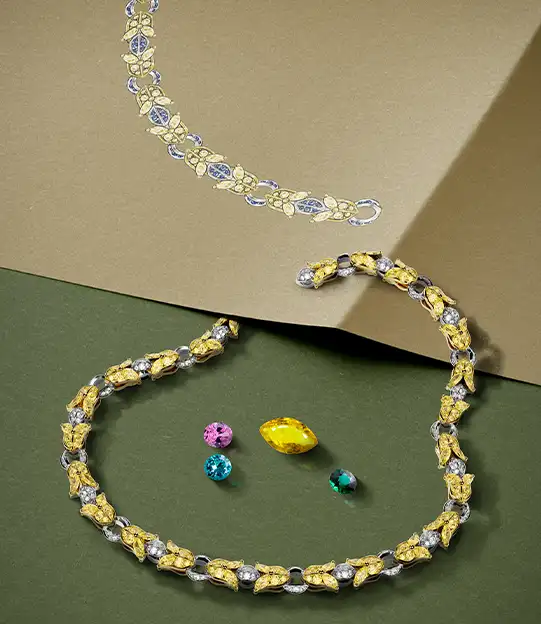
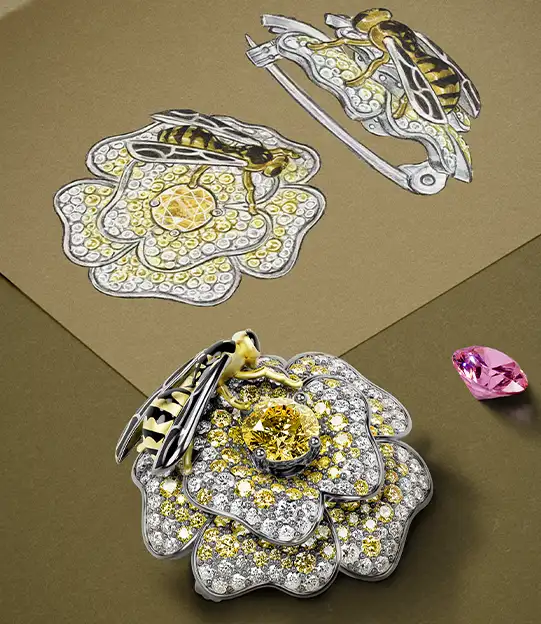

Do You Recommend Natural or Lab-Grown Diamonds / Gemstones for a Custom Design?

How to Choose the Right Stone for a Custom Jewelry Piece
Choosing the center stone of your bespoke jewelry design is a deeply personal decision. It is about more than just the sparkle of the stone – it represents your values, your priorities, and how you envision wearing your piece for years to come. Whether you’re searching for the best diamond for engagement ring or simply the best stone for everyday wear, your choice should align with what matters most to you. At Olertis, we believe that your choice should be based on your unique preferences.
Why U.S. Clients Compare Natural and Lab-Grown Stones in 2026
Lab-Grown Diamonds have gone from being a novelty to becoming a mainstream alternative to natural diamonds. In 2026, they now represent nearly half of all engagement ring diamond center stones sold in many U.S. retail segments. This shift has been driven by consumers who are prioritizing transparency regarding the origin of the stone, wanting larger stones, and having a better price-to-size ratio. While some consumers still prefer natural diamonds due to their rarity, their rich history, and potential long-term appreciation, at Olertis, we believe that you should have the opportunity to make an informed decision on what is best for you, free from external influence or pressure.
Appearance, Quality & Everyday-Wear Durability
The appearance of modern lab-grown diamonds is virtually identical to that of natural diamonds. Lab-grown diamonds often show fewer visible inclusions due to controlled growth conditions, making them perfect for clean, brilliant bespoke jewelry. Natural stones, on the other hand, have inherent characteristics within the stone (the “fingerprints of earth”) that many people see as a part of the gemstone’s unique personality.
Both types of diamonds perform extremely well in terms of diamond durability and longevity for everyday wear, making either option suitable as a diamond for daily wear or for a custom engagement ring. Lab-grown diamonds share the same hardness as natural diamonds (10 on the Mohs scale), though some HPHT-grown stones may contain metallic inclusions, which should be considered when assessing their structural integrity. Ultimately, the main decision comes down to whether you prefer a larger, cleaner lab-grown diamond or the legacy and history associated with a natural gemstone.
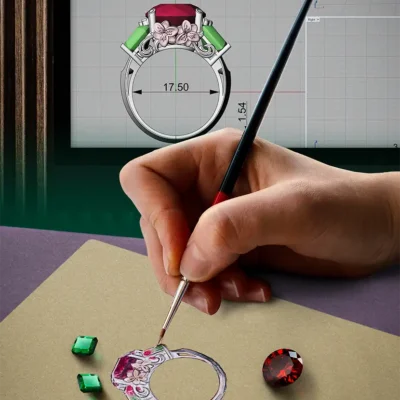
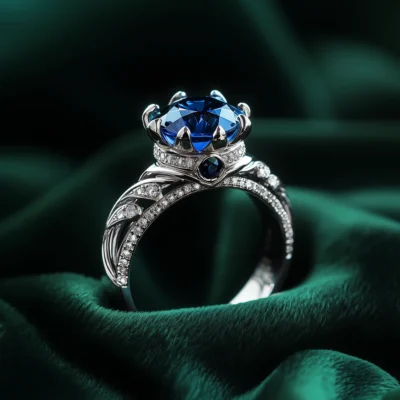
How Lab-Grown Diamonds and Gemstones Are Created (HPHT, CVD, Hydrothermal)
Clients often ask us how lab-grown diamonds are made. Here is a simplified explanation of the process:
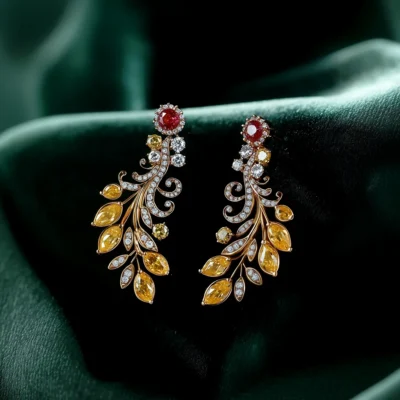
Lab-diamonds are created using two primary methods: HPHT (High-Pressure-High-Temperature) and CVD (Chemical Vapor Deposition). Color gemstones such as Sapphires, Rubies, Emeralds, etc., are primarily grown using hydrothermal or flux-growth methods. These methods mimic the natural growth process of gemstones, but occur under controlled conditions, producing gemstones with consistent clarity and color suitable for fine jewelry.

Natural vs Lab-Grown: U.S. Price Differences for Custom Jewelry
There are significant price disparities between natural diamonds/gemstones and lab-grown diamonds/gemstones, particularly at the same quality level. Generalized US Retail Price Trends are:
- 1 carat clear diamonds: lab-grown diamonds usually cost 70–90% less than equivalent quality natural diamonds. A typical 1-carat lab-grown diamond may cost approximately $1,000, while an equivalent quality natural diamond could start at $4,000+.
- 1-carat colored gems — rubies, emeralds, sapphires: lab-grown versions usually cost 70–90% less than natural counterparts. For example, a good quality lab-grown sapphire of nice color/clarity may retail between $200–$600 per carat, whereas a comparable quality natural sapphire — especially from a premium source — may retail in the $950–$2,200 per carat range (for commercially fine blue sapphires), and potentially much higher depending on saturation and cut. Premium-quality rubies and emeralds often fetch $2,600–$4,200 per carat (and higher), while comparable quality lab-grown options may sell for a fraction of that amount. Ultra-premium rubies (e.g., Burmese) may reach $10,000+ per carat; emeralds can also exceed this range but only in rare, exceptional cases.
- Alternatives: Stones such as Moissanite or other synthetic stones may be purchased at lower prices, however, these types of stones fall into a completely separate category and do not replicate the chemical and structural properties of diamonds.
Why the large gap? Natural gemstones remain relatively expensive due to limited availability, mining costs, and variable clarity and color. Lab-grown stones enjoy advantages in manufacturing scalability, predictable quality, and reduced supply chain constraints, particularly since the U.S. saw a surge in lab-grown diamond production over the last 3–4 years, driving prices downward and increasing the gap.
At Olertis, when you commission custom jewelry, we always provide two price estimates: one for natural diamonds and one for lab-grown. This way, you can compare your budget options: either a larger/cleaner lab-grown stone or a smaller, but natural one. The percentages above reflect general market trends, we will always give you the most current pricing for your custom jewelry project.

Olertis’ Transparent Stone-Selection Process
At Olertis, we operate on a client-centered, transparent basis. From the outset of your custom jewelry project, we provide you with pricing for both natural and lab-grown stones. Once we have discussed your goals (whether you are looking for investment potential, a future family heirloom, a particular aesthetic/style, or the greatest possible visual impact for your budget), we will collaborate with you to select the appropriate gemstone/design that best meets those goals. We will provide you with objective evaluations of the pros and cons of each option. All aspects of that decision (including the stone’s origin, certification, grade, specification, etc.) will then be documented in your agreement with complete transparency and accountability.
We will never direct you to “our favorite”. Ultimately, the decision is up to you. Our role is to assist you in finding the right balance between beauty, budget, ethics, and long-term significance so that your custom jewelry is a reflection of your story, not ours.
FAQ: U.S. Client Questions About Diamonds and Gemstones
When deciding between natural and lab-grown, clients often weigh several factors:
To make the decision-making process easier, we typically compare the equivalent lab-grown option to a 1-carat natural diamond, demonstrating the trade-offs in terms of size, clarity, and value. This comparison helps clients understand which option might be the best diamond for engagement ring based on their priorities.